
Advanced Certificate in Designing Temperature Monitoring Systems
Develop expertise in designing precise temperature monitoring systems for optimal performance and efficiency.
Advanced Certificate in Designing Temperature Monitoring Systems
Programme Overview
The Advanced Certificate in Designing Temperature Monitoring Systems is a comprehensive programme that covers the principles and practices of designing, implementing, and maintaining temperature monitoring systems in various industries, including pharmaceuticals, food processing, and aerospace. This programme is designed for professionals and engineers who require specialized knowledge and skills to develop and manage temperature monitoring systems that meet regulatory requirements and industry standards.
Through this programme, learners will develop practical skills in selecting and calibrating temperature sensors, designing data logging and alarm systems, and conducting risk assessments and audits to ensure compliance with regulatory requirements. Learners will also gain in-depth knowledge of temperature monitoring protocols, data analysis and interpretation, and system validation and verification. The programme's curriculum is designed to provide learners with a thorough understanding of the technical, regulatory, and operational aspects of temperature monitoring systems.
Upon completing this programme, learners will be equipped to design and implement effective temperature monitoring systems that meet the highest standards of quality and compliance, leading to career advancement opportunities in industries that require specialized expertise in temperature monitoring and control.
What You'll Learn
The Advanced Certificate in Designing Temperature Monitoring Systems is a specialized programme that equips professionals with the expertise to develop and implement accurate, reliable, and efficient temperature monitoring systems. This programme is invaluable in today's professional landscape, where precise temperature control is critical in industries such as pharmaceuticals, biotechnology, and food processing.
Key topics covered include temperature sensor selection, data acquisition systems, and data analysis software, as well as the development of calibration protocols and validation procedures. Students gain competencies in designing systems that adhere to regulatory frameworks, such as those set by the FDA and ISO.
Graduates of this programme apply their skills in real-world settings, designing temperature monitoring systems for applications such as vaccine storage, laboratory research, and industrial process control. They are able to optimize system performance, troubleshoot issues, and ensure compliance with regulatory requirements.
Upon completion of the programme, graduates can pursue career advancement opportunities in roles such as temperature control engineer, validation specialist, or quality assurance manager. They are well-positioned to work in industries where temperature monitoring is critical, and their expertise is in high demand.
Programme Highlights
Industry-Aligned Curriculum
Developed with industry leaders for job-ready skills
Globally Recognised Certificate
Recognised by employers across 180+ countries
Flexible Online Learning
Study at your own pace with lifetime access
Instant Access
Start learning immediately, no application process
Constantly Updated Content
Latest industry trends and best practices
Career Advancement
87% report measurable career progression within 6 months
Topics Covered
- Introduction to Thermometry: Basic temperature concepts.
- Sensor Technologies: Various sensor types.
- Data Acquisition Systems: Data collection methods.
- Calibration and Validation: System accuracy checks.
- Wireless Communication: Remote data transmission.
- System Integration and Design: Complete system development.
What You Get When You Enroll
Key Facts
Target Audience: Engineers, technicians, and professionals responsible for designing and implementing temperature monitoring systems in various industries.
Prerequisites: No formal prerequisites required, but a basic understanding of electrical and mechanical systems is beneficial.
Learning Outcomes:
Design and configure temperature monitoring systems for specific applications.
Select and specify suitable temperature sensors and transmitters.
Develop and implement data analysis and reporting protocols.
Ensure compliance with industry standards and regulations.
Troubleshoot common issues in temperature monitoring systems.
Assessment Method: Quiz-based assessment to evaluate understanding of key concepts and design principles.
Certification: Industry-recognised digital certificate awarded upon successful completion of the course, verifying expertise in designing temperature monitoring systems.
Ready to Advance Your Career?
Join thousands of professionals who have transformed their careers with LSBR UK
Why This Course
The 'Advanced Certificate in Designing Temperature Monitoring Systems' programme offers a unique opportunity for professionals to enhance their skills and stay ahead in the industry, where accurate temperature control is critical to ensuring product quality, safety, and regulatory compliance. By enrolling in this programme, professionals can gain the expertise needed to design and implement effective temperature monitoring systems, setting them apart in their field.
The programme provides in-depth knowledge of temperature monitoring principles, allowing professionals to design systems that meet specific industry requirements, such as those in the pharmaceutical or food processing sectors. This expertise enables them to develop systems that ensure product quality and safety, reducing the risk of contamination or degradation. By mastering these principles, professionals can create systems that meet regulatory standards, such as those set by the FDA or USDA.
The programme focuses on the latest technologies and trends in temperature monitoring, including wireless sensors, cloud-based data management, and predictive analytics. Professionals gain hands-on experience with these technologies, learning how to select and integrate the most suitable components for their specific applications. This knowledge enables them to design systems that are efficient, reliable, and scalable.
The programme covers the importance of validation and calibration in temperature monitoring systems, ensuring that professionals understand how to verify system accuracy and precision. This knowledge is critical in industries where temperature control is paramount, such as in vaccine storage or blood banking. By understanding validation and calibration principles, professionals can design systems that ensure accurate and reliable temperature monitoring.
The programme prepares professionals to address
3-4 Weeks
Study at your own pace
Course Brochure
Download our comprehensive course brochure with all details
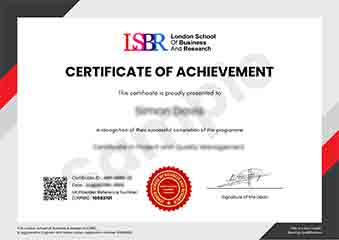
Sample Certificate
Preview the certificate you'll receive upon successful completion of this program.
Get Free Course Info
Receive detailed course information, curriculum breakdown, and career outcomes straight to your inbox.
Employer Sponsored?
Many employers cover professional development costs. Request a corporate invoice and we'll handle the rest. Bulk enrollment discounts available for teams of 3+.
Your Path to Certification
Four simple steps to your professionally recognised qualification
Enroll & Get Instant Access
Complete your enrollment and access course materials immediately
Study at Your Own Pace
Work through the modules on your schedule, from anywhere in the world
Complete Assessments
Demonstrate your knowledge through practical, real-world assessments
Receive Your Certificate
Get your official LSBR UK certificate, recognised across 180+ countries
Join Thousands Who Transformed Their Careers
Our graduates consistently report measurable career growth and professional advancement after completing their programmes.
What People Say About Us
Hear from our students about their experience with the Advanced Certificate in Designing Temperature Monitoring Systems at LSBR UK - Executive Education.
Sophie Brown
United Kingdom"The course material was incredibly comprehensive and well-structured, covering everything from sensor selection to data analysis, which really helped me develop a deep understanding of temperature monitoring systems. I gained hands-on experience with designing and implementing these systems, which has significantly improved my practical skills and given me a competitive edge in my career. The knowledge I acquired has been invaluable, allowing me to approach complex temperature control challenges with confidence and creativity."
Sophie Brown
United Kingdom"The Advanced Certificate in Designing Temperature Monitoring Systems has been a game-changer for my career, equipping me with the expertise to develop and implement precise temperature control solutions that meet the stringent demands of my industry. I've seen a significant boost in my professional growth, with my newfound skills allowing me to take on more complex projects and contribute meaningfully to my organization's quality control initiatives. By mastering the art of temperature monitoring system design, I've become a more valuable asset to my company and a competitive player in the job market."
Jia Li Lim
Singapore"The course structure was well-organized, allowing me to seamlessly progress from foundational concepts to advanced techniques in designing temperature monitoring systems, which significantly enhanced my understanding of the subject. The comprehensive content covered a wide range of topics, including real-world applications, enabling me to appreciate the practical implications of temperature monitoring in various industries. Through this course, I gained valuable knowledge that will undoubtedly contribute to my professional growth and expertise in this specialized field."
Still deciding?
Join 23,000+ professionals who advanced their careers. Enroll today and start learning immediately.
Enroll NowSecure payment • Instant access • Certificate included