
Advanced Certificate in Evolutionary Ecology of Mutualistic Relationships
Gain expertise in the evolutionary dynamics and ecological significance of mutualistic relationships, enhancing research and conservation efforts.
Advanced Certificate in Evolutionary Ecology of Mutualistic Relationships
About This Course
The Advanced Certificate in Evolutionary Ecology of Mutualistic Relationships is a specialized programme designed for scientists, researchers, and professionals interested in understanding the intricate dynamics and evolutionary underpinnings of mutualistic relationships in nature. This programme delves into the theoretical and practical aspects of mutualism, focusing on how species co-evolve to form mutually beneficial relationships. Learners will explore a wide range of ecosystems, including terrestrial, marine, and freshwater habitats, and gain insights into the genetic, ecological, and environmental factors that influence these relationships.
Participants will develop a robust set of skills, including analytical thinking, critical evaluation of scientific literature, and advanced research methodologies. They will learn to apply evolutionary theory to the study of mutualistic interactions, understand the mechanisms that drive the evolution of cooperation, and assess the impact of environmental changes on mutualistic systems. Through hands-on fieldwork and laboratory exercises, learners will enhance their ability to conduct empirical research and interpret complex data.
The career impact of this programme is significant, as it equips graduates with the knowledge and skills necessary to contribute to fields such as conservation biology, ecology, and environmental science. Graduates can pursue roles in academia, research institutions, government agencies, and non-profit organizations, conducting research, developing policies, and contributing to the preservation and management of ecosystems. This programme also prepares individuals for advanced study in related fields, such as PhD programs, where they can delve deeper into specialized areas of mutualistic ecology.
What You Will Learn
The Advanced Certificate in Evolutionary Ecology of Mutualistic Relationships is a comprehensive program designed for scientists, ecologists, and researchers dedicated to understanding and enhancing mutualistic interactions in nature. This program delves into the complexities of mutualism, exploring how organisms form long-term, beneficial relationships that are crucial for biodiversity and ecosystem stability. Key topics include the evolution, genetics, and ecological impacts of mutualistic relationships in various ecosystems, such as pollination, mycorrhizal associations, and symbiotic relationships in marine and terrestrial environments.
Participants will learn cutting-edge research methodologies and analytical tools to study mutualistic networks and their evolutionary dynamics. They will also gain insights into the conservation and management of mutualistic systems, addressing real-world challenges such as habitat loss, climate change, and the introduction of invasive species. By the end of the program, graduates will be equipped with the knowledge and skills to conduct independent research, contribute to policy-making, and develop sustainable practices that support the health of mutualistic ecosystems.
Career opportunities for graduates are diverse, ranging from academic and research positions at universities and research institutions to roles in conservation organizations, environmental consulting, and government agencies. Graduates can also pursue careers in industry, working on projects that integrate ecological knowledge with sustainable business practices. This program not only fosters a deeper understanding of the natural world but also equips students with practical skills to make a tangible impact on the conservation and management of our planet's vital ecosystems.
Course Benefits
Industry-Aligned Curriculum
Developed with industry leaders for job-ready skills
Globally Recognised Certificate
Recognised by employers across 180+ countries
Flexible Online Learning
Study at your own pace with lifetime access
Instant Access
Start learning immediately, no application process
Constantly Updated Content
Latest industry trends and best practices
Career Advancement
87% report measurable career progression within 6 months
What This Course Covers
- Introduction to Mutualism: Provides an overview of mutualistic relationships and their importance in ecology.: Evolutionary Theory: Discusses the theoretical underpinnings of mutualism from an evolutionary perspective.
- Ecological Interactions: Analyzes the various types of interactions that form mutualistic relationships.: Genetic Basis: Explores the genetic mechanisms that underlie mutualistic associations.
- Behavioral Ecology: Examines the behavioral aspects of mutualism and how organisms interact.: Conservation Implications: Discusses the impact of mutualistic relationships on conservation efforts.
Everything You Get With This Course
Course Facts
For professionals, researchers, and advanced students
Basic understanding of ecology and evolution required
Analyze complex mutualistic interactions
Apply theoretical knowledge to real-world scenarios
Develop skills in data analysis and interpretation
Ready to Advance Your Career?
Join thousands of professionals who have transformed their careers with LSBR UK
Why This Course Is Right for You
Expanding Expertise in Mutualism: The Advanced Certificate in Evolutionary Ecology of Mutualistic Relationships enhances professionals' understanding of how mutualistic interactions form the basis of ecosystems. This knowledge is crucial for fields like conservation biology, where understanding these relationships can inform strategies for wildlife management and habitat preservation.
Applied Research Skills: Participants develop skills in analyzing data from various ecological studies, which are essential for conducting independent research. This ability is particularly valuable for scientists seeking to advance their careers by contributing original research to academic journals or through consultancy roles.
Policy and Management Insights: The program equips professionals with the knowledge to advise on environmental policies and management practices. For instance, understanding the dynamics of mutualistic relationships can help in designing effective policies for sustainable use of natural resources, impacting industries such as agriculture and forestry.
Interdisciplinary Collaboration: The certificate fosters collaboration across disciplines, preparing professionals to work effectively with ecologists, biologists, and environmental policymakers. This skill is increasingly important in today’s complex environmental challenges, where multidisciplinary approaches are essential for developing comprehensive solutions.
3-4 Weeks
Study at your own pace
Course Brochure
Download our comprehensive course brochure with all details
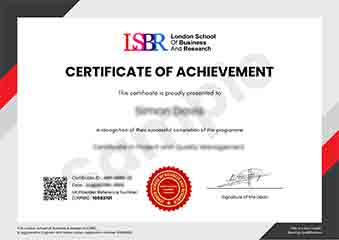
Sample Certificate
Preview the certificate you'll receive upon successful completion of this program.
Get Free Course Info
Receive detailed course information, curriculum breakdown, and career outcomes straight to your inbox.
Employer Sponsored?
Many employers cover professional development costs. Request a corporate invoice and we'll handle the rest. Bulk enrollment discounts available for teams of 3+.
How You Earn Your Certificate
Four simple steps to your professionally recognised qualification
Enroll & Get Instant Access
Complete your enrollment and access course materials immediately
Study at Your Own Pace
Work through the modules on your schedule, from anywhere in the world
Complete Assessments
Demonstrate your knowledge through practical, real-world assessments
Receive Your Certificate
Get your official LSBR UK certificate, recognised across 180+ countries
Real Results from Real Learners
Our graduates consistently report measurable career growth and professional advancement after completing their programmes.
Reviews from Our Learners
Hear from our students about their experience with the Advanced Certificate in Evolutionary Ecology of Mutualistic Relationships at LSBR UK - Executive Education.
Charlotte Williams
United Kingdom"The course content was incredibly thorough, covering a wide range of mutualistic relationships from a variety of ecosystems, which greatly enhanced my understanding of ecological interactions. Gaining insights into the practical applications of these relationships has equipped me with valuable skills that I can apply directly in my research and future career in conservation biology."
Ruby McKenzie
Australia"This course has been incredibly valuable, equipping me with a deep understanding of mutualistic relationships that directly applies to my work in conservation biology. It has not only enhanced my analytical skills but also opened up new career opportunities in the field."
Zoe Williams
Australia"The course structure was meticulously organized, providing a clear pathway to understanding the complex dynamics of mutualistic relationships, which has greatly enhanced my knowledge and perspective in evolutionary ecology. The comprehensive content not only deepened my theoretical understanding but also highlighted numerous real-world applications, making the subject matter both engaging and highly relevant to my professional growth."
Need more time to decide?
Join 23,000+ professionals who advanced their careers. Enroll today and start learning immediately.
Enroll NowSecure payment • Instant access • Certificate included