
Advanced Certificate in Evolutionary Patterns in Vertebrate Anatomy
Gain expertise in evolutionary anatomy patterns, enhancing knowledge in vertebrate biology and paleontology.
Advanced Certificate in Evolutionary Patterns in Vertebrate Anatomy
Programme Overview
The Advanced Certificate in Evolutionary Patterns in Vertebrate Anatomy is designed for experienced professionals in biology, conservation, and related fields who seek to deepen their understanding of vertebrate anatomy and its evolutionary history. This comprehensive programme delves into the fossil record, comparative anatomy, and genetic data to explore the evolutionary trajectories of vertebrate species, from early jawless fish to modern mammals. It equips learners with the ability to critically analyze anatomical structures and their evolutionary significance, providing a solid foundation for advanced research and conservation efforts.
Key skills and knowledge developed through this programme include the ability to interpret and analyze anatomical data, understand the principles of comparative anatomy, and apply evolutionary theory to the study of vertebrate diversity. Learners will also gain proficiency in using digital tools and databases to access and analyze large datasets, enhancing their capacity for independent research and problem-solving in the field.
The programme has a significant impact on career trajectories, particularly for those aiming to contribute to cutting-edge research in vertebrate paleontology, evolutionary biology, and conservation biology. Graduates are well-prepared to pursue careers as researchers, educators, or consultants in academic institutions, government agencies, or non-profit organizations focused on biodiversity and conservation.
What You'll Learn
Explore the intricate and fascinating world of vertebrate anatomy through the 'Advanced Certificate in Evolutionary Patterns in Vertebrate Anatomy.' This program is designed for professionals and students interested in deepening their understanding of vertebrate evolution and anatomy. By studying the anatomical structures and evolutionary patterns across various vertebrate species, participants gain profound insights into the adaptive strategies and physiological innovations that have shaped life on Earth.
Key topics in the program include comparative anatomy, phylogenetic analysis, functional morphology, and the evolution of skeletal, muscular, and nervous systems. Students engage in hands-on research, utilizing state-of-the-art laboratory facilities and digital tools to analyze and interpret complex anatomical data. This practical experience equips graduates with the skills necessary to contribute to academic research, conservation efforts, and zoological institutions.
Upon completion, graduates are well-prepared for a range of career paths, including research assistant roles, museum positions, and academic teaching. They can also pursue advanced degrees in fields such as paleontology, evolutionary biology, and bioinformatics, or apply their knowledge to industries like veterinary medicine, wildlife management, and biotechnology. This program not only fosters a deeper appreciation for the natural world but also empowers individuals to make meaningful contributions to scientific discourse and conservation efforts.
Programme Highlights
Industry-Aligned Curriculum
Developed with industry leaders for job-ready skills
Globally Recognised Certificate
Recognised by employers across 180+ countries
Flexible Online Learning
Study at your own pace with lifetime access
Instant Access
Start learning immediately, no application process
Constantly Updated Content
Latest industry trends and best practices
Career Advancement
87% report measurable career progression within 6 months
Topics Covered
- Phylogenetic Inference: Analyzes methods for constructing evolutionary trees.: Comparative Anatomy: Studies anatomical structures across different species.
- Developmental Biology: Examines how ancestral patterns are maintained or altered.: Molecular Evolution: Investigates genetic changes over evolutionary time.
- Functional Morphology: Relates form to function in vertebrate anatomy.: Paleontology: Explores the fossil record and its implications for vertebrate evolution.
What You Get When You Enroll
Key Facts
For professionals in biology, paleontology, and related fields
No specific prerequisites required
Analyze evolutionary adaptations in vertebrate anatomy
Identify key anatomical changes over evolutionary time
Compare and contrast different vertebrate lineages
Ready to Advance Your Career?
Join thousands of professionals who have transformed their careers with LSBR UK
Why This Course
Expanding Knowledge Base: An advanced certificate in evolutionary patterns in vertebrate anatomy equips professionals with a deep understanding of the historical and developmental aspects of vertebrate species. This knowledge is invaluable for roles in paleontology, comparative anatomy, and evolutionary biology, enriching their expertise and providing a unique perspective in research and academic settings.
Enhanced Analytical Skills: The program focuses on critical analysis of skeletal structures and evolutionary trends, which significantly enhances analytical and problem-solving abilities. Professionals can apply these skills to interpret fossil records, develop new theories, and contribute to the scientific community by addressing complex questions in vertebrate evolution.
Improved Career Opportunities: With specialized knowledge and advanced analytical skills, professionals can pursue roles that demand a deep understanding of vertebrate anatomy and evolution. This could include working in academic institutions, research laboratories, or government agencies focused on biodiversity and conservation. The certificate also opens doors to interdisciplinary fields like bioinformatics, where evolutionary knowledge is increasingly important.
Stronger Research Contributions: The advanced certificate provides a solid foundation for conducting cutting-edge research in vertebrate anatomy and evolution. Professionals can engage in projects that advance our understanding of species adaptation, biodiversity, and the impacts of environmental changes on evolutionary patterns. This not only enhances their research capabilities but also positions them to make significant contributions to the field.
3-4 Weeks
Study at your own pace
Course Brochure
Download our comprehensive course brochure with all details
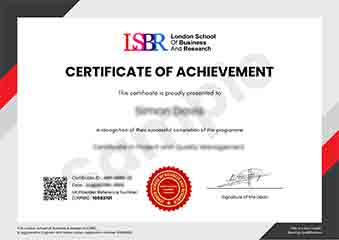
Sample Certificate
Preview the certificate you'll receive upon successful completion of this program.
Get Free Course Info
Receive detailed course information, curriculum breakdown, and career outcomes straight to your inbox.
Employer Sponsored?
Many employers cover professional development costs. Request a corporate invoice and we'll handle the rest. Bulk enrollment discounts available for teams of 3+.
Your Path to Certification
Four simple steps to your professionally recognised qualification
Enroll & Get Instant Access
Complete your enrollment and access course materials immediately
Study at Your Own Pace
Work through the modules on your schedule, from anywhere in the world
Complete Assessments
Demonstrate your knowledge through practical, real-world assessments
Receive Your Certificate
Get your official LSBR UK certificate, recognised across 180+ countries
Join Thousands Who Transformed Their Careers
Our graduates consistently report measurable career growth and professional advancement after completing their programmes.
What People Say About Us
Hear from our students about their experience with the Advanced Certificate in Evolutionary Patterns in Vertebrate Anatomy at LSBR UK - Executive Education.
Sophie Brown
United Kingdom"The course content is incredibly detailed and well-organized, providing a deep understanding of evolutionary patterns in vertebrate anatomy. Gaining insights into how anatomical structures have evolved over time has significantly enhanced my analytical skills and broadened my knowledge base, making me more competitive in the field of paleontology."
Kai Wen Ng
Singapore"This course has been incredibly valuable, providing me with a deep understanding of evolutionary patterns in vertebrate anatomy that directly applies to my work in wildlife conservation. It has enhanced my analytical skills and given me a competitive edge in my field, opening up new opportunities for collaboration and research."
Sophie Brown
United Kingdom"The course structure is well-organized, providing a clear progression from foundational concepts to advanced topics in vertebrate anatomy, which greatly enhances understanding and retention of evolutionary patterns. The comprehensive content offers numerous real-world applications, making the learning experience both enriching and applicable to various fields of study."
Still deciding?
Join 23,000+ professionals who advanced their careers. Enroll today and start learning immediately.
Enroll NowSecure payment • Instant access • Certificate included