
Advanced Certificate in Wind Flow Modeling for Urban Areas
Enhance urban planning with accurate wind flow modeling and simulation techniques for improved sustainability and livability outcomes.
Advanced Certificate in Wind Flow Modeling for Urban Areas
Programme Overview
The Advanced Certificate in Wind Flow Modeling for Urban Areas is a specialized programme that delves into the complexities of wind flow in urban environments, covering topics such as computational fluid dynamics, turbulence modeling, and urban morphology. This programme is designed for professionals and researchers in fields like urban planning, architecture, and environmental engineering who seek to enhance their understanding of wind flow patterns and their impact on urban microclimates.
Through a combination of theoretical foundations and practical applications, learners will develop skills in wind tunnel testing, computational modeling, and data analysis, enabling them to simulate and predict wind flow patterns in complex urban geometries. They will also gain knowledge of industry-standard software and tools, such as computational fluid dynamics (CFD) packages and geographic information systems (GIS), to support their work in urban wind flow modeling.
Upon completing this programme, learners will be equipped to take on roles that require expertise in wind flow modeling, such as urban planner, environmental consultant, or research scientist, and will be able to contribute to the development of sustainable and resilient urban environments.
What You'll Learn
The Advanced Certificate in Wind Flow Modeling for Urban Areas is a highly specialized programme designed to equip professionals with the expertise to analyze and mitigate the effects of wind flows on urban infrastructure and environments. Valuable in today's professional landscape, this programme addresses the growing need for accurate wind flow modeling in urban planning, architecture, and engineering. Key topics covered include computational fluid dynamics, wind tunnel testing, and numerical modeling using software such as OpenFOAM and ANSYS Fluent.
Graduates develop competencies in data analysis, visualization, and interpretation, enabling them to assess wind flow patterns, predict urban microclimates, and design optimized building layouts and ventilation systems. These skills are applied in real-world settings to improve building energy efficiency, reduce wind-induced structural loads, and enhance urban air quality.
Professionals with this advanced certificate can work as wind engineering specialists, urban planners, or building design consultants, applying their expertise to high-rise building design, wind farm optimization, and urban climate resilience projects. Career advancement opportunities are available in top architectural and engineering firms, research institutions, and government agencies, where expertise in wind flow modeling is increasingly sought after to inform sustainable and resilient urban development.
Programme Highlights
Industry-Aligned Curriculum
Developed with industry leaders for job-ready skills
Globally Recognised Certificate
Recognised by employers across 180+ countries
Flexible Online Learning
Study at your own pace with lifetime access
Instant Access
Start learning immediately, no application process
Constantly Updated Content
Latest industry trends and best practices
Career Advancement
87% report measurable career progression within 6 months
Topics Covered
- Introduction to Wind Flow: Basic concepts explained.
- Urban Geometry Modeling: Buildings and terrain modeled.
- Computational Fluid Dynamics: Simulations are performed.
- Turbulence and Dispersion: Airflow and particles studied.
- Data Analysis Techniques: Results are interpreted.
- Wind Flow Modeling Applications: Practical uses demonstrated.
What You Get When You Enroll
Key Facts
Target Audience: Urban planners, architects, environmental scientists, and engineers seeking to develop expertise in wind flow modeling.
Prerequisites: No formal prerequisites required, but basic knowledge of urban planning and environmental principles is beneficial.
Learning Outcomes:
Apply computational fluid dynamics to model urban wind flow patterns.
Analyze wind flow data to inform urban planning and design decisions.
Evaluate the impact of wind flow on urban microclimates and air quality.
Develop and implement wind flow modeling strategies for urban areas.
Interpret and visualize wind flow modeling results for effective communication.
Assessment Method: Quiz-based assessment to evaluate understanding of wind flow modeling principles and applications.
Certification: Industry-recognised digital certificate awarded upon successful completion of the course, verifying expertise in wind flow modeling for urban areas.
Ready to Advance Your Career?
Join thousands of professionals who have transformed their careers with LSBR UK
Why This Course
The 'Advanced Certificate in Wind Flow Modeling for Urban Areas' programme is a game-changer for professionals seeking to enhance their skills in urban planning, architecture, and environmental engineering, offering a unique blend of theoretical knowledge and practical applications. By enrolling in this programme, professionals can gain a competitive edge in their careers and contribute to the development of sustainable and livable cities.
The programme provides advanced training in wind flow modeling techniques, enabling professionals to accurately assess and mitigate the impact of wind on urban environments, which is critical for ensuring public safety and reducing wind-related damages to buildings and infrastructure. This skillset is highly valued in the industry, and professionals who possess it can expect to take on leadership roles in urban planning and development projects. By mastering wind flow modeling, professionals can also develop innovative solutions to improve air quality, reduce urban heat islands, and enhance overall urban livability.
The programme covers the latest industry-standard software and tools, such as computational fluid dynamics (CFD) and geographic information systems (GIS), which are essential for wind flow modeling and urban planning. Professionals who are proficient in these tools can work efficiently and effectively, and are better equipped to collaborate with cross-functional teams and communicate complex ideas to stakeholders. This expertise can also be applied to a wide range of applications, including building design, urban forestry, and climate change mitigation.
The programme focuses on the application of wind flow modeling to real-world urban challenges, such as urban heat islands, air pollution, and
3-4 Weeks
Study at your own pace
Course Brochure
Download our comprehensive course brochure with all details
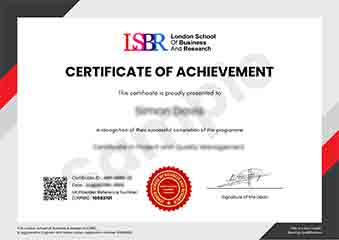
Sample Certificate
Preview the certificate you'll receive upon successful completion of this program.
Get Free Course Info
Receive detailed course information, curriculum breakdown, and career outcomes straight to your inbox.
Employer Sponsored?
Many employers cover professional development costs. Request a corporate invoice and we'll handle the rest. Bulk enrollment discounts available for teams of 3+.
Your Path to Certification
Four simple steps to your professionally recognised qualification
Enroll & Get Instant Access
Complete your enrollment and access course materials immediately
Study at Your Own Pace
Work through the modules on your schedule, from anywhere in the world
Complete Assessments
Demonstrate your knowledge through practical, real-world assessments
Receive Your Certificate
Get your official LSBR UK certificate, recognised across 180+ countries
Join Thousands Who Transformed Their Careers
Our graduates consistently report measurable career growth and professional advancement after completing their programmes.
What People Say About Us
Hear from our students about their experience with the Advanced Certificate in Wind Flow Modeling for Urban Areas at LSBR UK - Executive Education.
Oliver Davies
United Kingdom"The course material was incredibly comprehensive and well-structured, providing me with a deep understanding of wind flow modeling principles and their applications in urban areas. Through hands-on exercises and real-world case studies, I gained practical skills in using computational fluid dynamics software to simulate and analyze wind patterns, which I believe will be highly valuable in my future career as an urban planner. The knowledge I acquired has not only enhanced my technical expertise but also given me a competitive edge in the industry, allowing me to approach complex urban design challenges with confidence."
Kavya Reddy
India"The Advanced Certificate in Wind Flow Modeling for Urban Areas has been a game-changer for my career, equipping me with specialized skills that are in high demand in the industry, particularly in urban planning and environmental consulting. I've seen a significant boost in my ability to analyze and mitigate the effects of wind patterns on urban infrastructure, which has not only enhanced my professional credibility but also opened up new opportunities for career advancement. By mastering wind flow modeling, I've been able to drive more informed decision-making and deliver more effective solutions for my clients, setting me apart as a expert in my field."
Wei Ming Tan
Singapore"The course structure was well-organized, allowing me to seamlessly progress from foundational concepts to advanced wind flow modeling techniques, which significantly enhanced my understanding of urban microclimates. The comprehensive content covered a wide range of topics, from basic aerodynamics to complex computational fluid dynamics, providing me with a solid foundation for real-world applications in urban planning and design. By mastering these skills, I feel more confident in my ability to contribute to the development of more sustainable and resilient cities."
Still deciding?
Join 23,000+ professionals who advanced their careers. Enroll today and start learning immediately.
Enroll NowSecure payment • Instant access • Certificate included