
Certificate in Acoustic Design Using Mathematical Principles
This certificate equips you with the skills to design acoustic environments using mathematical principles, enhancing sound quality and space functionality.
Certificate in Acoustic Design Using Mathematical Principles
About This Course
The Certificate in Acoustic Design Using Mathematical Principles is designed for architects, engineers, interior designers, and acoustic consultants who seek to enhance their expertise in the application of mathematical principles to acoustic design. This program delves into the fundamental theories and practical applications of acoustics, focusing on the use of mathematical models and software for the analysis and design of acoustic environments. Participants will learn to apply Fourier analysis, wave equations, and signal processing techniques to create soundproofing solutions and optimize acoustic performance in various settings.
Learners will develop a comprehensive understanding of sound propagation, noise control, and acoustic measurement. Key skills include the ability to use advanced software tools for simulating acoustic environments, designing sound systems, and analyzing the acoustic impact of building materials and structures. Through hands-on projects and case studies, participants will gain proficiency in integrating mathematical principles into acoustic design, enabling them to address complex noise issues and create spaces with optimal acoustic quality.
The program has a significant impact on career progression, equipping professionals with the knowledge and skills to lead projects involving acoustic design, contribute to the development of innovative solutions in the field, and enhance their consulting services. Graduates can expect to advance in roles such as senior acoustic consultant, project manager for acoustic design, or researcher in the field of acoustics.
What You Will Learn
The Certificate in Acoustic Design Using Mathematical Principles is a comprehensive course designed to equip students with the skills necessary to design and optimize acoustic environments through mathematical and computational methods. This program bridges the gap between theoretical mathematics and practical acoustics, focusing on the application of advanced mathematical principles to solve real-world acoustic challenges.
Key topics include the mathematical modeling of sound propagation, the use of Fourier analysis and spectral methods, and the integration of computational acoustics. Students will learn to model complex acoustic systems, simulate sound behavior in various environments, and apply optimization techniques to enhance sound quality.
Upon completion, graduates can apply these skills in a range of industries, including architectural design, audio engineering, and environmental health and safety. They will be adept at designing spaces with superior acoustic performance, optimizing sound systems for clarity and comfort, and conducting environmental impact assessments.
This program opens doors to diverse career opportunities, such as acoustical consultant, audio engineer, and noise control engineer. Graduates are prepared to lead projects from inception to completion, ensuring that acoustic designs meet the highest standards of performance and user satisfaction. Whether working on concert halls, recording studios, or industrial plants, professionals with this certificate are uniquely qualified to address the complex acoustic needs of modern environments.
Course Benefits
Industry-Aligned Curriculum
Developed with industry leaders for job-ready skills
Globally Recognised Certificate
Recognised by employers across 180+ countries
Flexible Online Learning
Study at your own pace with lifetime access
Instant Access
Start learning immediately, no application process
Constantly Updated Content
Latest industry trends and best practices
Career Advancement
87% report measurable career progression within 6 months
What This Course Covers
- Foundational Concepts: Covers the core principles and key terminology.: Wave Propagation: Examines the behavior of sound waves through various media.
- Material Acoustics: Analyzes the interaction of sound with different materials.: Room Acoustics: Studies the effects of room dimensions and shapes on sound.
- Noise Control Techniques: Discusses methods to reduce unwanted sound.: Sound Intensity and Measurement: Teaches how to measure and quantify sound levels.
Everything You Get With This Course
Course Facts
For architects, acousticians, and engineers
No prior math or acoustic design required
Understand basic acoustics and sound math
Apply mathematical principles in design
Design spaces with optimal sound quality
Analyze existing spaces for acoustic improvements
Ready to Advance Your Career?
Join thousands of professionals who have transformed their careers with LSBR UK
Why This Course Is Right for You
Enhanced Career Opportunities: Acoustic design professionals who obtain a certificate in acoustic design using mathematical principles can significantly expand their career horizons. This certification equips them with advanced skills in using mathematical models to design sound systems, making them adept at tackling complex acoustic challenges in various fields such as architecture, audio engineering, and noise control. This expertise is in high demand, particularly in industries that require precise sound management, such as concert halls, recording studios, and environmental noise reduction.
Improved Problem-Solving Skills: The course content is designed to enhance problem-solving abilities through the application of mathematical principles to real-world acoustic issues. Professionals learn to model sound propagation, analyze room acoustics, and optimize sound systems. These skills not only improve their technical proficiency but also foster a deeper understanding of acoustics, enabling them to innovate and develop more effective solutions to sound-related problems.
Competitive Edge in the Job Market: With the increasing emphasis on sustainable and energy-efficient design, professionals with a certificate in acoustic design using mathematical principles can stand out. This certification demonstrates a commitment to staying updated with cutting-edge methodologies and technologies in the field. Employers value candidates who can leverage mathematical tools to contribute to the design and optimization of energy-efficient and acoustically comfortable spaces, making such professionals highly sought after in both public and private sectors.
3-4 Weeks
Study at your own pace
Course Brochure
Download our comprehensive course brochure with all details
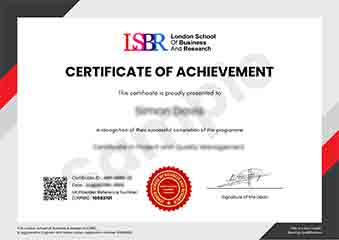
Sample Certificate
Preview the certificate you'll receive upon successful completion of this program.
Get Free Course Info
Receive detailed course information, curriculum breakdown, and career outcomes straight to your inbox.
Employer Sponsored?
Many employers cover professional development costs. Request a corporate invoice and we'll handle the rest. Bulk enrollment discounts available for teams of 3+.
How You Earn Your Certificate
Four simple steps to your professionally recognised qualification
Enroll & Get Instant Access
Complete your enrollment and access course materials immediately
Study at Your Own Pace
Work through the modules on your schedule, from anywhere in the world
Complete Assessments
Demonstrate your knowledge through practical, real-world assessments
Receive Your Certificate
Get your official LSBR UK certificate, recognised across 180+ countries
Real Results from Real Learners
Our graduates consistently report measurable career growth and professional advancement after completing their programmes.
Reviews from Our Learners
Hear from our students about their experience with the Certificate in Acoustic Design Using Mathematical Principles at LSBR UK - Executive Education.
Charlotte Williams
United Kingdom"The course content was incredibly thorough, providing a deep understanding of how mathematical principles apply to acoustic design, which has been invaluable for my career. I now have practical skills to analyze and improve sound environments in various settings."
Klaus Mueller
Germany"This course has been instrumental in bridging the gap between theoretical mathematics and real-world acoustic design challenges. It has significantly enhanced my ability to apply mathematical principles to improve sound quality in various environments, making me a more competitive candidate in the field."
Kavya Reddy
India"The course structure is well-organized, providing a clear path from foundational mathematical concepts to practical applications in acoustic design, which has significantly enhanced my understanding and ability to solve real-world problems in the field."
Need more time to decide?
Join 23,000+ professionals who advanced their careers. Enroll today and start learning immediately.
Enroll NowSecure payment • Instant access • Certificate included