
Certificate in Airborne Toxins Detection Methods
Gain expertise in airborne toxin detection methods, enhancing analytical skills and knowledge for environmental and occupational health safety.
Certificate in Airborne Toxins Detection Methods
Programme Overview
The Certificate in Airborne Toxins Detection Methods is designed for professionals in environmental science, public health, and industrial safety who are tasked with ensuring air quality and protecting public health. This comprehensive programme covers a wide range of detection methods, including sampling techniques, analytical chemistry, and real-time monitoring technologies. Learners will gain a deep understanding of the sources, properties, and health impacts of airborne toxins, as well as the latest methodologies for their detection and quantification.
Participants will develop key skills in sample collection and preparation, instrumental analysis, data interpretation, and risk assessment. The programme also emphasizes the importance of regulatory compliance and the application of detection methods in various settings, such as industrial emissions monitoring, air quality management, and emergency response scenarios. By the end of the programme, learners will be equipped with the knowledge and skills to design, implement, and interpret airborne toxins detection protocols effectively.
This programme significantly impacts career advancement by equipping professionals with the specialized skills necessary to address environmental challenges and improve public health outcomes. Graduates will be well-prepared to take on leadership roles in environmental monitoring, health surveillance, and regulatory compliance. They will also be better positioned to contribute to the development of strategies for mitigating the health risks associated with airborne toxins in both industrial and urban environments.
What You'll Learn
The Certificate in Airborne Toxins Detection Methods is a comprehensive program designed for professionals aiming to master the latest techniques in identifying and analyzing airborne toxins. This program equips participants with the knowledge and skills to understand the sources, behavior, and health impacts of various airborne pollutants, including particulate matter, volatile organic compounds, and toxic gases.
Key topics include the principles of air sampling, advanced analytical techniques such as mass spectrometry and gas chromatography, and the use of portable detection devices. Participants will learn how to develop and implement detection strategies, manage data, and interpret results to inform public health decisions and environmental policy.
Graduates of this program are well-equipped to work in a variety of settings, including government agencies, research institutions, environmental consulting firms, and industrial environments. They can apply these skills to monitor air quality, assess workplace safety, and contribute to the development of pollution control strategies. The program also prepares students for certifications such as Certified Environmental Health Specialist (CEHS) and Certified Indoor Environmental Consultant (CIEC), enhancing their career prospects in regulatory compliance, environmental health, and safety management.
This certificate program not only provides a solid foundation in the science and technology of airborne toxin detection but also offers hands-on experience through practical workshops and field exercises, ensuring that graduates are ready to make meaningful contributions to protect public health and the environment.
Programme Highlights
Industry-Aligned Curriculum
Developed with industry leaders for job-ready skills
Globally Recognised Certificate
Recognised by employers across 180+ countries
Flexible Online Learning
Study at your own pace with lifetime access
Instant Access
Start learning immediately, no application process
Constantly Updated Content
Latest industry trends and best practices
Career Advancement
87% report measurable career progression within 6 months
Topics Covered
- Foundational Concepts: Covers the core principles and key terminology.: Sampling Techniques: Discusses methods for collecting airborne toxin samples.
- Analytical Chemistry: Introduces techniques for analyzing toxin samples.: Instrumentation: Focuses on the equipment and tools used in detection.
- Data Interpretation: Teaches how to analyze and interpret results.: Case Studies: Examines real-world applications and scenarios.
What You Get When You Enroll
Key Facts
Audience: Environmental scientists, toxicologists, air quality specialists
Prerequisites: Basic knowledge of chemistry, laboratory techniques
Outcomes: Proficient in airborne toxin identification, capable of using detection equipment
Ready to Advance Your Career?
Join thousands of professionals who have transformed their careers with LSBR UK
Why This Course
Enhanced Professional Competence: Professionals in environmental health, occupational safety, and air quality management can significantly enhance their expertise by obtaining a Certificate in Airborne Toxins Detection Methods. This certification equips them with the latest knowledge and skills in identifying, analyzing, and mitigating airborne toxins, which are critical for public health and workplace safety.
Career Advancement Opportunities: With this certification, career advancement becomes more accessible. Employers often look for professionals who can demonstrate in-depth knowledge and practical application of detection methods. Individuals with this certification can take up roles such as environmental health specialists, air quality monitors, or safety officers, with potential for higher positions in these fields.
Regulatory Compliance and Risk Management: The certificate provides professionals with the tools necessary to comply with stringent environmental regulations and manage risks associated with airborne toxins. This is particularly important in industries like manufacturing, construction, and healthcare, where exposure to toxins can lead to severe health consequences. The ability to detect and mitigate these risks can significantly reduce legal liabilities and improve workplace safety.
Interdisciplinary Collaboration: Airborne toxins detection involves cross-disciplinary collaboration. Professionals who hold this certificate are better equipped to work with teams from various backgrounds, including engineering, chemistry, and public health. This skill enhances their ability to solve complex problems and contribute to more effective risk management strategies in diverse settings.
3-4 Weeks
Study at your own pace
Course Brochure
Download our comprehensive course brochure with all details
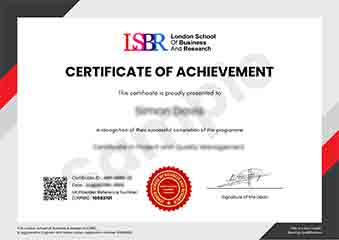
Sample Certificate
Preview the certificate you'll receive upon successful completion of this program.
Get Free Course Info
Receive detailed course information, curriculum breakdown, and career outcomes straight to your inbox.
Employer Sponsored?
Many employers cover professional development costs. Request a corporate invoice and we'll handle the rest. Bulk enrollment discounts available for teams of 3+.
Your Path to Certification
Four simple steps to your professionally recognised qualification
Enroll & Get Instant Access
Complete your enrollment and access course materials immediately
Study at Your Own Pace
Work through the modules on your schedule, from anywhere in the world
Complete Assessments
Demonstrate your knowledge through practical, real-world assessments
Receive Your Certificate
Get your official LSBR UK certificate, recognised across 180+ countries
Join Thousands Who Transformed Their Careers
Our graduates consistently report measurable career growth and professional advancement after completing their programmes.
What People Say About Us
Hear from our students about their experience with the Certificate in Airborne Toxins Detection Methods at LSBR UK - Executive Education.
James Thompson
United Kingdom"The course content was incredibly comprehensive, covering a wide range of airborne toxins and their detection methods, which has significantly enhanced my practical skills in environmental analysis. Gaining hands-on experience with various testing techniques has been invaluable for my career in environmental science."
James Thompson
United Kingdom"This course has been incredibly valuable, equipping me with the latest techniques in airborne toxin detection that are directly applicable in the field. It has not only enhanced my technical skills but also opened up new career opportunities in environmental health and safety."
Connor O'Brien
Canada"The course structure was well-organized, providing a clear pathway from foundational concepts to advanced detection methods, which greatly enhanced my understanding of airborne toxins. The comprehensive content and real-world applications have significantly broadened my knowledge base and prepared me for practical challenges in the field."
Still deciding?
Join 23,000+ professionals who advanced their careers. Enroll today and start learning immediately.
Enroll NowSecure payment • Instant access • Certificate included