
Certificate in Interfacial Phenomena in Phase Transitions
This certificate equips learners with advanced knowledge of interfacial phenomena in phase transitions, enhancing understanding and applications in materials science and engineering.
Certificate in Interfacial Phenomena in Phase Transitions
About This Course
The Certificate in Interfacial Phenomena in Phase Transitions is designed for professionals and students with a background in chemistry, materials science, physics, or engineering who are interested in understanding the complex interactions at the interfaces between different phases of matter. This program delves into the fundamental principles governing the behavior of materials during phase transitions and the critical role of interfaces in these processes. Comprehensive coverage includes theoretical foundations, experimental techniques, and practical applications, ensuring a well-rounded educational experience.
Participants will develop a deep understanding of interfacial phenomena, including adsorption, desorption, and wetting, as well as the thermodynamics and kinetics of phase transitions. They will learn advanced analytical methods for characterizing interfaces, such as spectroscopy, microscopy, and calorimetry, and gain proficiency in computational modeling and simulation techniques. The program also emphasizes the importance of interdisciplinary approaches, integrating knowledge from physics, chemistry, and materials science to address real-world problems.
The career impact of this program is significant, enabling graduates to pursue roles in research and development, quality control, and innovation within industries such as pharmaceuticals, electronics, and energy. Graduates will be equipped to innovate in developing new materials, optimize processes, and advance technologies that rely on precise control and understanding of phase transitions and interfacial phenomena.
What You Will Learn
The Certificate in Interfacial Phenomena in Phase Transitions is an intensive, interdisciplinary program designed for scientists, engineers, and researchers interested in understanding the fundamental principles governing phase transitions at interfaces. This course delves into the thermal, mechanical, and chemical behaviors of materials during phase changes, providing a comprehensive framework for analyzing and predicting interfacial phenomena.
Key topics include thermodynamics and kinetics of phase transitions, surface science, wetting and adhesion, and the role of interfaces in material properties and performance. Students will gain hands-on experience through laboratory experiments and simulations, enhancing their ability to apply theoretical knowledge to real-world problems.
Graduates of this program are well-equipped to contribute to cutting-edge research and development in fields such as nanotechnology, energy conversion, and advanced materials. They can pursue careers in academia, industry, and government laboratories, where they can lead projects focused on developing new materials, improving energy efficiency, and advancing sustainable technologies.
By mastering the intricacies of interfacial phenomena, participants will be at the forefront of innovation, driving progress in sectors that demand precision and efficiency in material science and engineering.
Course Benefits
Industry-Aligned Curriculum
Developed with industry leaders for job-ready skills
Globally Recognised Certificate
Recognised by employers across 180+ countries
Flexible Online Learning
Study at your own pace with lifetime access
Instant Access
Start learning immediately, no application process
Constantly Updated Content
Latest industry trends and best practices
Career Advancement
87% report measurable career progression within 6 months
What This Course Covers
- Thermodynamics Fundamentals: Covers the core principles and key terminology of thermodynamics.: Phase Transition Kinetics: Explores the rates and mechanisms of phase transitions.
- Interfacial Energy: Analyzes the energy associated with interfaces between different phases.: Surface Tension and Capillarity: Investigates the forces and phenomena related to surface tension and capillarity.
- Wetting and Spreading: Examines the behavior of liquids on solid surfaces.: Interface Dynamics: Studies the dynamics of interfaces during phase transitions.
Everything You Get With This Course
Course Facts
Aimed at advanced undergraduates, graduates, and industry professionals
No specific prerequisites, but familiarity with basic thermodynamics and chemistry recommended
Understands fundamental concepts of interfacial phenomena
Analyzes phase transition dynamics and thermodynamics
Applies theories to real-world materials science and engineering problems
Ready to Advance Your Career?
Join thousands of professionals who have transformed their careers with LSBR UK
Why This Course Is Right for You
Enhanced Problem-Solving Skills: The certificate in interfacial phenomena in phase transitions equips professionals with a deep understanding of material science principles, particularly at interfaces. This knowledge is crucial for developing innovative solutions in areas such as battery technology, where optimizing material interactions can significantly enhance energy storage efficiency.
Advanced Career Opportunities: With a specialized qualification in this field, professionals can diversify their career paths. For instance, they can transition into roles focusing on advanced material development, phase transition dynamics in polymers, or thermal management systems in electronics. This specialization can lead to higher job security and better remuneration.
Industry-Relevant Research Skills: The program emphasizes practical applications and real-world problem-solving. Professionals gain hands-on experience in researching and analyzing phase transitions, which is highly valued in industries like automotive, aerospace, and pharmaceuticals. This research experience can boost their credibility and make them more attractive to leading research institutions and companies.
Interdisciplinary Collaboration: The coursework encourages collaboration across disciplines such as physics, chemistry, and engineering. This interdisciplinary approach not only enhances professional networks but also prepares individuals to lead multidisciplinary teams, a skill increasingly demanded in today's complex research environments.
3-4 Weeks
Study at your own pace
Course Brochure
Download our comprehensive course brochure with all details
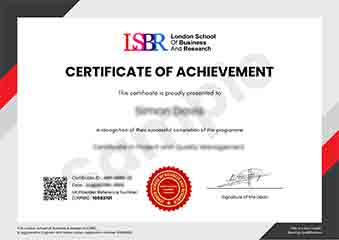
Sample Certificate
Preview the certificate you'll receive upon successful completion of this program.
Get Free Course Info
Receive detailed course information, curriculum breakdown, and career outcomes straight to your inbox.
Employer Sponsored?
Many employers cover professional development costs. Request a corporate invoice and we'll handle the rest. Bulk enrollment discounts available for teams of 3+.
How You Earn Your Certificate
Four simple steps to your professionally recognised qualification
Enroll & Get Instant Access
Complete your enrollment and access course materials immediately
Study at Your Own Pace
Work through the modules on your schedule, from anywhere in the world
Complete Assessments
Demonstrate your knowledge through practical, real-world assessments
Receive Your Certificate
Get your official LSBR UK certificate, recognised across 180+ countries
Real Results from Real Learners
Our graduates consistently report measurable career growth and professional advancement after completing their programmes.
Reviews from Our Learners
Hear from our students about their experience with the Certificate in Interfacial Phenomena in Phase Transitions at LSBR UK - Executive Education.
Oliver Davies
United Kingdom"The course provided an in-depth look at interfacial phenomena in phase transitions, which significantly enhanced my understanding of material science. Gaining practical skills in analyzing phase behavior and interface dynamics has been invaluable for my career in research and development."
Zoe Williams
Australia"This certificate course has been instrumental in bridging the gap between theoretical knowledge and practical applications in phase transitions. It has significantly enhanced my ability to analyze complex systems, making me more competitive in the job market and opening up new opportunities in my field."
Priya Sharma
India"The course structure was well-organized, providing a clear progression from fundamental concepts to advanced topics in interfacial phenomena, which greatly enhanced my understanding of phase transitions. The comprehensive content not only deepened my theoretical knowledge but also showed how these principles apply to real-world scenarios, significantly boosting my professional growth."
Need more time to decide?
Join 23,000+ professionals who advanced their careers. Enroll today and start learning immediately.
Enroll NowSecure payment • Instant access • Certificate included