
Certificate in Media Literacy in Science Contexts
Develop critical thinking skills to analyze scientific information effectively through media, enhancing understanding and literacy.
Certificate in Media Literacy in Science Contexts
Programme Overview
The Certificate in Media Literacy in Science Contexts is designed for educators, journalists, policymakers, and the general public seeking to enhance their ability to critically evaluate and interpret scientific information presented in media. The program focuses on developing skills for identifying credible sources, understanding scientific concepts, and recognizing common rhetorical strategies used in media to present scientific information. Participants will learn to differentiate between scientific facts and opinions, assess the reliability of scientific claims, and effectively communicate scientific information to diverse audiences.
Key skills and knowledge developed through this program include the ability to analyze media content for accuracy, bias, and relevance to scientific principles, as well as the capability to interpret statistical data and understand the limitations of scientific studies. Learners will also acquire the ability to critically evaluate the methods used in scientific research and to communicate scientific information in a clear, concise, and accessible manner, ensuring that the public can make informed decisions based on reliable scientific evidence.
The career impact of this program is significant, enabling participants to play a more informed role in their professional and personal lives. Educators can improve their teaching strategies, journalists can enhance their reporting on scientific topics, and policymakers can make better-informed decisions based on accurate scientific information. Participants will be better equipped to engage in public discourse on complex scientific issues and to contribute positively to evidence-based decision-making in their respective fields.
What You'll Learn
The Certificate in Media Literacy in Science Contexts is a comprehensive program designed to equip you with the skills necessary to critically evaluate and effectively communicate scientific information found in media. This program is essential for anyone seeking to navigate the complex landscape of scientific misinformation and engage with the public on a range of scientific issues.
Key topics include understanding the structure of scientific research, distinguishing between correlation and causation, recognizing biases in media reporting, and developing strategies for clear, evidence-based communication. By examining case studies and real-world examples, you will learn to identify the strengths and weaknesses of scientific arguments presented in various media formats, from news articles and social media posts to podcasts and television documentaries.
Upon completion, you will be able to apply these skills to foster informed public discourse and contribute to evidence-based policy discussions. Graduates of this program are well-prepared to work in science communication roles, journalism, education, and public health, as well as to advocate for accurate scientific information in their communities.
This program is ideal for science communicators, journalists, educators, and policy analysts who recognize the importance of media literacy in shaping public perception and understanding of science. With a certificate from this program, you will enhance your professional toolkit, enabling you to play a pivotal role in bridging the gap between scientific knowledge and public understanding.
Programme Highlights
Industry-Aligned Curriculum
Developed with industry leaders for job-ready skills
Globally Recognised Certificate
Recognised by employers across 180+ countries
Flexible Online Learning
Study at your own pace with lifetime access
Instant Access
Start learning immediately, no application process
Constantly Updated Content
Latest industry trends and best practices
Career Advancement
87% report measurable career progression within 6 months
Topics Covered
- Foundational Concepts: Covers the core principles and key terminology.: Scientific Communication: Focuses on effective ways to communicate scientific information.
- Critical Analysis: Teaches how to critically evaluate scientific information and media.: Digital Literacy: Addresses the skills needed to navigate and evaluate digital information.
- Ethical Considerations: Explores the ethical implications of media in science contexts.: Case Studies: Analyzes real-world examples of media literacy in scientific contexts.
What You Get When You Enroll
Key Facts
Target audience: Adults, educators, scientists
Prerequisites: Basic computer skills
Outcomes: Enhanced critical thinking, improved media analysis skills
Ready to Advance Your Career?
Join thousands of professionals who have transformed their careers with LSBR UK
Why This Course
Enhance Critical Thinking: The Certificate in Media Literacy in Science Contexts equips professionals with the ability to critically analyze and evaluate scientific information presented in media. This skill is invaluable in today's information-saturated environment, where pseudo-science and misinformation are prevalent. For instance, health professionals can better discern reliable medical information from misleading claims, leading to more informed decision-making and patient care.
Strengthen Communication Skills: Understanding how to communicate complex scientific concepts effectively is crucial, especially for educators, scientists, and science communicators. The certificate program improves narrative skills, enabling professionals to convey scientific facts in an engaging and accessible manner. This can lead to more effective public engagement and better science education.
Equip for Career Advancement: Gaining this certification can open new opportunities in various fields, including science communication, education, and public health. It demonstrates a commitment to staying current with trends in science communication and media literacy, which are increasingly important in career advancement. For example, a science educator might use this knowledge to develop more effective lesson plans or a healthcare professional could enhance their ability to advise patients on credible health resources.
3-4 Weeks
Study at your own pace
Course Brochure
Download our comprehensive course brochure with all details
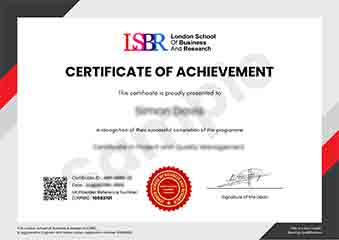
Sample Certificate
Preview the certificate you'll receive upon successful completion of this program.
Get Free Course Info
Receive detailed course information, curriculum breakdown, and career outcomes straight to your inbox.
Employer Sponsored?
Many employers cover professional development costs. Request a corporate invoice and we'll handle the rest. Bulk enrollment discounts available for teams of 3+.
Your Path to Certification
Four simple steps to your professionally recognised qualification
Enroll & Get Instant Access
Complete your enrollment and access course materials immediately
Study at Your Own Pace
Work through the modules on your schedule, from anywhere in the world
Complete Assessments
Demonstrate your knowledge through practical, real-world assessments
Receive Your Certificate
Get your official LSBR UK certificate, recognised across 180+ countries
Join Thousands Who Transformed Their Careers
Our graduates consistently report measurable career growth and professional advancement after completing their programmes.
What People Say About Us
Hear from our students about their experience with the Certificate in Media Literacy in Science Contexts at LSBR UK - Executive Education.
Sophie Brown
United Kingdom"The course provided high-quality materials that significantly enhanced my ability to critically evaluate scientific information in media, which has been incredibly beneficial for my career in public health communication. I gained practical skills in identifying biases and misinformation, which I now use regularly to inform my work and engage with the public more effectively."
Ashley Rodriguez
United States"The certificate in Media Literacy in Science Contexts has been incredibly valuable, equipping me with the skills to critically evaluate scientific information in the media, which is directly applicable in my role as a science communicator. This has not only enhanced my credibility but also opened up new opportunities for collaboration with various organizations."
Klaus Mueller
Germany"The course structure is well-organized, providing a clear path from basic concepts to advanced applications in media literacy within science contexts, which has significantly enhanced my ability to critically evaluate scientific information in the media."
Still deciding?
Join 23,000+ professionals who advanced their careers. Enroll today and start learning immediately.
Enroll NowSecure payment • Instant access • Certificate included