
Certificate in Microbial Ecology in Aquatic Systems
Gain expertise in microbial ecology of aquatic systems, enhancing understanding of ecosystem health and sustainability.
Certificate in Microbial Ecology in Aquatic Systems
About This Course
The Certificate in Microbial Ecology in Aquatic Systems is designed for professionals and students interested in advancing their knowledge in the field of aquatic microbial ecology. This comprehensive programme delves into the complex interactions between microorganisms and aquatic environments, covering topics such as microbial ecology principles, microbial community structure and function, and the impact of environmental factors on microbial dynamics. It also explores the use of cutting-edge techniques for microbial analysis and the integration of microbial ecology in managing aquatic ecosystems.
Participants will develop a robust set of skills and knowledge, including the ability to conduct detailed microbial sampling and analysis, understand the ecological roles of different microbial groups in aquatic systems, and apply ecological principles to solve real-world environmental issues. They will also learn how to use bioinformatics tools for microbial data analysis and how to interpret microbial community data in the context of ecosystem health and resilience.
The programme has a significant impact on careers in environmental science, water resource management, and ecological research. Graduates will be well-prepared to contribute to projects focused on improving water quality, managing aquatic biodiversity, and addressing challenges associated with climate change and pollution. They can pursue roles such as microbial ecologists, environmental scientists, or ecotoxicologists, or further their education in related fields.
What You Will Learn
The Certificate in Microbial Ecology in Aquatic Systems is a cutting-edge program designed to equip students with a comprehensive understanding of microbial communities in aquatic environments. This program delves into the complex interactions between microorganisms and their environment, providing insights into how these interactions influence water quality, ecosystem health, and biogeochemical cycles.
Key topics include the classification and identification of aquatic microorganisms, the role of microbial communities in nutrient cycling, and the impact of environmental stressors such as pollution and climate change. Students will also explore advanced techniques for sample collection, genetic analysis, and data interpretation using state-of-the-art laboratory equipment and software.
Upon completion, graduates will be well-prepared to apply their skills in a variety of settings, including environmental monitoring, water treatment facilities, academic research, and governmental agencies. The program's hands-on approach ensures that students gain practical experience in fieldwork, laboratory analysis, and data presentation, making them highly sought after in both public and private sectors.
Career opportunities for graduates are diverse, ranging from microbiologists in environmental consulting firms to researchers in governmental and non-governmental organizations. The demand for professionals skilled in microbial ecology is expected to grow as environmental concerns and the need for sustainable water management solutions become increasingly urgent.
Course Benefits
Industry-Aligned Curriculum
Developed with industry leaders for job-ready skills
Globally Recognised Certificate
Recognised by employers across 180+ countries
Flexible Online Learning
Study at your own pace with lifetime access
Instant Access
Start learning immediately, no application process
Constantly Updated Content
Latest industry trends and best practices
Career Advancement
87% report measurable career progression within 6 months
What This Course Covers
- Introduction to Microbial Ecology: Provides an overview of microbial life in aquatic environments and its significance.: Biodiversity in Aquatic Systems: Examines the variety and distribution of microorganisms in different aquatic habitats.
- Ecological Interactions: Analyzes the relationships between microorganisms and their environment, including symbiotic and competitive interactions.: Metagenomics and Metabolomics: Introduces techniques for studying microbial communities through genetic and metabolic analysis.
- Impact of Environmental Stressors: Investigates how factors like pollution, temperature changes, and pH levels affect microbial communities.: Conservation and Management Strategies: Discusses methods for preserving and enhancing microbial diversity in aquatic ecosystems.
Everything You Get With This Course
Course Facts
Audience: Environmental scientists, biologists, aquatic managers
Prerequisites: Basic biology, chemistry knowledge
Outcomes: Understand microbial ecology, analyze aquatic systems, apply conservation strategies
Ready to Advance Your Career?
Join thousands of professionals who have transformed their careers with LSBR UK
Why This Course Is Right for You
Enhance Expertise: The Certificate in Microbial Ecology in Aquatic Systems provides professionals with a deep understanding of microbial interactions within aquatic environments. This knowledge is crucial for addressing issues like water quality, ecosystem health, and the impact of pollutants, thereby enhancing their professional expertise.
Career Advancement: Professionals who earn this certificate can qualify for advanced positions in environmental consulting, water resource management, and scientific research. The certificate demonstrates a specialized skill set that is highly valued by employers looking to tackle complex environmental challenges.
Interdisciplinary Skills: The program integrates microbiology, ecology, and aquatic systems, fostering interdisciplinary skills that are essential for solving multifaceted problems. These skills enable professionals to work effectively in teams and contribute to innovative solutions in fields such as bioremediation, fisheries management, and renewable energy.
Networking Opportunities: Participating in the certificate program offers opportunities to connect with leading experts and professionals in the field. These networking connections can lead to mentorship, collaboration, and job opportunities, further advancing one's career in microbial ecology and aquatic systems.
3-4 Weeks
Study at your own pace
Course Brochure
Download our comprehensive course brochure with all details
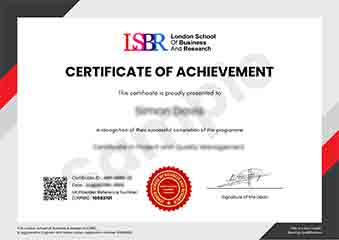
Sample Certificate
Preview the certificate you'll receive upon successful completion of this program.
Get Free Course Info
Receive detailed course information, curriculum breakdown, and career outcomes straight to your inbox.
Employer Sponsored?
Many employers cover professional development costs. Request a corporate invoice and we'll handle the rest. Bulk enrollment discounts available for teams of 3+.
How You Earn Your Certificate
Four simple steps to your professionally recognised qualification
Enroll & Get Instant Access
Complete your enrollment and access course materials immediately
Study at Your Own Pace
Work through the modules on your schedule, from anywhere in the world
Complete Assessments
Demonstrate your knowledge through practical, real-world assessments
Receive Your Certificate
Get your official LSBR UK certificate, recognised across 180+ countries
Real Results from Real Learners
Our graduates consistently report measurable career growth and professional advancement after completing their programmes.
Reviews from Our Learners
Hear from our students about their experience with the Certificate in Microbial Ecology in Aquatic Systems at LSBR UK - Executive Education.
Charlotte Williams
United Kingdom"The course provided an in-depth look at microbial ecology in aquatic systems, equipping me with valuable skills in analyzing water samples and understanding microbial communities. Gaining hands-on experience through lab work has significantly enhanced my knowledge and made me more competitive in the field of environmental science."
Brandon Wilson
United States"This certificate program has been incredibly valuable, equipping me with the latest tools and techniques in microbial ecology that are directly applicable to my work in water treatment. It has opened up new opportunities for me to contribute more effectively to environmental sustainability projects."
Madison Davis
United States"The course structure was well-organized, providing a comprehensive overview of microbial ecology in aquatic systems that seamlessly connected theoretical knowledge with practical, real-world applications, significantly enhancing my understanding and professional growth in the field."
Need more time to decide?
Join 23,000+ professionals who advanced their careers. Enroll today and start learning immediately.
Enroll NowSecure payment • Instant access • Certificate included