
Certificate in Molecular Imaging Techniques in Research
Develop comprehensive molecular imaging techniques in research expertise through structured learning. Build confidence in practical applications.
Certificate in Molecular Imaging Techniques in Research
About This Course
The Certificate in Molecular Imaging Techniques in Research is designed for researchers, scientists, and medical professionals seeking to deepen their understanding and application of advanced imaging techniques in various research settings. This program is ideal for individuals involved in biotechnology, pharmaceutical research, and medical imaging, aiming to utilize molecular imaging to enhance diagnostic and therapeutic approaches in clinical and translational research.
Learners will develop comprehensive skills in the application of molecular imaging techniques, including but not limited to positron emission tomography (PET), single-photon emission computed tomography (SPECT), and magnetic resonance imaging (MRI). The curriculum focuses on the principles of radiopharmaceuticals, contrast agents, and imaging modalities, enabling participants to design, execute, and interpret molecular imaging studies effectively. Additionally, the program emphasizes the integration of molecular imaging with other imaging techniques and the analysis of imaging data using advanced software and tools.
Upon completion of the program, participants will be well-prepared to contribute to cutting-edge research in fields such as oncology, neurology, and cardiology. They will possess the knowledge and skills necessary to develop and evaluate novel imaging agents, interpret complex imaging data, and communicate findings to interdisciplinary teams. This program will also prepare learners for advanced positions in research institutions, hospitals, and pharmaceutical companies, or for further academic pursuits in related fields.
What You Will Learn
The Certificate in Molecular Imaging Techniques in Research is tailored for researchers and professionals aiming to advance their understanding and application of cutting-edge imaging technologies in biomedical research. This comprehensive program equips participants with the skills to design, implement, and analyze molecular imaging experiments, leveraging the latest technologies such as positron emission tomography (PET), single-photon emission computed tomography (SPECT), and magnetic resonance imaging (MRI). Key topics include the principles of molecular imaging, radiopharmaceuticals, image acquisition, and processing, as well as the integration of molecular imaging with other diagnostic modalities.
Graduates of this program are well-prepared to contribute to research in oncology, neuroscience, cardiology, and infectious diseases, among others. They can develop innovative imaging protocols, interpret complex imaging data, and translate research findings into clinical applications. The program’s rigorous curriculum, hands-on training, and access to state-of-the-art facilities ensure that participants are at the forefront of molecular imaging research.
Career opportunities for program graduates are diverse and include roles as research scientists, clinical research associates, and imaging technologists. Graduates may also pursue further studies in PhD programs or lead research initiatives in academia, biotech, and pharmaceutical industries. This certificate not only enhances career prospects but also drives innovation in the field of molecular imaging, contributing to improved diagnostics and therapeutic strategies.
Course Benefits
Industry-Aligned Curriculum
Developed with industry leaders for job-ready skills
Globally Recognised Certificate
Recognised by employers across 180+ countries
Flexible Online Learning
Study at your own pace with lifetime access
Instant Access
Start learning immediately, no application process
Constantly Updated Content
Latest industry trends and best practices
Career Advancement
87% report measurable career progression within 6 months
What This Course Covers
- Introduction to Molecular Imaging: Provides an overview of the field, its importance, and historical development.: Radiopharmaceuticals and Tracers: Discusses the types, properties, and applications of radiopharmaceuticals in imaging.
- Positron Emission Tomography (PET): Details the principles, protocols, and clinical applications of PET imaging.: Single Photon Emission Computed Tomography (SPECT): Covers the techniques, advantages, and limitations of SPECT imaging.
- Magnetic Resonance Imaging (MRI): Explains the physics, contrast mechanisms, and uses of MRI in molecular imaging.: Optical Imaging: Introduces the principles, instrumentation, and applications of fluorescence and bioluminescence imaging.
Everything You Get With This Course
Course Facts
Audience: Researchers, medical professionals
Prerequisites: Basic knowledge of imaging techniques
Outcomes: Proficient in molecular imaging technologies, clinical applications
Ready to Advance Your Career?
Join thousands of professionals who have transformed their careers with LSBR UK
Why This Course Is Right for You
Enhanced Specialization: The Certificate in Molecular Imaging Techniques in Research equips professionals with specialized knowledge in the latest imaging technologies. This expertise is crucial for advancing research in fields such as oncology, neurology, and cardiology. For instance, professionals can learn to design and interpret molecular images that provide detailed insights into cellular and molecular processes, enabling more precise diagnosis and treatment planning.
Improved Research Contributions: By mastering molecular imaging techniques, researchers can contribute more effectively to cutting-edge studies. The certificate program includes hands-on training in techniques like positron emission tomography (PET) and magnetic resonance imaging (MRI). These skills allow researchers to develop and validate new imaging protocols, thereby enhancing the quality and impact of their research.
Enhanced Career Opportunities: Acquiring a certificate in molecular imaging techniques opens doors to advanced roles in academia, pharmaceuticals, and biotechnology. Professionals can lead research projects, collaborate on clinical trials, or develop imaging technologies. For example, those with this certification are well-positioned to work as research scientists, project managers, or clinical informaticians, where they can apply their specialized knowledge to drive innovation and improve patient care.
3-4 Weeks
Study at your own pace
Course Brochure
Download our comprehensive course brochure with all details
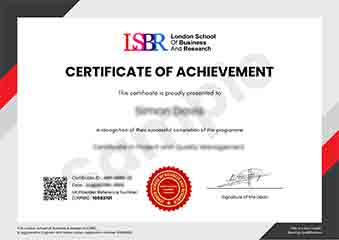
Sample Certificate
Preview the certificate you'll receive upon successful completion of this program.
Get Free Course Info
Receive detailed course information, curriculum breakdown, and career outcomes straight to your inbox.
Employer Sponsored?
Many employers cover professional development costs. Request a corporate invoice and we'll handle the rest. Bulk enrollment discounts available for teams of 3+.
How You Earn Your Certificate
Four simple steps to your professionally recognised qualification
Enroll & Get Instant Access
Complete your enrollment and access course materials immediately
Study at Your Own Pace
Work through the modules on your schedule, from anywhere in the world
Complete Assessments
Demonstrate your knowledge through practical, real-world assessments
Receive Your Certificate
Get your official LSBR UK certificate, recognised across 180+ countries
Real Results from Real Learners
Our graduates consistently report measurable career growth and professional advancement after completing their programmes.
Reviews from Our Learners
Hear from our students about their experience with the Certificate in Molecular Imaging Techniques in Research at LSBR UK - Executive Education.
Sophie Brown
United Kingdom"The course provided an in-depth understanding of molecular imaging techniques, equipping me with practical skills that are directly applicable in research settings. Gaining hands-on experience with various imaging modalities has significantly enhanced my ability to design and execute experiments effectively."
Kavya Reddy
India"This certificate program has been instrumental in enhancing my understanding of molecular imaging techniques, which has significantly improved my ability to analyze and interpret complex biological data. It has opened up new career opportunities in the pharmaceutical industry, where my enhanced skills are highly valued."
Connor O'Brien
Canada"The course structure is meticulously organized, providing a clear pathway from foundational concepts to advanced techniques in molecular imaging, which greatly enhances understanding and retention. The comprehensive content not only covers theoretical aspects but also delves into practical applications, significantly boosting my knowledge and preparing me for real-world research challenges."
Need more time to decide?
Join 23,000+ professionals who advanced their careers. Enroll today and start learning immediately.
Enroll NowSecure payment • Instant access • Certificate included