
Certificate in Quality Assurance in DevOps: Bridging the Gap
This certificate equips professionals with the skills to integrate quality assurance into DevOps, enhancing software reliability and accelerating delivery.
Certificate in Quality Assurance in DevOps: Bridging the Gap
Programme Overview
This course is for software developers, QA professionals, and DevOps engineers. These people aim to integrate quality assurance into their DevOps processes. You will learn to bridge the gap between development and operations. First, you will understand the basics of DevOps and quality assurance. Then, you will explore strategies to embed QA into DevOps pipelines.
First, you will dive into continuous testing and automation. Next, you will practice monitoring and logging. Furthermore, you will gain hands-on experience with popular tools. Finally, you will learn to measure and improve the quality of software.
What You'll Learn
Dive into the future of software development with our 'Certificate in Quality Assurance in DevOps: Bridging the Gap.' First, you'll learn to seamlessly integrate quality assurance into the DevOps pipeline. Then, master automated testing frameworks and continuous integration/continuous deployment (CI/CD) practices. By the end, you'll be proficient in tools like Jenkins, Selenium, and Docker.
Moreover, this course is designed for beginners and experts alike. Therefore, no prior experience is required. Also, you'll gain hands-on experience through real-world projects and case studies. These skills will set you apart in the job market. Furthermore, you'll open doors to roles like QA Engineer, DevOps Engineer, and Software Test Automation Specialist.
Enroll now. Then, transform your career! Take the first step towards becoming a valuable asset in the evolving tech landscape. Finally, join a community of learners committed to excellence in DevOps and quality assurance.
Programme Highlights
Industry-Aligned Curriculum
Developed with industry leaders to ensure practical, job-ready skills valued by employers worldwide.
Expert Faculty
Learn from experienced professionals with real-world expertise in your chosen field.
Flexible Learning
Study at your own pace, from anywhere in the world, with our flexible online platform.
Industry Focus
Practical, real-world knowledge designed to meet the demands of today's competitive job market.
Latest Curriculum
Stay ahead with constantly updated content reflecting the latest industry trends and best practices.
Career Advancement
Unlock new opportunities with a globally recognized qualification respected by employers.
Topics Covered
- Introduction to DevOps and Quality AssuranceUnderstand the fundamental concepts of DevOps and its importance in quality assurance.: Continuous Integration and Continuous Deployment (CI/CD) PipelinesLearn to implement CI/CD pipelines for automated and efficient software delivery.
- Automated Testing in DevOpsExplore various automated testing techniques to ensure software quality.: Infrastructure as Code (IaC) and Configuration ManagementMaster tools like Terraform and Ansible for managing infrastructure and configurations.
- Monitoring and Logging in DevOpsImplement monitoring and logging practices to maintain system reliability and performance.: Security and Compliance in DevOpsIntegrate security practices into the DevOps lifecycle to ensure compliance and protect data.
Key Facts
Audience:
This certificate is designed for anyone, from beginners seeking to understand Quality Assurance to seasoned professionals looking to build on their DevOps skills.
Prerequisites:
Before starting, students should first have a basic understanding of IT or software development processes.
Additionally, having prior exposure to Agile methodologies will be helpful.
Outcomes:
As a student, you will gain a clear understanding of how Quality Assurance integrates with DevOps.
First, you will learn to identify and implement best practices in Quality Assurance within a DevOps environment.
Next, you will develop the ability to collaborate effectively with interdisciplinary teams to ensure continuous delivery of high-quality software.
Why This Course
First, this certificate empowers learners to bridge the gap between development, operations, and quality assurance. It fosters a collaborative culture. Also, it enhances understanding of DevOps principles.
Furthermore, it equips learners with practical skills. They can actively improve software quality. Additionally, they can reduce defects and increase efficiency.
Finally, this certificate boosts career opportunities. It prepares learners for diverse roles. Also, it ensures they stay competitive in the industry.
Programme Title
Certificate in Quality Assurance in DevOps: Bridging the Gap
Course Brochure
Download our comprehensive course brochure with all details
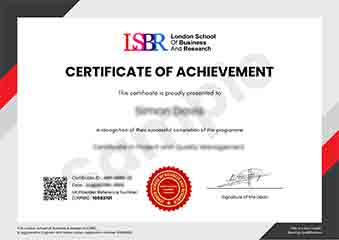
Sample Certificate
Preview the certificate you'll receive upon successful completion of this program.
Pay as an Employer
Request an invoice for your company to pay for this course. Perfect for corporate training and professional development.
What People Say About Us
Hear from our students about their experience with the Certificate in Quality Assurance in DevOps: Bridging the Gap at LSBR UK - Executive Education.
Sophie Brown
United Kingdom"The course content was exceptionally well-structured, providing a comprehensive overview of Quality Assurance in DevOps. I gained practical skills in implementing CI/CD pipelines and automated testing, which have already proven valuable in my current role."
Kavya Reddy
India"This course has been a game-changer for my career. The practical applications of quality assurance in DevOps have made me more confident in my role, and the skills I've developed have opened up new opportunities for advancement in the industry."
Emma Tremblay
Canada"The course structure was exceptionally well-organized, with each module building logically on the previous one, which made complex topics in Quality Assurance and DevOps much easier to grasp. The comprehensive content not only covered theoretical aspects but also provided real-world applications, significantly enhancing my professional growth and understanding of how to implement these practices effectively in my current role."