
Certificate in Weather Forecasting for Aviation Safety
This certificate equips professionals with essential skills in weather forecasting to enhance aviation safety and operational efficiency.
Certificate in Weather Forecasting for Aviation Safety
Programme Overview
The Certificate in Weather Forecasting for Aviation Safety is designed to equip aspiring and existing aviation professionals with comprehensive knowledge and practical skills in understanding and interpreting meteorological data crucial for ensuring safe and efficient air travel. This program is ideal for aviation meteorologists, flight dispatchers, air traffic controllers, and aviation students who wish to specialize in meteorology and its impact on aviation safety. The curriculum is meticulously crafted to cater to the unique needs of the aviation industry, focusing on the latest weather forecasting techniques, severe weather phenomena, and their implications on flight operations.
Learners in this program will develop essential skills such as the ability to analyze and interpret numerical weather prediction models, understand the dynamics of atmospheric conditions, and apply this knowledge to make informed decisions regarding flight planning and operations. The course also emphasizes the importance of communication and teamwork in conveying weather information effectively to pilots and other aviation staff, thereby enhancing overall safety protocols. Upon completion, participants will be well-prepared to tackle the challenges of weather-related aviation safety issues and contribute to the continuous improvement of operational procedures.
The Certificate in Weather Forecasting for Aviation Safety has a significant impact on career advancement. Graduates can pursue roles as aviation meteorologists, aviation weather analysts, or weather consultants with airlines, airports, or regulatory bodies. The program's focus on both theoretical knowledge and practical application ensures that participants are well-positioned to excel in their roles and contribute to the safety and efficiency of aviation operations.
What You'll Learn
The Certificate in Weather Forecasting for Aviation Safety is designed to equip professionals with the advanced knowledge and skills necessary to predict and mitigate weather-related risks in aviation. This comprehensive program covers critical topics such as atmospheric science, meteorological data analysis, and the impact of weather on aircraft performance and safety. Students will learn to interpret satellite imagery, radar systems, and other meteorological tools, enabling them to make accurate short-term and long-term weather forecasts essential for safe flight operations.
Upon completion, graduates will be adept at using sophisticated software and models to assess weather conditions, identify potential hazards, and communicate weather information effectively to aviation stakeholders. They will be well-prepared to work in roles such as aviation weather analysts, meteorologists, and weather consultants, contributing to the safety and efficiency of air travel. The program also prepares students for certification from organizations like the National Weather Service, enhancing their employability in the aviation sector.
By integrating practical, hands-on learning experiences with theoretical knowledge, this certificate program ensures that graduates are well-equipped to safeguard air travel against the challenges posed by the weather.
Programme Highlights
Industry-Aligned Curriculum
Developed with industry leaders for job-ready skills
Globally Recognised Certificate
Recognised by employers across 180+ countries
Flexible Online Learning
Study at your own pace with lifetime access
Instant Access
Start learning immediately, no application process
Constantly Updated Content
Latest industry trends and best practices
Career Advancement
87% report measurable career progression within 6 months
Topics Covered
- Meteorological Fundamentals: Covers the core principles and key terminology.: Atmospheric Dynamics: Explores the movement of air masses and their impact on weather.
- Satellite and Radar Applications: Discusses the use of satellite imagery and radar in weather forecasting.: Numerical Weather Prediction: Introduces the use of computer models for forecasting.
- Aviation Weather Hazards: Identifies common hazards such as turbulence, icing, and low visibility.: Decision-Making Processes: Teaches how to apply weather information in aviation safety contexts.
What You Get When You Enroll
Key Facts
Target professionals in aviation
No specific prerequisites required
Understand meteorological impacts on flights
Learn to use weather data for safety
Develop skills in forecasting aviation weather
Prepare for adverse weather conditions
Enhance decision-making for flight safety
Ready to Advance Your Career?
Join thousands of professionals who have transformed their careers with LSBR UK
Why This Course
Enhanced Safety and Efficiency: Acquiring a Certificate in Weather Forecasting for Aviation Safety equips professionals with the tools to predict and understand weather patterns that can affect flight safety and efficiency. For instance, knowing how to interpret satellite imagery and radar data can help in identifying convective storms or turbulence, allowing pilots to avoid hazardous conditions and adjust flight paths accordingly.
Career Advancement Opportunities: The certificate can open doors to specialized roles in aviation safety and operations. Professionals with this certification can work as meteorologists in airlines, air traffic management, or airport operations. This qualification demonstrates a deep understanding of the atmospheric sciences as they relate to aviation, making candidates more competitive for advanced positions.
Regulatory Compliance and Knowledge: The aviation industry is heavily regulated, and having a certificate in weather forecasting ensures compliance with international standards. For example, understanding the criteria for issuing turbulence warnings and weather advisories is crucial for meeting regulatory requirements and enhancing operational safety. This knowledge not only supports regulatory compliance but also contributes to the overall safety culture within an organization.
3-4 Weeks
Study at your own pace
Course Brochure
Download our comprehensive course brochure with all details
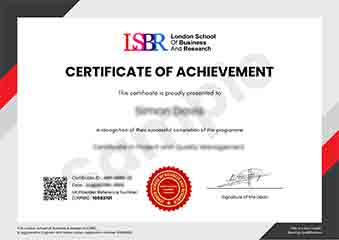
Sample Certificate
Preview the certificate you'll receive upon successful completion of this program.
Get Free Course Info
Receive detailed course information, curriculum breakdown, and career outcomes straight to your inbox.
Employer Sponsored?
Many employers cover professional development costs. Request a corporate invoice and we'll handle the rest. Bulk enrollment discounts available for teams of 3+.
Your Path to Certification
Four simple steps to your professionally recognised qualification
Enroll & Get Instant Access
Complete your enrollment and access course materials immediately
Study at Your Own Pace
Work through the modules on your schedule, from anywhere in the world
Complete Assessments
Demonstrate your knowledge through practical, real-world assessments
Receive Your Certificate
Get your official LSBR UK certificate, recognised across 180+ countries
Join Thousands Who Transformed Their Careers
Our graduates consistently report measurable career growth and professional advancement after completing their programmes.
What People Say About Us
Hear from our students about their experience with the Certificate in Weather Forecasting for Aviation Safety at LSBR UK - Executive Education.
Oliver Davies
United Kingdom"The course content is incredibly thorough, covering all the essential aspects of weather forecasting that are crucial for aviation safety. Gaining a deep understanding of how to interpret weather patterns and their impacts has significantly enhanced my ability to make informed decisions in the field."
Kavya Reddy
India"The certificate in Weather Forecasting for Aviation Safety has been incredibly valuable, enhancing my ability to make informed decisions that directly impact flight safety. It has opened up new opportunities in my career, allowing me to contribute more effectively to the aviation industry's safety protocols."
Greta Fischer
Germany"The course structure was well-organized, providing a clear path from basic meteorological principles to advanced forecasting techniques, which greatly enhanced my understanding of weather's impact on aviation safety. The comprehensive content, coupled with real-world case studies, has been invaluable for my professional growth in the field."
Still deciding?
Join 23,000+ professionals who advanced their careers. Enroll today and start learning immediately.
Enroll NowSecure payment • Instant access • Certificate included