
Executive Development Programme in Epidemiology of Flood-Related Illnesses
This programme equips executives with advanced knowledge in flood-related epidemiology to enhance public health strategies and disaster management outcomes.
Executive Development Programme in Epidemiology of Flood-Related Illnesses
Programme Overview
The Executive Development Programme in Epidemiology of Flood-Related Illnesses is tailored for senior public health professionals, policymakers, and researchers who are responsible for managing and mitigating the health impacts of floods in their regions. This program offers an in-depth exploration of flood-related epidemiology, including the latest research methodologies, statistical analysis techniques, and public health interventions. Participants will gain a comprehensive understanding of the epidemiological patterns and risk factors associated with flood-related illnesses, as well as the development and implementation of effective public health strategies.
Key skills and knowledge developed through this program include advanced epidemiological research methods, data analysis using specialized software, and policy formulation for flood-related public health emergencies. Learners will be equipped to conduct rigorous field studies, interpret complex data, and develop evidence-based policies aimed at reducing the incidence of flood-related illnesses. They will also master the art of stakeholder engagement and collaboration, essential for effectively addressing public health challenges during and after floods.
The career impact of this program is substantial, as it prepares participants to lead and influence public health initiatives at the local, national, and international levels. Graduates are well-prepared to take on leadership roles in public health agencies, research institutions, and international organizations, where they can contribute to the development of strategies that enhance community resilience and improve public health outcomes in flood-prone areas.
What You'll Learn
The Executive Development Programme in Epidemiology of Flood-Related Illnesses is an unparalleled opportunity for public health professionals, disaster management experts, and policymakers to enhance their understanding and capability in managing and responding to flood-related health crises. This intensive program is designed to equip participants with the latest knowledge and skills in epidemiological research, risk assessment, and public health interventions.
Key topics include the epidemiology of waterborne diseases, climate change and its impact on flood patterns, and the socio-economic factors that influence health outcomes in flood-prone regions. Participants will also delve into advanced statistical methods, spatial epidemiology, and the use of GIS in public health surveillance. The program emphasizes hands-on learning through case studies, practical exercises, and interactive workshops led by leading experts in the field.
Upon completion, graduates will be well-prepared to design and implement effective health and safety measures in flood-prone areas, improve emergency response protocols, and advocate for policies that mitigate the health risks associated with flooding. This program opens doors to various career opportunities, including roles in public health agencies, non-governmental organizations, and academic institutions, where the ability to analyze and mitigate flood-related health risks is in high demand.
Programme Highlights
Industry-Aligned Curriculum
Developed with industry leaders for job-ready skills
Globally Recognised Certificate
Recognised by employers across 180+ countries
Flexible Online Learning
Study at your own pace with lifetime access
Instant Access
Start learning immediately, no application process
Constantly Updated Content
Latest industry trends and best practices
Career Advancement
87% report measurable career progression within 6 months
Topics Covered
- Introduction to Flood-Related Illnesses: Provides an overview of the health impacts associated with floods.: Epidemiological Data Collection: Focuses on methods for collecting and managing health data during flood events.
- Risk Assessment and Management: Discusses strategies for assessing and mitigating flood-related health risks.: Case Studies in Epidemiology: Analyzes real-world examples of flood-related illnesses and their epidemiological impact.
- Public Health Interventions: Examines the role of public health measures in preventing and managing flood-related illnesses.: Policy and Preparedness: Covers the development and implementation of policies to address flood-related health issues.
What You Get When You Enroll
Key Facts
Target executives in public health
No prior epidemiology experience required
Understand flood-related illness patterns
Develop data analysis skills for public health
Create flood preparedness strategies
Enhance risk communication techniques
Ready to Advance Your Career?
Join thousands of professionals who have transformed their careers with LSBR UK
Why This Course
Enhanced Expertise and Specialization: Participating in an Executive Development Programme in Epidemiology of Flood-Related Illnesses allows professionals to gain deep insights into the complex interplay between natural disasters and public health. This specialization can be particularly valuable for those working in public health, disaster management, or environmental health, as it equips them with the knowledge to better predict, prevent, and respond to health risks post-flood events.
Improved Decision-Making Skills: The programme focuses on equipping participants with advanced analytical and critical thinking skills. By understanding the epidemiological patterns and factors that lead to flood-related illnesses, professionals can make more informed decisions during disaster preparedness and response phases. This not only enhances their decision-making capabilities but also improves their ability to advocate for effective public health policies.
Networking Opportunities: Engaging with peers and experts from diverse backgrounds in the programme provides a unique platform for networking. These connections can lead to collaborative research opportunities, joint projects, and potential career advancements. For instance, collaborations with researchers in climate science, public health, and water management can open new avenues for research and innovation in the field of flood-related health impacts.
3-4 Weeks
Study at your own pace
Course Brochure
Download our comprehensive course brochure with all details
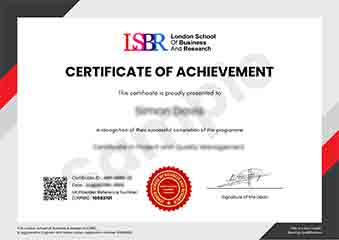
Sample Certificate
Preview the certificate you'll receive upon successful completion of this program.
Get Free Course Info
Receive detailed course information, curriculum breakdown, and career outcomes straight to your inbox.
Employer Sponsored?
Many employers cover professional development costs. Request a corporate invoice and we'll handle the rest. Bulk enrollment discounts available for teams of 3+.
Your Path to Certification
Four simple steps to your professionally recognised qualification
Enroll & Get Instant Access
Complete your enrollment and access course materials immediately
Study at Your Own Pace
Work through the modules on your schedule, from anywhere in the world
Complete Assessments
Demonstrate your knowledge through practical, real-world assessments
Receive Your Certificate
Get your official LSBR UK certificate, recognised across 180+ countries
Join Thousands Who Transformed Their Careers
Our graduates consistently report measurable career growth and professional advancement after completing their programmes.
What People Say About Us
Hear from our students about their experience with the Executive Development Programme in Epidemiology of Flood-Related Illnesses at LSBR UK - Executive Education.
Sophie Brown
United Kingdom"The course provided in-depth, well-researched material that significantly enhanced my understanding of flood-related illnesses, and I gained practical skills in data analysis and risk assessment that are directly applicable to my field. It has opened up new career opportunities and deepened my expertise in public health emergencies."
Ruby McKenzie
Australia"This course has been incredibly valuable in enhancing my understanding of how to manage and mitigate flood-related health risks, equipping me with practical tools and insights that are directly applicable in my role. It has opened up new opportunities for career advancement in public health and disaster management."
Hans Weber
Germany"The course structure was well-organized, providing a clear path from understanding the basics of epidemiology to applying that knowledge in real-world flood scenarios, which significantly enhanced my professional growth and prepared me for practical challenges."
Still deciding?
Join 23,000+ professionals who advanced their careers. Enroll today and start learning immediately.
Enroll NowSecure payment • Instant access • Certificate included