
Executive Development Programme in Geometric Computing for Engineering Design
This program enhances leadership skills in geometric computing, fostering innovative engineering design solutions and strategic decision-making.
Executive Development Programme in Geometric Computing for Engineering Design
About This Course
The Executive Development Programme in Geometric Computing for Engineering Design is tailored for senior engineers, design managers, and executives who seek to enhance their expertise in geometric computing techniques and their application in innovation and problem-solving within the engineering design sector. This comprehensive program combines theoretical knowledge and practical applications, equipping participants with the latest tools and methodologies to drive geometric modeling, simulation, and optimization in complex engineering projects.
Participants will develop key skills in advanced geometric modeling, computational geometry, and digital design technologies. They will learn how to integrate these technologies with existing engineering practices to improve product design efficiency, reduce development cycles, and enhance product performance. Additionally, the program covers the use of machine learning and artificial intelligence in geometric computing, enabling learners to anticipate future trends and apply innovative solutions to engineering challenges.
The career impact of this program is significant, as participants will be better positioned to lead innovation in their organizations, drive strategic initiatives, and contribute to the development of cutting-edge products. They will be able to articulate the value of geometric computing to stakeholders, make informed decisions based on geometric data analysis, and foster a culture of continuous improvement and innovation. This program not only advances individual professional capabilities but also enhances an organization's competitive edge in the engineering and design industry.
What You Will Learn
The Executive Development Programme in Geometric Computing for Engineering Design is designed to elevate the next generation of engineering leaders by equipping them with advanced geometric computing skills. This cutting-edge program, tailored for professionals in the fields of engineering, architecture, and design, focuses on the integration of geometric algorithms and computational techniques to enhance product design and development processes.
Key topics include the application of computational geometry in design optimization, the use of geometric modeling in advanced manufacturing, and the implementation of virtual and augmented reality technologies for immersive design visualization. Participants will delve into the latest software tools and platforms, such as CAD and CAM systems, to gain hands-on experience in geometric computing.
Upon completion, graduates will be adept at leveraging geometric computing to drive innovation in their projects, improve design efficiency, and enhance product quality. They will be well-prepared to lead teams in geometric design projects, manage complex engineering challenges, and contribute to the development of sustainable and innovative products. Career opportunities range from senior design engineer roles to executive positions in engineering management, with the potential to significantly impact the technological landscape of the engineering and design industries.
Course Benefits
Industry-Aligned Curriculum
Developed with industry leaders for job-ready skills
Globally Recognised Certificate
Recognised by employers across 180+ countries
Flexible Online Learning
Study at your own pace with lifetime access
Instant Access
Start learning immediately, no application process
Constantly Updated Content
Latest industry trends and best practices
Career Advancement
87% report measurable career progression within 6 months
What This Course Covers
- Foundational Concepts: Covers the core principles and key terminology.: Geometric Modeling: Introduces techniques for creating and manipulating geometric models.
- Computational Geometry: Focuses on algorithms and data structures for geometric problems.: Simulation and Analysis: Explains methods for simulating and analyzing geometric designs.
- Optimization Techniques: Discusses algorithms for optimizing geometric designs.: Case Studies: Analyzes real-world applications and case studies in geometric computing.
Everything You Get With This Course
Course Facts
Audience: Engineers, managers, tech leaders
Prerequisites: Basic programming, engineering knowledge
Outcomes: Master geometric algorithms, enhance design efficiency
Ready to Advance Your Career?
Join thousands of professionals who have transformed their careers with LSBR UK
Why This Course Is Right for You
Enhanced Technical Proficiency: Professionals who enroll in the Executive Development Programme in Geometric Computing for Engineering Design will gain advanced skills in geometric modeling and computational techniques. This knowledge is crucial for solving complex design problems, optimizing manufacturing processes, and developing innovative solutions. For instance, understanding non-uniform rational B-splines (NURBS) and other advanced geometric algorithms can significantly improve the accuracy and efficiency of D modeling and simulation tools.
Leadership and Strategic Skills: The program emphasizes leadership and strategic thinking, which are essential for managing projects and teams effectively. Participants learn to apply geometric computing principles to enhance decision-making and innovation within their organizations. For example, they can lead initiatives to integrate geometric computing into company workflows, thereby fostering a culture of continuous improvement and technological advancement.
Interdisciplinary Collaboration: Geometric computing involves collaboration across various disciplines such as mathematics, computer science, and engineering. The program equips professionals with the skills to effectively communicate and collaborate with experts from these fields. This interdisciplinary approach is vital for tackling real-world engineering challenges, especially in areas like additive manufacturing and digital twin technologies, where seamless integration of different technologies is paramount.
3-4 Weeks
Study at your own pace
Course Brochure
Download our comprehensive course brochure with all details
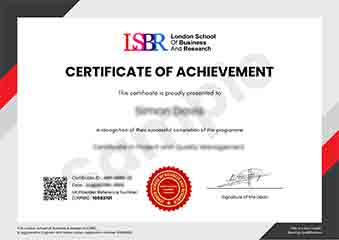
Sample Certificate
Preview the certificate you'll receive upon successful completion of this program.
Get Free Course Info
Receive detailed course information, curriculum breakdown, and career outcomes straight to your inbox.
Employer Sponsored?
Many employers cover professional development costs. Request a corporate invoice and we'll handle the rest. Bulk enrollment discounts available for teams of 3+.
How You Earn Your Certificate
Four simple steps to your professionally recognised qualification
Enroll & Get Instant Access
Complete your enrollment and access course materials immediately
Study at Your Own Pace
Work through the modules on your schedule, from anywhere in the world
Complete Assessments
Demonstrate your knowledge through practical, real-world assessments
Receive Your Certificate
Get your official LSBR UK certificate, recognised across 180+ countries
Real Results from Real Learners
Our graduates consistently report measurable career growth and professional advancement after completing their programmes.
Reviews from Our Learners
Hear from our students about their experience with the Executive Development Programme in Geometric Computing for Engineering Design at LSBR UK - Executive Education.
Oliver Davies
United Kingdom"The course content was incredibly detailed and well-structured, providing a solid foundation in geometric computing that has significantly enhanced my ability to design complex engineering systems. I've gained practical skills that are directly applicable to real-world challenges, which I believe will be invaluable in my career."
James Thompson
United Kingdom"The Executive Development Programme in Geometric Computing for Engineering Design has significantly enhanced my ability to apply advanced geometric principles in real-world engineering problems, making my solutions more innovative and efficient. This skill set has not only deepened my expertise but also opened up new career opportunities in high-demand areas of geometric modeling and computational design."
Ahmad Rahman
Malaysia"The course structure was meticulously organized, seamlessly blending theoretical concepts with practical applications, which greatly enhanced my understanding of geometric computing in engineering design. It provided a robust foundation, enabling me to apply these principles effectively in real-world scenarios, significantly boosting my professional growth."
Need more time to decide?
Join 23,000+ professionals who advanced their careers. Enroll today and start learning immediately.
Enroll NowSecure payment • Instant access • Certificate included