
Executive Development Programme in Historical Linguistics for Language Documentation
This programme enhances leadership skills in historical linguistics, focusing on advanced language documentation techniques and scholarly leadership.
Executive Development Programme in Historical Linguistics for Language Documentation
Programme Overview
The Executive Development Programme in Historical Linguistics for Language Documentation is designed for professionals in linguistics, anthropology, and related fields, aiming to enhance their expertise in the documentation and analysis of linguistic data. The programme offers a comprehensive curriculum that integrates advanced theoretical knowledge with practical skills, focusing on the historical evolution of languages and the documentation techniques essential for preserving endangered languages and cultural heritage.
Learners will develop a robust set of skills, including the ability to analyze and reconstruct language families, apply historical linguistic theories to real-world data, and employ cutting-edge computational methods for language documentation. They will also gain proficiency in the linguistic documentation process, from fieldwork to digital archiving, and will be equipped with the skills necessary to manage and analyze large datasets. Additionally, the programme emphasizes the importance of interdisciplinary collaboration and ethical considerations in language documentation.
The programme has a significant impact on career development, preparing participants to lead initiatives in language documentation, preserve linguistic diversity, and contribute to linguistic research at academic institutions and cultural organizations. Graduates are well-positioned to take on roles in language documentation projects, research, and policy-making, as well as to spearhead initiatives in language revitalization and cultural preservation.
What You'll Learn
The Executive Development Programme in Historical Linguistics for Language Documentation is designed to equip professionals with the cutting-edge skills needed to document and preserve endangered languages. This program offers a unique blend of theoretical knowledge and practical application, focusing on the historical evolution of languages, language documentation techniques, and the ethical considerations in language preservation. Participants will gain expertise in phonology, morphology, and syntax, as well as hands-on experience in transcribing, archiving, and analyzing linguistic data.
By the end of the program, graduates will be able to contribute to the documentation of diverse linguistic communities, ensuring that languages at risk of extinction are not lost. They will also develop the skills to collaborate with indigenous communities, academic institutions, and international organizations, fostering a global network of linguistic preservation.
Career opportunities for graduates are extensive, ranging from working in language documentation centers and research institutions to roles in non-profit organizations and government agencies focused on cultural heritage and linguistic diversity. The program also prepares participants for academic pursuits, including advanced research and teaching positions. With the increasing global emphasis on cultural preservation and linguistic diversity, this program offers a pathway to meaningful careers that make a tangible impact on the world.
Programme Highlights
Industry-Aligned Curriculum
Developed with industry leaders for job-ready skills
Globally Recognised Certificate
Recognised by employers across 180+ countries
Flexible Online Learning
Study at your own pace with lifetime access
Instant Access
Start learning immediately, no application process
Constantly Updated Content
Latest industry trends and best practices
Career Advancement
87% report measurable career progression within 6 months
Topics Covered
- Historical Linguistics Overview: Provides an introduction to the study of language change over time.: Comparative Linguistics: Focuses on methods for comparing related languages to identify historical connections.
- Phonological Change: Examines the development of sound systems in languages through history.: Morphological Evolution: Analyzes how word structure changes over time.
- Semantic Shifts: Investigates the evolution of word meanings across different historical periods.: Documentation Techniques: Teaches methods for systematically documenting languages for long-term preservation.
What You Get When You Enroll
Key Facts
Audience: Advanced linguists, archaeologists, cultural anthropologists
Prerequisites: Bachelor’s degree in linguistics, archaeology, or relevant field
Outcomes: Expertise in historical linguistics, documentation skills, interdisciplinary knowledge
Ready to Advance Your Career?
Join thousands of professionals who have transformed their careers with LSBR UK
Why This Course
Enhance Your Analytical Skills: The Executive Development Programme in Historical Linguistics for Language Documentation provides a deep dive into analyzing linguistic data over time. This skill is crucial for professionals in fields such as translation, lexicography, and language policy, where understanding the evolution of languages can greatly enhance the accuracy and relevance of work.
Specialized Knowledge for Documentation: With a focus on language documentation, participants gain specialized knowledge on how to systematically record and preserve endangered languages. This is particularly valuable in fields like cultural heritage management and linguistics research, where the documentation of languages is critical for preserving cultural diversity and facilitating cross-cultural communication.
Career Advancement Opportunities: The program equips professionals with advanced skills in language documentation and analysis, making them more competitive in the job market. Graduates are well-prepared for roles in academic institutions, governmental bodies, non-profit organizations, and tech companies that value linguistic expertise.
Network Building: Engaging with peers and experts in the field through the program fosters a strong professional network. Such connections can lead to collaborative research opportunities, mentorship, and potential job leads, significantly enhancing career prospects and professional growth.
3-4 Weeks
Study at your own pace
Course Brochure
Download our comprehensive course brochure with all details
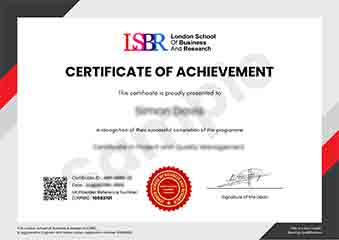
Sample Certificate
Preview the certificate you'll receive upon successful completion of this program.
Get Free Course Info
Receive detailed course information, curriculum breakdown, and career outcomes straight to your inbox.
Employer Sponsored?
Many employers cover professional development costs. Request a corporate invoice and we'll handle the rest. Bulk enrollment discounts available for teams of 3+.
Your Path to Certification
Four simple steps to your professionally recognised qualification
Enroll & Get Instant Access
Complete your enrollment and access course materials immediately
Study at Your Own Pace
Work through the modules on your schedule, from anywhere in the world
Complete Assessments
Demonstrate your knowledge through practical, real-world assessments
Receive Your Certificate
Get your official LSBR UK certificate, recognised across 180+ countries
Join Thousands Who Transformed Their Careers
Our graduates consistently report measurable career growth and professional advancement after completing their programmes.
What People Say About Us
Hear from our students about their experience with the Executive Development Programme in Historical Linguistics for Language Documentation at LSBR UK - Executive Education.
Charlotte Williams
United Kingdom"The course provided an in-depth exploration of historical linguistics, which significantly enhanced my analytical skills for language documentation. Gaining insights into language evolution and documentation techniques has been invaluable for my career in linguistic research."
Klaus Mueller
Germany"This course has significantly enhanced my understanding of historical linguistics, making me more competitive in the field of language documentation. The practical applications I've learned have directly contributed to my career advancement, allowing me to approach projects with a deeper historical perspective and more effective methodologies."
Jia Li Lim
Singapore"The course structure was meticulously organized, providing a clear pathway for understanding complex linguistic theories and their practical applications in language documentation. It offered a wealth of knowledge that significantly enhanced my analytical skills and broadened my perspective on the field."
Still deciding?
Join 23,000+ professionals who advanced their careers. Enroll today and start learning immediately.
Enroll NowSecure payment • Instant access • Certificate included