
Executive Development Programme in Mechanistic Modeling of Drug Interactions
This programme equips executives with advanced mechanistic modeling skills to predict and optimize drug interactions, enhancing drug development strategies and outcomes.
Executive Development Programme in Mechanistic Modeling of Drug Interactions
About This Course
The Executive Development Programme in Mechanistic Modeling of Drug Interactions is a comprehensive programme designed for pharmaceutical professionals, including researchers, pharmacologists, and regulatory affairs specialists, who seek to enhance their understanding of complex drug interactions through mechanistic modeling. This programme equips participants with advanced analytical tools and methodologies to predict and understand the effects of drugs on biological systems, which is crucial for the development and optimization of new therapeutic agents.
Participants will develop key skills in quantitative systems pharmacology, pharmacokinetics, pharmacodynamics, and the application of computational models to drug development. They will learn to use software tools and platforms for mechanistic modeling, interpret simulation results, and apply these insights to improve drug efficacy and safety. Additionally, the programme emphasizes the integration of mechanistic models into drug discovery and regulatory processes, providing a strategic advantage in drug development.
This programme significantly impacts career trajectories by positioning participants as leaders in their field. Graduates can expect to advance their roles in research and development, regulatory affairs, and clinical trials, contributing to the development of innovative and effective pharmaceutical treatments. The enhanced understanding and practical skills acquired will enable them to drive more informed decision-making, optimize drug development processes, and contribute to the improvement of patient outcomes.
What You Will Learn
The Executive Development Programme in Mechanistic Modeling of Drug Interactions is a cutting-edge initiative designed to equip pharmaceutical leaders with the advanced skills necessary to navigate the complexities of drug interactions. This program focuses on mechanistic modeling, a critical tool in understanding how drugs interact within the body and predict their efficacy and safety profiles.
Participants will delve into key topics such as pharmacokinetics, pharmacodynamics, and systems pharmacology, learning to apply mathematical models to real-world scenarios. Through interactive workshops and hands-on projects, graduates will gain proficiency in using state-of-the-art software and algorithms to simulate drug interactions, enabling them to make informed decisions in drug development and regulatory submissions.
By mastering these skills, program graduates will be well-prepared to lead research teams, contribute to innovative drug discovery projects, and enhance patient outcomes. The program also offers networking opportunities with industry leaders and access to cutting-edge research, opening doors to senior executive roles in pharmaceutical companies and regulatory agencies.
Whether advancing in current positions or transitioning into leadership roles, this programme provides the foundational knowledge and practical expertise needed to excel in the rapidly evolving field of mechanistic modeling in drug interactions.
Course Benefits
Industry-Aligned Curriculum
Developed with industry leaders for job-ready skills
Globally Recognised Certificate
Recognised by employers across 180+ countries
Flexible Online Learning
Study at your own pace with lifetime access
Instant Access
Start learning immediately, no application process
Constantly Updated Content
Latest industry trends and best practices
Career Advancement
87% report measurable career progression within 6 months
What This Course Covers
- Introduction to Drug Mechanistic Modeling: Provides an overview of the field and its importance in drug development.: Pharmacokinetic Principles: Discusses the basic principles of drug absorption, distribution, metabolism, and excretion.
- Pharmacodynamic Basics: Explains the relationship between drug concentration and effect.: Model Development Techniques: Covers strategies for building and validating mechanistic models.
- Case Studies in Drug Interactions: Analyzes real-world examples of drug interactions and their modeling.: Advanced Topics in Mechanistic Modeling: Explores cutting-edge methods and emerging trends in the field.
Everything You Get With This Course
Course Facts
Audience: Pharmaceutical scientists, pharmacologists
Prerequisites: Basic knowledge of pharmacokinetics, modeling
Outcomes: Enhanced mechanistic modeling skills, improved drug interaction analysis
Ready to Advance Your Career?
Join thousands of professionals who have transformed their careers with LSBR UK
Why This Course Is Right for You
Enhanced Predictive Capabilities: Participating in an Executive Development Programme in Mechanistic Modeling of Drug Interactions equips professionals with advanced analytical tools and predictive modeling techniques. These skills are crucial for predicting drug interactions accurately, which can significantly reduce the risk of adverse reactions and improve patient outcomes.
Strategic Decision-Making: The programme not only focuses on technical skills but also on strategic thinking. Participants learn to integrate mechanistic modeling into strategic decision-making processes, enabling them to make informed choices that can drive innovation and efficiency in drug development projects.
Interdisciplinary Collaboration: The programme fosters collaboration across different disciplines, including pharmacology, chemistry, and data science. This interdisciplinary approach is essential in the pharmaceutical industry, where successful drug development relies on seamless communication and collaboration among diverse teams.
Leadership Development: By enhancing technical expertise and strategic thinking, the programme supports the development of leadership skills. Professionals can better lead cross-functional teams and manage complex projects, contributing to the growth and success of their organizations.
3-4 Weeks
Study at your own pace
Course Brochure
Download our comprehensive course brochure with all details
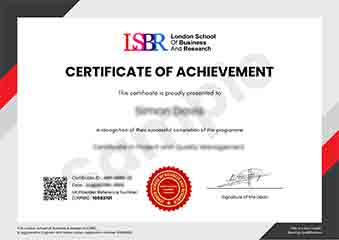
Sample Certificate
Preview the certificate you'll receive upon successful completion of this program.
Get Free Course Info
Receive detailed course information, curriculum breakdown, and career outcomes straight to your inbox.
Employer Sponsored?
Many employers cover professional development costs. Request a corporate invoice and we'll handle the rest. Bulk enrollment discounts available for teams of 3+.
How You Earn Your Certificate
Four simple steps to your professionally recognised qualification
Enroll & Get Instant Access
Complete your enrollment and access course materials immediately
Study at Your Own Pace
Work through the modules on your schedule, from anywhere in the world
Complete Assessments
Demonstrate your knowledge through practical, real-world assessments
Receive Your Certificate
Get your official LSBR UK certificate, recognised across 180+ countries
Real Results from Real Learners
Our graduates consistently report measurable career growth and professional advancement after completing their programmes.
Reviews from Our Learners
Hear from our students about their experience with the Executive Development Programme in Mechanistic Modeling of Drug Interactions at LSBR UK - Executive Education.
Oliver Davies
United Kingdom"The course content was incredibly thorough and well-organized, providing a solid foundation in mechanistic modeling that has significantly enhanced my ability to predict drug interactions. Gaining these practical skills has been invaluable, as I can now apply them directly to real-world scenarios, which is a huge career benefit."
Ruby McKenzie
Australia"This course has been instrumental in enhancing my understanding of mechanistic modeling, making my insights more valuable in drug development. It has directly contributed to my career advancement by equipping me with practical tools to analyze complex interactions, which are crucial in the pharmaceutical industry."
Kai Wen Ng
Singapore"The course structure was meticulously organized, providing a seamless transition from theoretical concepts to practical applications, which significantly enhanced my understanding of mechanistic modeling in drug interactions. The comprehensive content not only deepened my knowledge but also equipped me with valuable tools for addressing real-world challenges in the pharmaceutical industry."
Need more time to decide?
Join 23,000+ professionals who advanced their careers. Enroll today and start learning immediately.
Enroll NowSecure payment • Instant access • Certificate included