
Executive Development Programme in Morphological Variation and Taxonomy
This programme enhances leaders' understanding of morphological variation and taxonomy, boosting strategic decision-making and innovation.
Executive Development Programme in Morphological Variation and Taxonomy
About This Course
The Executive Development Programme in Morphological Variation and Taxonomy is designed for senior biologists, environmental scientists, and professionals in related fields who seek to enhance their expertise in the classification and analysis of biological diversity. This program focuses on deepening understanding of morphological variation and the principles of taxonomy, equipping participants with the skills necessary to contribute effectively to research and conservation efforts.
Participants will develop key skills in taxonomic identification, morphological analysis, and the application of modern computational tools to biodiversity studies. They will learn to apply taxonomic classification systems, understand the genetic basis of morphological variation, and use advanced molecular techniques for phylogenetic analysis. The program also emphasizes the importance of environmental and ecological factors in shaping morphological traits, preparing learners to conduct rigorous and comprehensive taxonomic studies.
This programme has a significant impact on career advancement, enabling participants to lead projects in biodiversity research, conservation, and policy development. Graduates will be better equipped to contribute to scientific publications, secure funding for research initiatives, and influence ecological management strategies. The programme also enhances leadership and communication skills, preparing professionals to mentor junior colleagues, collaborate across disciplines, and advocate for sustainable practices.
What You Will Learn
The Executive Development Programme in Morphological Variation and Taxonomy is a cutting-edge initiative designed to equip professionals with advanced skills in biodiversity analysis and conservation. This program bridges the gap between theoretical knowledge and practical application, offering a comprehensive exploration of morphological variation and taxonomy through a combination of lectures, hands-on workshops, and field research.
Participants will delve into the complexities of biodiversity, learning to identify, classify, and analyze species based on their morphological characteristics. The curriculum includes topics such as phylogenetic analysis, molecular taxonomy, and the impact of environmental changes on biodiversity. By mastering these skills, graduates can contribute to scientific research, conservation efforts, and policy-making in the field of biodiversity.
This program is invaluable for professionals seeking to enhance their expertise in taxonomic and morphological analysis, particularly in sectors such as environmental consulting, wildlife management, and academia. Graduates will be able to apply their knowledge to develop strategies for species conservation, conduct biodiversity assessments, and contribute to global conservation initiatives. The program’s focus on practical application ensures that participants are well-prepared to tackle real-world challenges in biodiversity management.
By the end of the program, participants will have a robust skill set that can be leveraged in various career paths, including roles such as taxonomists, biodiversity assessors, and conservation scientists. The program’s emphasis on interdisciplinary learning and fieldwork prepares participants to work in diverse settings, from local wildlife reserves to international conservation organizations.
Course Benefits
Industry-Aligned Curriculum
Developed with industry leaders for job-ready skills
Globally Recognised Certificate
Recognised by employers across 180+ countries
Flexible Online Learning
Study at your own pace with lifetime access
Instant Access
Start learning immediately, no application process
Constantly Updated Content
Latest industry trends and best practices
Career Advancement
87% report measurable career progression within 6 months
What This Course Covers
- Introduction to Morphology: Introduces the study of the structure of words.: Taxonomic Classification: Discusses systems and principles of classification.
- Comparative Linguistics: Examines similarities and differences among languages.: Data Collection Techniques: Outlines methods for collecting morphological data.
- Computational Tools: Explores software and algorithms used in morphological analysis.: Case Studies in Taxonomy: Analyzes real-world examples and applications.
Everything You Get With This Course
Course Facts
Target Audience: Biologists, taxonomists, researchers
Prerequisites: Basic knowledge of biology, taxonomy
Outcomes: Enhanced understanding of morphological variation, improved taxonomy skills
Ready to Advance Your Career?
Join thousands of professionals who have transformed their careers with LSBR UK
Why This Course Is Right for You
Enhance Career Versatility: An Executive Development Programme in Morphological Variation and Taxonomy can broaden professionals' skill sets, making them more adaptable in various roles. This program equips individuals with a deep understanding of biological classifications, which is valuable in fields such as biotechnology, environmental consultancy, and botanical research.
Strengthen Leadership Skills: The programme includes leadership modules that focus on strategic thinking, team management, and problem-solving. These skills are crucial for executives who need to lead interdisciplinary teams and manage complex projects. For instance, a leader with expertise in taxonomy can effectively manage conservation projects, ensuring they are scientifically sound and aligned with environmental goals.
Foster Strategic Insight: Professionals will gain a comprehensive knowledge of morphological variations and their implications for taxonomy. This understanding can be applied to develop strategic insights in areas like biodiversity conservation, genetic engineering, and personalized medicine. For example, insights from taxonomy can inform the development of targeted therapies in pharmacogenomics, enhancing the effectiveness of medical treatments.
Network with Industry Leaders: The programme offers opportunities to network with peers and experts from around the world. These connections can lead to collaborative opportunities, mentorship, and access to cutting-edge research. Professionals who participate in such programmes often find it easier to form strategic partnerships and stay at the forefront of their industry.
3-4 Weeks
Study at your own pace
Course Brochure
Download our comprehensive course brochure with all details
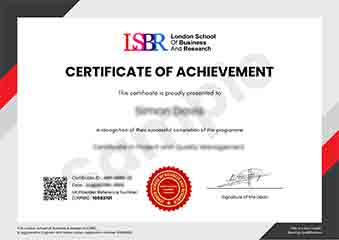
Sample Certificate
Preview the certificate you'll receive upon successful completion of this program.
Get Free Course Info
Receive detailed course information, curriculum breakdown, and career outcomes straight to your inbox.
Employer Sponsored?
Many employers cover professional development costs. Request a corporate invoice and we'll handle the rest. Bulk enrollment discounts available for teams of 3+.
How You Earn Your Certificate
Four simple steps to your professionally recognised qualification
Enroll & Get Instant Access
Complete your enrollment and access course materials immediately
Study at Your Own Pace
Work through the modules on your schedule, from anywhere in the world
Complete Assessments
Demonstrate your knowledge through practical, real-world assessments
Receive Your Certificate
Get your official LSBR UK certificate, recognised across 180+ countries
Real Results from Real Learners
Our graduates consistently report measurable career growth and professional advancement after completing their programmes.
Reviews from Our Learners
Hear from our students about their experience with the Executive Development Programme in Morphological Variation and Taxonomy at LSBR UK - Executive Education.
James Thompson
United Kingdom"The course provided an in-depth look at morphological variation and taxonomy, equipping me with practical skills to analyze and classify biological specimens effectively. It has significantly enhanced my ability to contribute to research and has opened up new career opportunities in the field."
Mei Ling Wong
Singapore"This course has significantly enhanced my ability to analyze and classify biological specimens, making me more competitive in the job market. The practical applications I've learned have directly contributed to my recent promotion to a senior research position."
Charlotte Williams
United Kingdom"The course structure was meticulously organized, providing a clear path from foundational concepts to advanced topics in morphological variation and taxonomy, which significantly enhanced my understanding and ability to apply these principles in real-world scenarios."
Need more time to decide?
Join 23,000+ professionals who advanced their careers. Enroll today and start learning immediately.
Enroll NowSecure payment • Instant access • Certificate included