
Executive Development Programme in Nutrient Cycling in Estuarine Environments
This program develops executives' expertise in nutrient cycling in estuarine environments, enhancing ecological management and sustainability strategies.
Executive Development Programme in Nutrient Cycling in Estuarine Environments
About This Course
The Executive Development Programme in Nutrient Cycling in Estuarine Environments is designed for environmental scientists, policy makers, and industry leaders who seek to advance their expertise in understanding and managing nutrient dynamics in estuarine ecosystems. This comprehensive programme integrates the latest research findings with practical applications, equipping participants with a deep understanding of nutrient cycling processes, their impacts on estuarine health, and the strategies for sustainable management.
Participants will develop advanced skills in scientific analysis, policy formulation, and stakeholder engagement, alongside a robust knowledge base in biogeochemistry, microbial ecology, and ecological modeling. They will learn to apply cutting-edge techniques in monitoring and assessing nutrient impacts, and will gain insight into the economic and social dimensions of estuarine management.
The programme significantly enhances career prospects by positioning participants as leaders in environmental stewardship. Graduates will be well-prepared to influence policy and practice, lead interdisciplinary teams, and drive innovation in sustainable management strategies for estuarine environments. This includes roles such as environmental consultants, policy advisors, research scientists, and program managers in government, non-profit organizations, and private sector companies.
What You Will Learn
The Executive Development Programme in Nutrient Cycling in Estuarine Environments is a comprehensive, two-year initiative designed for environmental professionals seeking to advance their expertise in estuarine ecosystems. This program equips participants with advanced knowledge in nutrient dynamics, ecological modeling, and adaptive management strategies. Key topics include the impact of freshwater and marine influences on nutrient cycles, the role of phytoplankton and benthic processes, and the effects of climate change on estuarine health.
Graduates of this program are well-prepared to lead projects in habitat restoration, policy development, and sustainable resource management. They gain practical skills in environmental assessment, stakeholder engagement, and the application of cutting-edge technologies for monitoring water quality. The program also focuses on leadership and strategic planning, enabling participants to drive change within their organizations and contribute to global environmental conservation efforts.
This program opens doors to careers in environmental consulting, government agencies, non-profit organizations, and academic institutions. Graduates can expect to secure roles as project managers, research scientists, or environmental policymakers, or they may choose to further their academic pursuits through advanced degrees. By the end of the program, participants will have the knowledge and skills to make a significant impact on the health and sustainability of estuarine environments worldwide.
Course Benefits
Industry-Aligned Curriculum
Developed with industry leaders for job-ready skills
Globally Recognised Certificate
Recognised by employers across 180+ countries
Flexible Online Learning
Study at your own pace with lifetime access
Instant Access
Start learning immediately, no application process
Constantly Updated Content
Latest industry trends and best practices
Career Advancement
87% report measurable career progression within 6 months
What This Course Covers
- Introduction to Nutrient Cycling: Introduces the fundamental concepts and importance of nutrient cycling in estuarine environments.: Biogeochemical Cycles: Examines the key biogeochemical cycles relevant to estuaries.
- Water Quality and Nutrient Sources: Discusses the sources and impacts of nutrients on water quality in estuaries.: Impact of Human Activities: Analyzes the influence of human activities on nutrient cycling and estuarine health.
- Case Studies in Nutrient Management: Reviews real-world case studies focusing on nutrient management strategies.: Future Trends and Challenges: Explores emerging trends and challenges in nutrient cycling research and management.
Everything You Get With This Course
Course Facts
Audience: Environmental scientists, conservationists, policymakers
Prerequisites: Basic understanding of ecology, environmental science
Outcomes: Advanced knowledge in nutrient cycling, practical application skills
Ready to Advance Your Career?
Join thousands of professionals who have transformed their careers with LSBR UK
Why This Course Is Right for You
Enhance Expertise: Participating in the Executive Development Programme in Nutrient Cycling in Estuarine Environments can significantly enhance your expertise in environmental management and policy. This program equips professionals with a deep understanding of nutrient dynamics, enabling them to develop more effective strategies for ecosystem health and sustainability.
Network with Leaders: The program provides a platform to connect with industry leaders, academics, and professionals from various organizations. These connections can lead to valuable collaborations and opportunities for career advancement, particularly in roles requiring interdisciplinary expertise and stakeholder engagement.
Practical Application of Knowledge: The curriculum focuses on real-world applications, offering hands-on experience and case studies that are relevant to the management of estuarine environments. This practical approach not only improves your problem-solving skills but also prepares you to address complex environmental challenges in a dynamic and responsive manner.
Leadership Development: The program emphasizes leadership and strategic thinking, crucial for advancing in executive roles. Participants learn to lead interdisciplinary teams, manage projects, and communicate effectively with stakeholders, which are essential skills for driving organizational change and environmental policy.
3-4 Weeks
Study at your own pace
Course Brochure
Download our comprehensive course brochure with all details
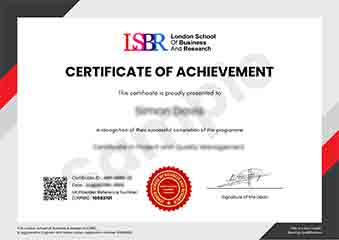
Sample Certificate
Preview the certificate you'll receive upon successful completion of this program.
Get Free Course Info
Receive detailed course information, curriculum breakdown, and career outcomes straight to your inbox.
Employer Sponsored?
Many employers cover professional development costs. Request a corporate invoice and we'll handle the rest. Bulk enrollment discounts available for teams of 3+.
How You Earn Your Certificate
Four simple steps to your professionally recognised qualification
Enroll & Get Instant Access
Complete your enrollment and access course materials immediately
Study at Your Own Pace
Work through the modules on your schedule, from anywhere in the world
Complete Assessments
Demonstrate your knowledge through practical, real-world assessments
Receive Your Certificate
Get your official LSBR UK certificate, recognised across 180+ countries
Real Results from Real Learners
Our graduates consistently report measurable career growth and professional advancement after completing their programmes.
Reviews from Our Learners
Hear from our students about their experience with the Executive Development Programme in Nutrient Cycling in Estuarine Environments at LSBR UK - Executive Education.
Sophie Brown
United Kingdom"The course content was incredibly comprehensive, providing deep insights into nutrient cycling in estuarine environments that significantly enhanced my understanding of aquatic ecosystems. Gaining practical skills in field sampling and data analysis has been invaluable, directly applicable to my work in environmental consulting."
Mei Ling Wong
Singapore"This course has significantly enhanced my understanding of nutrient cycling in estuarine environments, making my work in environmental consulting much more relevant and impactful. It has provided me with practical tools and insights that have directly contributed to advancing my career in coastal management."
Isabella Dubois
Canada"The course structure was meticulously organized, providing a clear pathway from foundational concepts to advanced topics in nutrient cycling, which greatly enhanced my understanding and application of the material in real-world estuarine settings. It offered a wealth of knowledge that has significantly contributed to my professional growth in environmental management."
Need more time to decide?
Join 23,000+ professionals who advanced their careers. Enroll today and start learning immediately.
Enroll NowSecure payment • Instant access • Certificate included