
Executive Development Programme in Pollinator Habitat Restoration: Best Practices
This programme equips executives with strategies for restoring pollinator habitats, enhancing biodiversity and improving corporate sustainability practices.
Executive Development Programme in Pollinator Habitat Restoration: Best Practices
About This Course
The Executive Development Programme in Pollinator Habitat Restoration: Best Practices is a comprehensive, month initiative designed for environmental executives, policymakers, conservationists, and anyone with a vested interest in sustainable land management and biodiversity enhancement. This program equips participants with the latest research and practical tools to restore and manage pollinator habitats effectively, addressing the critical role of pollinators in ecosystem health and agricultural productivity.
Key skills and knowledge developed through this program include advanced understanding of pollinator biology, the ecological importance of diverse habitats, and the latest methodologies for habitat restoration. Learners will master techniques for site assessment, design, implementation, and evaluation of pollinator habitats. They will also gain proficiency in stakeholder engagement and community-based conservation efforts, as well as the economic and policy implications of pollinator conservation.
This program has a significant impact on career progression, offering participants the opportunity to lead and influence large-scale conservation projects, policy development, and research initiatives. Graduates are well-prepared to drive innovation in sustainable land management, contribute to environmental policy, and spearhead community engagement in biodiversity conservation. The program fosters a network of professionals dedicated to the protection and enhancement of pollinator habitats, ensuring a sustainable future for ecosystems and agricultural systems alike.
What You Will Learn
The Executive Development Programme in Pollinator Habitat Restoration: Best Practices is a transformative initiative designed for professionals seeking to drive sustainability and biodiversity through innovative pollinator conservation. This program equips participants with the knowledge and skills to implement effective pollinator habitat restoration strategies in various settings, from urban green spaces to agricultural landscapes. Key topics include the science behind pollinator health, best practices for habitat creation, community engagement techniques, and policy advocacy.
Graduates of this program are well-prepared to lead projects that not only enhance biodiversity but also foster community involvement and long-term sustainability. They will learn to design, implement, and evaluate pollinator-friendly initiatives, ensuring that these projects align with broader environmental goals. The program also offers valuable networking opportunities, connecting participants with leading experts in the field and providing insights into advanced research and emerging trends.
With a growing demand for sustainable practices, graduates can pursue careers as environmental consultants, habitat restoration specialists, or policy advisors. This program opens doors to roles in governmental agencies, non-profit organizations, and private companies dedicated to environmental stewardship. By joining this program, professionals will be at the forefront of creating healthier ecosystems and spreading awareness about the critical role of pollinators in our world.
Course Benefits
Industry-Aligned Curriculum
Developed with industry leaders for job-ready skills
Globally Recognised Certificate
Recognised by employers across 180+ countries
Flexible Online Learning
Study at your own pace with lifetime access
Instant Access
Start learning immediately, no application process
Constantly Updated Content
Latest industry trends and best practices
Career Advancement
87% report measurable career progression within 6 months
What This Course Covers
- Foundational Concepts: Covers the core principles and key terminology.: Ecological Impact Analysis: Evaluates the effects of human activities on pollinator habitats.
- Site Assessment and Planning: Teaches how to conduct thorough site assessments and develop restoration plans.: Habitat Restoration Techniques: Demonstrates various methods for restoring pollinator habitats.
- Community Engagement and Partnerships: Focuses on building and maintaining relationships with local communities.: Monitoring and Evaluation: Discusses strategies for measuring the success of restoration projects.
Everything You Get With This Course
Course Facts
Audience: Environmental managers, conservationists, policy makers
Prerequisites: Basic knowledge of ecology, habitat restoration
Outcomes: Enhanced habitat restoration skills, network expansion, best practice insights
Ready to Advance Your Career?
Join thousands of professionals who have transformed their careers with LSBR UK
Why This Course Is Right for You
Enhance Leadership and Strategic Thinking: Participating in the Executive Development Programme in Pollinator Habitat Restoration equips professionals with the strategic mindset necessary to develop and implement large-scale environmental initiatives. This program provides frameworks for sustainable land management and biodiversity enhancement, which are valuable skills for leadership roles in corporate social responsibility and environmental departments.
Specialized Knowledge in Ecological Management: The programme offers in-depth knowledge of pollinator habitats and the best practices for their restoration. This expertise can enhance career prospects in fields such as environmental consulting, conservation, and sustainability management. It also opens doors to new job opportunities in industries that prioritize ecological sustainability.
Development of Interdisciplinary Skills: The programme integrates knowledge from ecology, horticulture, and environmental science with business and project management skills. This interdisciplinary approach fosters a holistic understanding of environmental challenges and solutions, enabling professionals to collaborate effectively across various departments and disciplines. Such skills are particularly valuable in roles that require cross-functional teamwork and innovation.
3-4 Weeks
Study at your own pace
Course Brochure
Download our comprehensive course brochure with all details
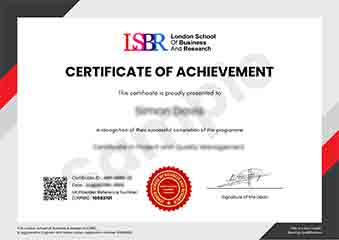
Sample Certificate
Preview the certificate you'll receive upon successful completion of this program.
Get Free Course Info
Receive detailed course information, curriculum breakdown, and career outcomes straight to your inbox.
Employer Sponsored?
Many employers cover professional development costs. Request a corporate invoice and we'll handle the rest. Bulk enrollment discounts available for teams of 3+.
How You Earn Your Certificate
Four simple steps to your professionally recognised qualification
Enroll & Get Instant Access
Complete your enrollment and access course materials immediately
Study at Your Own Pace
Work through the modules on your schedule, from anywhere in the world
Complete Assessments
Demonstrate your knowledge through practical, real-world assessments
Receive Your Certificate
Get your official LSBR UK certificate, recognised across 180+ countries
Real Results from Real Learners
Our graduates consistently report measurable career growth and professional advancement after completing their programmes.
Reviews from Our Learners
Hear from our students about their experience with the Executive Development Programme in Pollinator Habitat Restoration: Best Practices at LSBR UK - Executive Education.
Sophie Brown
United Kingdom"The course provided an in-depth look at the latest best practices in pollinator habitat restoration, equipping me with practical skills to implement effective conservation strategies in real-world scenarios. Gaining this knowledge has significantly enhanced my career prospects in environmental management."
Liam O'Connor
Australia"This course has significantly enhanced my understanding of pollinator habitat restoration and provided me with practical tools to implement best practices in the field. It has not only broadened my knowledge but also opened up new career opportunities in environmental consultancy."
Rahul Singh
India"The course structure was meticulously organized, providing a clear pathway for understanding the complexities of pollinator habitat restoration. The knowledge gained has been incredibly beneficial, offering practical insights that can be directly applied to enhance biodiversity in various ecosystems."
Need more time to decide?
Join 23,000+ professionals who advanced their careers. Enroll today and start learning immediately.
Enroll NowSecure payment • Instant access • Certificate included