
Executive Development Programme in Water Quality Reporting and Journalism
Enhance skills in water quality reporting and journalism, providing in-depth knowledge and practical tools for effective communication and advocacy.
Executive Development Programme in Water Quality Reporting and Journalism
About This Course
The Executive Development Programme in Water Quality Reporting and Journalism is designed for professionals in the water sector, journalists, policymakers, and environmental advocates who aim to enhance their expertise in water quality reporting and journalism. This comprehensive program equips participants with the advanced skills necessary to navigate the complexities of water quality issues, including the ability to critically analyze data, understand regulatory frameworks, and effectively communicate scientific information to diverse audiences.
Participants will develop key skills in water quality assessment, data interpretation, reporting techniques, and multimedia storytelling. They will learn to use advanced tools and software for data analysis, conduct in-depth research on water quality issues, and craft compelling narratives that address the public health, environmental, and economic impacts of water quality. The program also emphasizes the ethical considerations in reporting on sensitive environmental issues and the importance of precision and accuracy in storytelling.
Upon completion of the programme, participants will be well-equipped to lead water quality initiatives, report on critical issues affecting water resources, and influence policy decisions. This will enable them to make significant contributions to water sustainability efforts and to advocate for the protection and management of water resources at local, national, and international levels.
What You Will Learn
Embark on a transformative journey with the 'Executive Development Programme in Water Quality Reporting and Journalism.' This cutting-edge programme equips professionals with the expertise to navigate the complex landscape of water quality issues, ensuring they can effectively communicate the importance of sustainable water management. The curriculum covers essential topics such as water chemistry, regulatory frameworks, public health implications, and advanced data analysis techniques, preparing participants to tackle real-world challenges.
Participants will learn to craft compelling narratives that inform and empower communities, driving meaningful change. Through hands-on workshops, case studies, and expert-led sessions, the programme fosters a deep understanding of the technical and ethical aspects of water quality reporting. Graduates will be adept at using multimedia tools to tell impactful stories, enhancing their ability to advocate for policy changes and public awareness.
This programme opens doors to diverse career opportunities, including roles as environmental journalists, water quality analysts, and sustainability communicators. Alumni will be well-prepared to lead initiatives that promote transparency and accountability in water management, contributing to global efforts in environmental stewardship. Join a network of driven professionals committed to making a difference in the quest for clean, accessible water for all.
Course Benefits
Industry-Aligned Curriculum
Developed with industry leaders for job-ready skills
Globally Recognised Certificate
Recognised by employers across 180+ countries
Flexible Online Learning
Study at your own pace with lifetime access
Instant Access
Start learning immediately, no application process
Constantly Updated Content
Latest industry trends and best practices
Career Advancement
87% report measurable career progression within 6 months
What This Course Covers
- Introduction to Water Quality: Provides an overview of water quality issues and their significance.: Regulatory Frameworks: Discusses legal and regulatory aspects governing water quality.
- Data Collection and Analysis: Teaches methods for collecting and analyzing water quality data.: Reporting Techniques: Focuses on effective communication of water quality issues through journalism.
- Case Studies in Water Quality Journalism: Analyzes successful and unsuccessful reporting on water quality issues.: Stakeholder Engagement: Explains strategies for engaging with various stakeholders in water quality reporting.
Everything You Get With This Course
Course Facts
Audience: Environmental journalists, water quality experts
Prerequisites: Basic journalism or environmental science knowledge
Outcomes: Enhanced skills in water quality reporting, credible journalism practices
Ready to Advance Your Career?
Join thousands of professionals who have transformed their careers with LSBR UK
Why This Course Is Right for You
Enhanced Expertise and Marketability: The Executive Development Programme in Water Quality Reporting and Journalism equips professionals with advanced knowledge in water quality reporting. This deepens their expertise, making them more competitive in the job market. Participants learn to analyze complex data, understand environmental regulations, and communicate findings effectively, which are highly valued by employers in journalism, environmental consulting, and government agencies.
Strong Communication Skills: The programme focuses on developing strong communication skills, crucial for journalists and data analysts. Through hands-on workshops and real-world case studies, participants learn to write compelling stories, create infographics, and present data in a way that is accessible to a wide audience. This not only enhances their reporting skills but also improves their ability to advocate for environmental issues.
Networking Opportunities: The programme offers exclusive networking opportunities, connecting professionals with industry leaders, policymakers, and fellow experts. These connections can lead to collaborative projects, job opportunities, and mentorship. For instance, alumni often report receiving offers from prestigious media outlets and environmental organizations shortly after completing the programme.
Ethical Reporting and Advocacy: Participants are trained in ethical reporting and responsible journalism, which is critical in the field of water quality. They learn to balance the need for accurate reporting with the societal impact of their work. This training ensures that graduates are well-prepared to report on water issues with integrity and a commitment to public interest, thereby contributing positively to environmental discourse and policy-making.
3-4 Weeks
Study at your own pace
Course Brochure
Download our comprehensive course brochure with all details
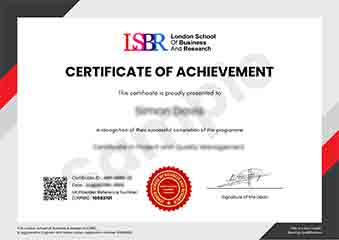
Sample Certificate
Preview the certificate you'll receive upon successful completion of this program.
Get Free Course Info
Receive detailed course information, curriculum breakdown, and career outcomes straight to your inbox.
Employer Sponsored?
Many employers cover professional development costs. Request a corporate invoice and we'll handle the rest. Bulk enrollment discounts available for teams of 3+.
How You Earn Your Certificate
Four simple steps to your professionally recognised qualification
Enroll & Get Instant Access
Complete your enrollment and access course materials immediately
Study at Your Own Pace
Work through the modules on your schedule, from anywhere in the world
Complete Assessments
Demonstrate your knowledge through practical, real-world assessments
Receive Your Certificate
Get your official LSBR UK certificate, recognised across 180+ countries
Real Results from Real Learners
Our graduates consistently report measurable career growth and professional advancement after completing their programmes.
Reviews from Our Learners
Hear from our students about their experience with the Executive Development Programme in Water Quality Reporting and Journalism at LSBR UK - Executive Education.
Oliver Davies
United Kingdom"The course content was incredibly comprehensive, covering everything from water quality testing to advanced reporting techniques, which significantly enhanced my analytical and investigative skills. Gaining hands-on experience in data analysis and storytelling has been invaluable for my career in environmental journalism."
Jack Thompson
Australia"The Executive Development Programme in Water Quality Reporting and Journalism has been incredibly impactful, equipping me with the latest tools and techniques in water quality reporting that are directly applicable in the field. This program has not only enhanced my professional skills but also opened up new career opportunities in environmental journalism."
Jia Li Lim
Singapore"The course structure is well-organized, providing a comprehensive overview of water quality reporting that seamlessly bridges theoretical knowledge with practical applications, enhancing my ability to report on environmental issues effectively."
Need more time to decide?
Join 23,000+ professionals who advanced their careers. Enroll today and start learning immediately.
Enroll NowSecure payment • Instant access • Certificate included