
Global Certificate in Building Resilient Infrastructure Using Hydrodynamic Tools
This global certificate equips professionals with skills to build resilient infrastructure using advanced hydrodynamic tools, enhancing disaster preparedness and response.
Global Certificate in Building Resilient Infrastructure Using Hydrodynamic Tools
About This Course
The Global Certificate in Building Resilient Infrastructure Using Hydrodynamic Tools is an intensive, eight-month programme designed for civil engineers, environmental scientists, and urban planners aiming to enhance their expertise in designing and managing infrastructure that withstands hydrodynamic challenges. This programme equips participants with a deep understanding of hydrodynamic principles, risk assessment methodologies, and advanced tools for infrastructure resilience.
Upon completion, learners will develop specialized skills in interpreting hydrodynamic data, integrating climate change projections into infrastructure planning, and selecting appropriate hydrodynamic models and tools for various geographic and environmental settings. They will also gain proficiency in conducting vulnerability assessments, developing adaptive management strategies, and ensuring compliance with international standards for sustainable infrastructure.
This programme significantly impacts career trajectories by qualifying graduates to lead projects in resilient infrastructure design, manage flood mitigation efforts, and contribute to policy development in disaster risk reduction and climate adaptation. Participants are well-prepared to address the complex challenges posed by climate change and extreme weather events, making them valuable assets in both public and private sectors.
What You Will Learn
The Global Certificate in Building Resilient Infrastructure Using Hydrodynamic Tools is a transformative program designed to equip professionals with the skills necessary to design, implement, and maintain resilient infrastructure in the face of environmental challenges. This program leverages cutting-edge hydrodynamic tools and methodologies to address complex issues such as flood risk management, coastal protection, and water resource sustainability.
Key topics include advanced hydrodynamic modeling, environmental impact assessment, sustainable infrastructure design, and policy and regulatory frameworks. Participants will learn to use hydrodynamic simulation software to predict and mitigate the effects of extreme weather events, enhancing the resilience of critical infrastructure.
Upon completion, graduates will be well-prepared to apply these skills in real-world scenarios, contributing to the development of resilient communities and ecosystems. They can work with government agencies, environmental consulting firms, and international organizations to create sustainable solutions that protect against natural disasters and promote long-term environmental health.
This program opens doors to diverse career opportunities, including roles as hydrodynamic modelers, sustainability consultants, and infrastructure planners. Graduates will also be well-positioned to pursue advanced studies in civil engineering, environmental science, and disaster management, furthering their expertise and impacting global infrastructure resilience initiatives.
Course Benefits
Industry-Aligned Curriculum
Developed with industry leaders for job-ready skills
Globally Recognised Certificate
Recognised by employers across 180+ countries
Flexible Online Learning
Study at your own pace with lifetime access
Instant Access
Start learning immediately, no application process
Constantly Updated Content
Latest industry trends and best practices
Career Advancement
87% report measurable career progression within 6 months
What This Course Covers
- Introduction to Resilient Infrastructure: Introduces the concept of resilient infrastructure and its importance in the face of environmental challenges.: Hydrodynamic Principles: Covers the fundamental principles of hydrodynamics and their relevance to infrastructure design.
- Risk Assessment Techniques: Focuses on methods for assessing the risks associated with hydrodynamic events on infrastructure.: Design for Resilience: Discusses best practices for designing infrastructure to be resilient against hydrodynamic forces.
- Case Studies in Hydrodynamic Tools: Examines real-world applications of hydrodynamic tools in infrastructure resilience.: Future Trends and Innovations: Explores emerging technologies and trends in the use of hydrodynamic tools for infrastructure resilience.
Everything You Get With This Course
Course Facts
Audience: Engineers, architects, urban planners
Prerequisites: Basic knowledge of infrastructure design
Outcomes: Understand hydrodynamic tools, enhance resilience
Ready to Advance Your Career?
Join thousands of professionals who have transformed their careers with LSBR UK
Why This Course Is Right for You
The Global Certificate in Building Resilient Infrastructure Using Hydrodynamic Tools equips professionals with advanced skills in managing and mitigating risks associated with coastal and marine environments. This is particularly crucial as climate change intensifies, leading to more frequent and severe natural disasters. Participants learn to apply hydrodynamic models and tools to predict and manage flood risks, ensuring infrastructure remains functional during extreme weather events.
This certification enhances career prospects by aligning with the growing demand for professionals skilled in sustainable and resilient infrastructure development. Graduates can work in sectors such as urban planning, environmental engineering, and disaster risk reduction, where demand for expertise in hydrodynamic analysis is increasing. The skills gained are highly relevant for roles such as hydrological engineers, environmental consultants, and disaster management specialists.
The program fosters a deep understanding of the latest technologies and methodologies in hydrodynamic risk assessment. This knowledge is not only valuable for addressing immediate challenges but also for future-proofing projects against evolving environmental threats. By staying updated with cutting-edge tools and practices, professionals can contribute to more resilient and sustainable urban development, infrastructure design, and climate adaptation strategies.
3-4 Weeks
Study at your own pace
Course Brochure
Download our comprehensive course brochure with all details
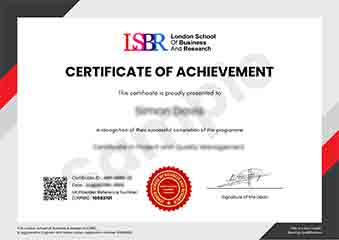
Sample Certificate
Preview the certificate you'll receive upon successful completion of this program.
Get Free Course Info
Receive detailed course information, curriculum breakdown, and career outcomes straight to your inbox.
Employer Sponsored?
Many employers cover professional development costs. Request a corporate invoice and we'll handle the rest. Bulk enrollment discounts available for teams of 3+.
How You Earn Your Certificate
Four simple steps to your professionally recognised qualification
Enroll & Get Instant Access
Complete your enrollment and access course materials immediately
Study at Your Own Pace
Work through the modules on your schedule, from anywhere in the world
Complete Assessments
Demonstrate your knowledge through practical, real-world assessments
Receive Your Certificate
Get your official LSBR UK certificate, recognised across 180+ countries
Real Results from Real Learners
Our graduates consistently report measurable career growth and professional advancement after completing their programmes.
Reviews from Our Learners
Hear from our students about their experience with the Global Certificate in Building Resilient Infrastructure Using Hydrodynamic Tools at LSBR UK - Executive Education.
Charlotte Williams
United Kingdom"The course content is incredibly comprehensive, covering all the essential aspects of building resilient infrastructure using hydrodynamic tools. I've gained valuable practical skills that will undoubtedly enhance my ability to tackle real-world challenges in the field."
Fatimah Ibrahim
Malaysia"This course has been instrumental in enhancing my understanding of hydrodynamic tools and their application in building resilient infrastructure. It has not only provided me with industry-relevant skills but also opened up new opportunities for career advancement in the field."
Rahul Singh
India"The course structure is well-organized, providing a clear path from foundational concepts to advanced applications in hydrodynamic modeling, which significantly enhances my understanding and prepares me for real-world challenges in infrastructure resilience."
Need more time to decide?
Join 23,000+ professionals who advanced their careers. Enroll today and start learning immediately.
Enroll NowSecure payment • Instant access • Certificate included