
Global Certificate in Computational Seismology and Dynamics
This global certificate program equips learners with advanced computational skills in seismology and dynamics, enhancing analytical and predictive capabilities in earth sciences.
Global Certificate in Computational Seismology and Dynamics
About This Course
The Global Certificate in Computational Seismology and Dynamics is a comprehensive program designed for professionals and students seeking to enhance their expertise in the application of computational methods to seismology and geophysical dynamics. This program is ideal for individuals with a background in geophysics, engineering, or related fields who wish to deepen their understanding of seismic data analysis, modeling, and interpretation. The curriculum is structured to provide a robust foundation in both theoretical and practical aspects of computational seismology, encompassing topics such as seismic wave propagation, numerical methods, and the integration of machine learning techniques in seismic data processing.
Participants will develop a wide range of key skills, including advanced numerical modeling, data analysis, and interpretative techniques. They will learn to use state-of-the-art computational tools and software for simulating seismic events, analyzing complex geophysical data sets, and predicting seismic activity. Additionally, learners will gain proficiency in interdisciplinary approaches, integrating geophysical data with other scientific and engineering disciplines to address real-world challenges in earthquake engineering, structural dynamics, and natural hazard assessment.
This program significantly impacts careers in the fields of geophysics, earthquake engineering, and environmental science, equipping graduates with the skills necessary to contribute to cutting-edge research, develop innovative solutions for seismic risk management, and advance the field through enhanced predictive capabilities and data-driven decision-making.
What You Will Learn
The Global Certificate in Computational Seismology and Dynamics is an intensive, cutting-edge program designed to empower professionals and students with the advanced skills necessary to advance our understanding of seismic phenomena. This program integrates theoretical knowledge with practical computational techniques, offering a unique blend of disciplines including geophysics, computational science, and applied mathematics.
Key topics covered include wave propagation in heterogeneous media, finite difference and spectral element methods, and advanced data analysis techniques. Students will have access to state-of-the-art computational tools and resources, enabling them to model seismic events and analyze complex geological structures. The curriculum is designed to foster innovation and critical thinking, preparing graduates to tackle real-world challenges in seismology, earthquake engineering, and geological exploration.
Graduates of this program are well-equipped to apply their skills in various sectors. They can work in academia, research institutions, government agencies, and private companies involved in energy exploration, disaster management, and structural safety. Potential career paths include seismologist, computational geophysicist, data analyst, and research scientist. The program also offers invaluable networking opportunities, connecting students with leading experts in the field and potential mentors for future projects and career development.
Course Benefits
Industry-Aligned Curriculum
Developed with industry leaders for job-ready skills
Globally Recognised Certificate
Recognised by employers across 180+ countries
Flexible Online Learning
Study at your own pace with lifetime access
Instant Access
Start learning immediately, no application process
Constantly Updated Content
Latest industry trends and best practices
Career Advancement
87% report measurable career progression within 6 months
What This Course Covers
- Foundational Concepts: Covers the core principles and key terminology.: Wave Propagation: Investigates the behavior of waves in different media.
- Seismic Source Mechanics: Analyzes the mechanisms of earthquake generation.: Seismic Data Acquisition: Explains methods for collecting seismic data.
- Data Processing and Inversion: Teaches techniques for processing and interpreting seismic data.: Applications in Exploration and Hazard Assessment: Discusses the use of computational seismology in resource exploration and natural hazard assessment.
Everything You Get With This Course
Course Facts
For professionals and students in geophysics, engineering, and computational science
Basic knowledge of calculus, linear algebra, and programming
Proficiency in computational methods for seismic data processing
Understanding of seismic wave propagation and modeling
Ability to apply computational techniques to seismology and dynamics problems
Ready to Advance Your Career?
Join thousands of professionals who have transformed their careers with LSBR UK
Why This Course Is Right for You
The Global Certificate in Computational Seismology and Dynamics equips professionals with advanced computational skills specifically tailored for seismic analysis. This includes proficiency in using state-of-the-art software tools, which are essential for interpreting seismic data and predicting natural disasters. Such skills are highly valued in the oil and gas industry, where accurate seismic interpretation can significantly enhance resource exploration and management.
Upon completion, participants gain a deep understanding of the theoretical foundations and practical applications of computational seismology and dynamics. This knowledge base is crucial for developing innovative solutions to complex problems, such as improving the resolution of seismic images or optimizing the design of seismometers. These capabilities are in high demand in research institutions and industrial sectors, offering professionals a competitive edge in their careers.
The certificate program also emphasizes interdisciplinary collaboration, fostering a network of professionals from various fields. This network provides opportunities for joint projects, shared research, and collaborative problem-solving. Such collaborations are pivotal in advancing the field of seismology, leading to breakthroughs that can have far-reaching impacts on disaster mitigation, environmental studies, and resource management.
3-4 Weeks
Study at your own pace
Course Brochure
Download our comprehensive course brochure with all details
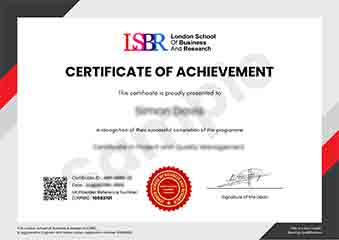
Sample Certificate
Preview the certificate you'll receive upon successful completion of this program.
Get Free Course Info
Receive detailed course information, curriculum breakdown, and career outcomes straight to your inbox.
Employer Sponsored?
Many employers cover professional development costs. Request a corporate invoice and we'll handle the rest. Bulk enrollment discounts available for teams of 3+.
How You Earn Your Certificate
Four simple steps to your professionally recognised qualification
Enroll & Get Instant Access
Complete your enrollment and access course materials immediately
Study at Your Own Pace
Work through the modules on your schedule, from anywhere in the world
Complete Assessments
Demonstrate your knowledge through practical, real-world assessments
Receive Your Certificate
Get your official LSBR UK certificate, recognised across 180+ countries
Real Results from Real Learners
Our graduates consistently report measurable career growth and professional advancement after completing their programmes.
Reviews from Our Learners
Hear from our students about their experience with the Global Certificate in Computational Seismology and Dynamics at LSBR UK - Executive Education.
Sophie Brown
United Kingdom"The course content is incredibly thorough and well-structured, providing a solid foundation in computational seismology and dynamics that has significantly enhanced my analytical and modeling skills. I've gained practical knowledge that I can directly apply to real-world problems, which is invaluable for my career in seismic risk assessment."
Oliver Davies
United Kingdom"This course has been instrumental in enhancing my understanding of computational methods in seismology, making me more competitive in the job market. It provided practical tools and insights that I've directly applied to real-world problems, significantly advancing my career in earthquake engineering."
Sophie Brown
United Kingdom"The course structure is meticulously organized, providing a seamless transition from theoretical concepts to practical applications in computational seismology and dynamics, which has significantly enhanced my understanding and prepared me for real-world challenges."
Need more time to decide?
Join 23,000+ professionals who advanced their careers. Enroll today and start learning immediately.
Enroll NowSecure payment • Instant access • Certificate included