
Global Certificate in Ethical Considerations in Aquatic Conservation
Enhance your professional profile with advanced ethical considerations in aquatic conservation competencies. Stand out in today's competitive market.
Global Certificate in Ethical Considerations in Aquatic Conservation
About This Course
The Global Certificate in Ethical Considerations in Aquatic Conservation is a comprehensive programme designed for professionals, researchers, and students dedicated to the field of aquatic conservation. This programme delves into the intricate challenges and ethical dilemmas faced in marine and freshwater ecosystems, covering topics such as biodiversity preservation, sustainable fishing practices, and climate change mitigation. It provides a solid foundation for understanding the social, environmental, and economic impacts of conservation efforts, fostering a holistic approach to aquatic resource management.
Participants will develop key skills in ethical analysis, policy formulation, and community engagement, enabling them to navigate complex stakeholder dynamics and implement effective conservation strategies. The curriculum emphasizes critical thinking, research methodology, and practical problem-solving, ensuring that learners can apply ethical frameworks to real-world scenarios. By the end of the programme, learners will be equipped to lead and participate in interdisciplinary teams, advocating for evidence-based policies and sustainable practices in aquatic conservation.
This programme significantly impacts careers in environmental science, policy, and management, offering valuable insights for professionals aiming to make a tangible difference in aquatic conservation efforts. Graduates can pursue roles in governmental agencies, non-profit organizations, and private sector companies, contributing to the global initiative to protect and restore aquatic ecosystems.
What You Will Learn
Embark on a transformative journey with the Global Certificate in Ethical Considerations in Aquatic Conservation, a pioneering program designed to equip you with the knowledge and skills essential for addressing complex ethical challenges in aquatic conservation. This program, tailored for professionals and students alike, delves into critical topics such as marine biodiversity, sustainable fisheries, and the moral implications of conservation practices. By exploring case studies from around the world, you will gain a deep understanding of the ecological, social, and economic dimensions of aquatic conservation.
Through interactive workshops and collaborative projects, participants learn to apply ethical frameworks to real-world scenarios, fostering a balanced approach to conservation that respects both environmental integrity and human needs. The curriculum emphasizes practical skills in policy analysis, stakeholder engagement, and community-based conservation strategies, preparing graduates to lead initiatives that promote sustainable and equitable use of aquatic resources.
Upon completion, you will be well-positioned to pursue careers in environmental organizations, government agencies, non-profits, and private sector firms focused on aquatic conservation. The program also provides pathways for further academic pursuits, such as a Master’s degree in Environmental Policy or Marine Biology. Whether you are a dedicated conservationist, a policy maker, or a concerned citizen, this certificate will empower you to contribute meaningfully to the global effort to protect our oceans and rivers for future generations.
Course Benefits
Industry-Aligned Curriculum
Developed with industry leaders for job-ready skills
Globally Recognised Certificate
Recognised by employers across 180+ countries
Flexible Online Learning
Study at your own pace with lifetime access
Instant Access
Start learning immediately, no application process
Constantly Updated Content
Latest industry trends and best practices
Career Advancement
87% report measurable career progression within 6 months
What This Course Covers
- Foundational Concepts: Covers the core principles and key terminology.: Historical Context: Examines the evolution of aquatic conservation ethics.
- Legal and Policy Frameworks: Analyzes international and national laws affecting aquatic ecosystems.: Stakeholder Engagement: Discusses strategies for involving diverse communities in conservation efforts.
- Technological Innovations: Investigates the role of technology in addressing ethical challenges.: Case Studies: Reviews real-world examples of ethical dilemmas and resolutions in aquatic conservation.
Everything You Get With This Course
Course Facts
Audience: Environmental professionals, conservationists, policymakers
Prerequisites: Basic knowledge of ecology, conservation science
Outcomes: Understand ethical frameworks, develop responsible practices, enhance policy advocacy skills
Ready to Advance Your Career?
Join thousands of professionals who have transformed their careers with LSBR UK
Why This Course Is Right for You
Enhance Expertise and Career Prospects: Obtaining the Global Certificate in Ethical Considerations in Aquatic Conservation demonstrates a deep commitment to ethical practices in conservation. This certificate is particularly valuable for professionals in marine biology, fisheries management, and environmental policy, as it equips them with a comprehensive understanding of ethical frameworks and their application in aquatic conservation efforts. This expertise can lead to advanced career opportunities and positions that require leadership in ethical decision-making.
Strengthen Ethical Decision-Making Skills: The course focuses on developing robust ethical reasoning and decision-making skills, which are crucial for addressing complex issues in aquatic conservation. By learning to consider the ethical implications of conservation actions, professionals can make more informed and responsible decisions that balance ecological, social, and economic factors. These skills are directly applicable in roles that involve policy development, research, and community engagement.
Foster Interdisciplinary Collaboration: The certificate emphasizes the importance of interdisciplinary collaboration in addressing ethical challenges in aquatic conservation. This promotes a more holistic approach to environmental issues, which can lead to more effective conservation strategies. Professionals who have completed this course are better equipped to work collaboratively with scientists, policymakers, community members, and other stakeholders, contributing to more sustainable and equitable conservation practices.
3-4 Weeks
Study at your own pace
Course Brochure
Download our comprehensive course brochure with all details
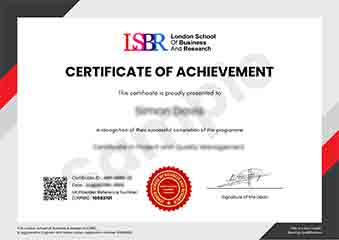
Sample Certificate
Preview the certificate you'll receive upon successful completion of this program.
Get Free Course Info
Receive detailed course information, curriculum breakdown, and career outcomes straight to your inbox.
Employer Sponsored?
Many employers cover professional development costs. Request a corporate invoice and we'll handle the rest. Bulk enrollment discounts available for teams of 3+.
How You Earn Your Certificate
Four simple steps to your professionally recognised qualification
Enroll & Get Instant Access
Complete your enrollment and access course materials immediately
Study at Your Own Pace
Work through the modules on your schedule, from anywhere in the world
Complete Assessments
Demonstrate your knowledge through practical, real-world assessments
Receive Your Certificate
Get your official LSBR UK certificate, recognised across 180+ countries
Real Results from Real Learners
Our graduates consistently report measurable career growth and professional advancement after completing their programmes.
Reviews from Our Learners
Hear from our students about their experience with the Global Certificate in Ethical Considerations in Aquatic Conservation at LSBR UK - Executive Education.
James Thompson
United Kingdom"The course provided an in-depth look at the ethical considerations in aquatic conservation, equipping me with a robust understanding of the environmental, social, and economic impacts of conservation efforts. Gaining insights into real-world case studies helped me develop critical thinking skills and a practical approach to addressing complex conservation challenges."
Sophie Brown
United Kingdom"This course has been incredibly valuable, equipping me with a deep understanding of ethical considerations in aquatic conservation that are directly applicable to my role in marine biology. It has not only enhanced my professional skills but also opened up new career opportunities in the field."
Klaus Mueller
Germany"The course structure is well-organized, providing a clear pathway to understanding complex ethical considerations in aquatic conservation, which has significantly enhanced my knowledge and perspective on the subject. The comprehensive content and real-world applications have been particularly beneficial, offering practical insights that are directly applicable to my future career in environmental management."
Need more time to decide?
Join 23,000+ professionals who advanced their careers. Enroll today and start learning immediately.
Enroll NowSecure payment • Instant access • Certificate included