
Global Certificate in Nutrient Cycling in Estuarine Systems
This global certificate program equips professionals with knowledge on nutrient cycling in estuarine systems, enhancing ecological management and conservation skills.
Global Certificate in Nutrient Cycling in Estuarine Systems
About This Course
The Global Certificate in Nutrient Cycling in Estuarine Systems is designed for environmental scientists, ecological researchers, and policymakers with an interest in coastal ecosystems. This program provides an in-depth exploration of the complex processes and interactions that govern nutrient cycling within estuarine environments, which are critical for the health and productivity of these ecosystems. Participants will gain a comprehensive understanding of the biogeochemical cycles of essential nutrients, such as nitrogen and phosphorus, and their impact on the ecological balance of estuarine systems.
Throughout the program, learners will develop key skills in assessing nutrient loadings, evaluating the impacts of human activities on nutrient cycling, and applying management strategies to mitigate nutrient pollution. They will also learn to integrate data from various sources, including remote sensing, water quality monitoring, and field analysis, to model and predict nutrient dynamics in estuarine systems. These skills will enable participants to contribute effectively to interdisciplinary research projects, environmental management plans, and policy development aimed at preserving and restoring estuarine ecosystems.
The certificate will significantly enhance career opportunities in academic research, environmental consultancy, government agencies, and non-profit organizations focused on marine and coastal conservation. Graduates will be well-equipped to pursue roles such as estuarine ecologists, environmental scientists, and policy analysts, where they can play a critical role in advancing our understanding of nutrient cycling and developing sustainable solutions for managing estuarine resources.
What You Will Learn
The Global Certificate in Nutrient Cycling in Estuarine Systems is a transformative educational program designed for professionals and students seeking to understand and manage nutrient dynamics in estuarine environments. This program equips participants with a deep understanding of estuarine ecosystems, including the biogeochemical cycles of nitrogen, phosphorus, and carbon, and their impacts on water quality and marine life.
Key topics include nutrient sources, transport mechanisms, and ecological impacts, as well as advanced techniques for monitoring and modeling nutrient cycles. Through a combination of online lectures, interactive workshops, and hands-on fieldwork, students will gain practical skills in data analysis, environmental sampling, and ecological modeling.
Graduates of this program are well-prepared to apply their knowledge in a variety of settings, from governmental agencies and non-profit organizations to private consulting firms and research institutions. They can contribute to projects aimed at reducing nutrient pollution, restoring degraded estuaries, and developing sustainable management practices. The program's graduates often find employment in roles such as environmental scientists, ecological consultants, and policy analysts, shaping policies and practices that protect and enhance estuarine ecosystems globally.
Course Benefits
Industry-Aligned Curriculum
Developed with industry leaders for job-ready skills
Globally Recognised Certificate
Recognised by employers across 180+ countries
Flexible Online Learning
Study at your own pace with lifetime access
Instant Access
Start learning immediately, no application process
Constantly Updated Content
Latest industry trends and best practices
Career Advancement
87% report measurable career progression within 6 months
What This Course Covers
- Introduction to Estuarine Systems: Provides an overview of estuarine environments and their ecological importance.: Nutrient Cycling Basics: Covers fundamental processes of nutrient movement and transformation.
- Biogeochemical Cycles: Examines specific nutrient cycles (e.g., nitrogen, phosphorus) in estuarine systems.: Anthropogenic Influences: Analyzes human activities affecting nutrient cycling in estuaries.
- Ecological Impacts: Discusses how altered nutrient cycles impact estuarine ecosystems.: Management and Conservation Strategies: Explores methods for managing and conserving estuarine nutrient cycles.
Everything You Get With This Course
Course Facts
Audience: Environmental scientists, ecologists, graduate students
Prerequisites: Basic knowledge of ecology, chemistry
Outcomes: Understand nutrient cycles, enhance data analysis skills, apply to estuarine management
Ready to Advance Your Career?
Join thousands of professionals who have transformed their careers with LSBR UK
Why This Course Is Right for You
Enhanced Expertise in Environmental Sustainability: The Global Certificate in Nutrient Cycling in Estuarine Systems equips professionals with a deep understanding of nutrient dynamics in estuarine environments. This knowledge is crucial for addressing environmental challenges such as eutrophication and maintaining ecological balance. By mastering these concepts, professionals can contribute effectively to sustainable land and water management practices.
Advanced Analytical and Problem-Solving Skills: The program focuses on practical applications and case studies, enhancing participants' analytical capabilities. This training allows professionals to develop robust problem-solving skills, essential for tackling complex environmental issues. For instance, understanding nutrient cycling can help in designing more effective waste management systems and reducing pollution in coastal areas.
Career Advancement and Networking Opportunities: Obtaining this certificate can open doors to advanced roles in environmental consulting, government agencies, and non-profit organizations. Professionals with this certification are well-prepared to lead projects that involve monitoring and managing nutrient cycles. Additionally, the program facilitates connections with industry leaders and researchers, providing a network that can support career growth and future opportunities.
3-4 Weeks
Study at your own pace
Course Brochure
Download our comprehensive course brochure with all details
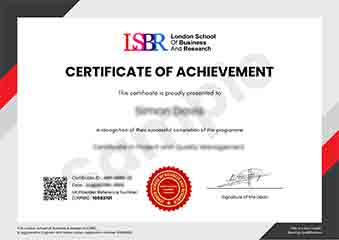
Sample Certificate
Preview the certificate you'll receive upon successful completion of this program.
Get Free Course Info
Receive detailed course information, curriculum breakdown, and career outcomes straight to your inbox.
Employer Sponsored?
Many employers cover professional development costs. Request a corporate invoice and we'll handle the rest. Bulk enrollment discounts available for teams of 3+.
How You Earn Your Certificate
Four simple steps to your professionally recognised qualification
Enroll & Get Instant Access
Complete your enrollment and access course materials immediately
Study at Your Own Pace
Work through the modules on your schedule, from anywhere in the world
Complete Assessments
Demonstrate your knowledge through practical, real-world assessments
Receive Your Certificate
Get your official LSBR UK certificate, recognised across 180+ countries
Real Results from Real Learners
Our graduates consistently report measurable career growth and professional advancement after completing their programmes.
Reviews from Our Learners
Hear from our students about their experience with the Global Certificate in Nutrient Cycling in Estuarine Systems at LSBR UK - Executive Education.
Charlotte Williams
United Kingdom"The course provided in-depth knowledge of nutrient cycling in estuarine systems, equipping me with valuable skills for environmental consulting. It significantly enhanced my understanding of ecological processes and their application in real-world scenarios."
Sophie Brown
United Kingdom"This course has significantly enhanced my understanding of nutrient cycling in estuarine systems, making me more competitive in the environmental consulting industry. The practical applications and real-world case studies have directly contributed to my career advancement by equipping me with the knowledge to tackle complex environmental challenges effectively."
Jack Thompson
Australia"The course structure was well-organized, providing a clear progression from basic concepts to advanced topics in nutrient cycling, which greatly enhanced my understanding and appreciation of estuarine systems. The comprehensive content and real-world applications have significantly broadened my knowledge base and prepared me for professional challenges in environmental management."
Need more time to decide?
Join 23,000+ professionals who advanced their careers. Enroll today and start learning immediately.
Enroll NowSecure payment • Instant access • Certificate included