
Global Certificate in Statistical Analysis of Astronomical Data
Enhance astronomical research skills with advanced statistical analysis techniques and data interpretation methods.
Global Certificate in Statistical Analysis of Astronomical Data
Programme Overview
The Global Certificate in Statistical Analysis of Astronomical Data is a comprehensive programme that covers the application of statistical techniques to astronomical data, including data mining, machine learning, and Bayesian inference. Designed for professionals and postgraduate students in astronomy, astrophysics, and related fields, this programme provides in-depth training in the analysis and interpretation of complex astronomical data sets.
Through a combination of lectures, case studies, and hands-on projects, learners will develop practical skills in data reduction, statistical modelling, and computational methods, using industry-standard software such as Python, R, and MATLAB. They will also gain a deep understanding of the underlying statistical principles and astronomical concepts, including stellar populations, galaxy evolution, and cosmology, enabling them to critically evaluate and improve existing analytical methods.
Upon completing the programme, learners will be equipped to pursue careers in astronomical research, data science, and scientific computing, with the ability to collect, analyse, and interpret large astronomical data sets, and to communicate complex results effectively to both specialist and non-specialist audiences.
What You'll Learn
The Global Certificate in Statistical Analysis of Astronomical Data is a highly specialized programme designed to equip professionals with the expertise to extract insights from complex astronomical datasets. In today's data-driven landscape, the ability to analyze and interpret large-scale astronomical data is a valuable asset, with applications in fields such as astrophysics, cosmology, and space exploration. This programme covers key topics including Bayesian inference, machine learning, and time series analysis, providing students with a comprehensive understanding of statistical frameworks and their application to astronomical data.
Graduates of this programme develop a range of competencies, including data visualization, signal processing, and computational modeling, using industry-standard tools such as Python, R, and MATLAB. These skills are applied in real-world settings, such as analyzing telescope data, modeling celestial phenomena, and informing spacecraft navigation systems. By mastering these skills, graduates can pursue career advancement opportunities in research institutions, government agencies, and private industry, including roles such as data scientist, research astronomer, and systems engineer. The programme's emphasis on practical application and industry relevance ensures that graduates are well-prepared to tackle complex challenges in astronomical data analysis and contribute to cutting-edge research and development in the field.
Programme Highlights
Industry-Aligned Curriculum
Developed with industry leaders for job-ready skills
Globally Recognised Certificate
Recognised by employers across 180+ countries
Flexible Online Learning
Study at your own pace with lifetime access
Instant Access
Start learning immediately, no application process
Constantly Updated Content
Latest industry trends and best practices
Career Advancement
87% report measurable career progression within 6 months
Topics Covered
- Introduction to Astronomy: Astronomy basics.
- Statistical Fundamentals: Statistical concepts.
- Data Analysis Techniques: Data analysis methods.
- Astronomical Data Sources: Data sources overview.
- Machine Learning Applications: Machine learning usage.
- Research Project Management: Project management skills.
What You Get When You Enroll
Key Facts
Target Audience: Professionals and students in astronomy, astrophysics, and related fields seeking to enhance their data analysis skills.
Prerequisites: No formal prerequisites required, but basic knowledge of statistics and astronomy is beneficial.
Learning Outcomes:
Apply statistical techniques to analyze astronomical data sets.
Interpret results from statistical models and methods.
Use programming languages to manipulate and visualize astronomical data.
Identify and address sources of error in astronomical data analysis.
Develop skills in data-driven decision making in astronomy.
Assessment Method: Quiz-based assessment to evaluate understanding of statistical concepts and their application to astronomical data.
Certification: Industry-recognised digital certificate awarded upon successful completion of the course, verifying expertise in statistical analysis of astronomical data.
Ready to Advance Your Career?
Join thousands of professionals who have transformed their careers with LSBR UK
Why This Course
The pursuit of advanced statistical knowledge in astronomy can be a defining factor in a professional's career, setting them apart in a rapidly evolving field where data-driven insights are paramount. By enrolling in the 'Global Certificate in Statistical Analysis of Astronomical Data' programme, professionals can significantly enhance their expertise and open up new avenues for growth and innovation.
Career Advancement: The programme equips professionals with specialized skills in statistical analysis, enabling them to tackle complex astronomical data sets and derive meaningful insights that can inform research and policy decisions. This expertise can lead to career advancement opportunities in prestigious research institutions, government agencies, and private sector organizations focused on space exploration and astronomy. By mastering statistical analysis techniques, professionals can increase their visibility and credibility within the scientific community.
Skill Development: The certificate programme focuses on developing practical skills in data analysis, machine learning, and computational modeling, which are essential for extracting valuable information from large astronomical datasets. Professionals learn to apply cutting-edge statistical methods to real-world problems, enhancing their ability to design and implement research studies, and to communicate complex findings effectively to both technical and non-technical audiences. This skill set is highly transferable across various disciplines and industries.
Industry Relevance: The programme's curriculum is designed in consultation with industry experts and practitioners, ensuring that the skills and knowledge imparted are directly relevant to the current needs and challenges of the astronomy sector. Professionals gain a deep understanding of the latest trends and technologies in statistical analysis, including
3-4 Weeks
Study at your own pace
Course Brochure
Download our comprehensive course brochure with all details
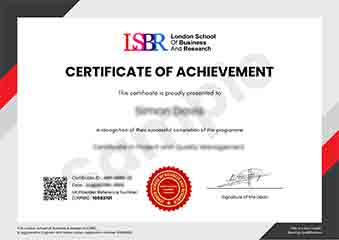
Sample Certificate
Preview the certificate you'll receive upon successful completion of this program.
Get Free Course Info
Receive detailed course information, curriculum breakdown, and career outcomes straight to your inbox.
Employer Sponsored?
Many employers cover professional development costs. Request a corporate invoice and we'll handle the rest. Bulk enrollment discounts available for teams of 3+.
Your Path to Certification
Four simple steps to your professionally recognised qualification
Enroll & Get Instant Access
Complete your enrollment and access course materials immediately
Study at Your Own Pace
Work through the modules on your schedule, from anywhere in the world
Complete Assessments
Demonstrate your knowledge through practical, real-world assessments
Receive Your Certificate
Get your official LSBR UK certificate, recognised across 180+ countries
Join Thousands Who Transformed Their Careers
Our graduates consistently report measurable career growth and professional advancement after completing their programmes.
What People Say About Us
Hear from our students about their experience with the Global Certificate in Statistical Analysis of Astronomical Data at LSBR UK - Executive Education.
Charlotte Williams
United Kingdom"The course material was incredibly comprehensive and well-structured, providing me with a deep understanding of statistical techniques and their applications in astronomical data analysis. Through hands-on exercises and real-world examples, I gained practical skills in data visualization, modeling, and interpretation, which I can now confidently apply to my own research projects. The knowledge and skills I acquired have significantly enhanced my career prospects in the field of astrophysics and data science."
Fatimah Ibrahim
Malaysia"The Global Certificate in Statistical Analysis of Astronomical Data has been instrumental in elevating my career as a data analyst in the space industry, equipping me with the specialized skills to extract valuable insights from complex astronomical datasets. I've seen a significant improvement in my ability to develop and apply statistical models that drive informed decision-making, which has not only enhanced my professional credibility but also opened up new opportunities for collaboration with leading research institutions. By mastering the statistical analysis of astronomical data, I've gained a unique competitive edge in the field, enabling me to contribute meaningfully to cutting-edge projects and advance my career in a highly competitive industry."
Tyler Johnson
United States"The course structure was well-organized, allowing me to seamlessly transition between topics and gain a comprehensive understanding of statistical analysis in astronomy, from foundational concepts to advanced techniques. I appreciated how the curriculum emphasized real-world applications, enabling me to see the practical implications of the methods and tools we learned, and I feel more confident in my ability to analyze complex astronomical data. The knowledge I gained has been invaluable in enhancing my skills and broadening my perspective in the field of astrophysics."
Still deciding?
Join 23,000+ professionals who advanced their careers. Enroll today and start learning immediately.
Enroll NowSecure payment • Instant access • Certificate included