
Global Certificate in Understanding Friction in Dynamic Motion
Gain profound insights into friction dynamics, enhancing motion analysis and engineering design skills globally.
Global Certificate in Understanding Friction in Dynamic Motion
Programme Overview
The Global Certificate in Understanding Friction in Dynamic Motion is a comprehensive, online educational programme designed for engineers, physicists, and advanced students in related fields who seek to deepen their understanding of the principles governing friction in dynamic systems. This programme explores the fundamental concepts of friction, including static and kinetic friction, coefficient of friction, and the effects of normal force and surface conditions on frictional forces. It also delves into the application of these principles in real-world scenarios, such as vehicle dynamics, robotics, and mechanical design.
Participants will develop key skills in analyzing and solving problems related to friction, utilizing advanced mathematical models and computational tools. They will learn to apply theoretical knowledge to practical situations, enhancing their ability to design and optimize mechanical systems for efficiency and performance. Additionally, learners will gain proficiency in using specialized software for simulations and data analysis, and they will be equipped with the critical thinking skills necessary to innovate within their field.
The programme has a significant impact on career advancement, particularly for professionals in engineering and physics. Graduates will be better prepared to tackle complex challenges in their work, leading to improved product design and performance. They will also be well-positioned to pursue advanced roles that require a deep understanding of frictional dynamics, such as research and development positions, consultancy, and leadership roles in engineering firms.
What You'll Learn
Explore the intricate world of friction in dynamic motion with the 'Global Certificate in Understanding Friction in Dynamic Motion.' This pioneering programme offers a comprehensive, interdisciplinary approach to understanding the fundamental principles that govern friction, acceleration, and deceleration in various motion contexts. Through a combination of theoretical studies and practical applications, participants gain a deep understanding of how friction influences motion across different scenarios, from everyday objects to complex mechanical systems.
Key topics covered include the mathematical modeling of friction, the role of surface properties, and the impact of environmental factors on dynamic motion. Students engage in hands-on experiments, utilizing advanced laboratory equipment to measure and analyze friction in diverse settings. This experiential learning enhances critical thinking and problem-solving skills, essential for advancing in fields such as engineering, physics, and materials science.
Upon completion, graduates are well-equipped to apply their knowledge in innovative solutions for reducing friction in industries like automotive, aerospace, and manufacturing. The programme also prepares students for roles requiring a strong grasp of mechanics and materials, such as mechanical engineers, materials scientists, and researchers. With a growing emphasis on sustainable and efficient technologies, the skills acquired in this programme are particularly valuable, opening doors to both specialized and interdisciplinary career opportunities.
Programme Highlights
Industry-Aligned Curriculum
Developed with industry leaders for job-ready skills
Globally Recognised Certificate
Recognised by employers across 180+ countries
Flexible Online Learning
Study at your own pace with lifetime access
Instant Access
Start learning immediately, no application process
Constantly Updated Content
Latest industry trends and best practices
Career Advancement
87% report measurable career progression within 6 months
Topics Covered
- Foundational Concepts: Covers the core principles and key terminology.: Historical Perspectives: Examines the evolution of understanding friction from ancient to modern times.
- Microscopic Structures: Analyzes the molecular and atomic-level interactions that cause friction.: Energy Loss Mechanisms: Investigates how friction affects mechanical energy and its conversion.
- Environmental Factors: Studies how temperature, humidity, and other environmental conditions influence friction.: Applications in Engineering: Demonstrates the practical use of friction knowledge in various engineering fields.
What You Get When You Enroll
Key Facts
Audience: Engineering professionals, students, researchers
Prerequisites: Basic physics knowledge, calculus
Outcomes: Understand friction principles, apply to motion analysis, solve real-world problems
Ready to Advance Your Career?
Join thousands of professionals who have transformed their careers with LSBR UK
Why This Course
Enhanced Technical Expertise: Professionals in fields such as mechanical engineering, automotive design, and materials science can significantly enhance their understanding of friction in dynamic motion. The Global Certificate equips them with advanced knowledge about frictional forces, their measurement, and their impact on performance. This deepens their technical expertise, making them more effective in their roles and better prepared to tackle complex problems.
Improved Problem-Solving Skills: The program focuses on practical applications and real-world scenarios, fostering a robust problem-solving mindset. Participants learn how to analyze and reduce friction in various mechanical systems, which is crucial for improving efficiency and reducing wear in machinery. For instance, this knowledge can help in optimizing the performance of conveyor systems or improving the lifespan of industrial equipment.
Career Advancement Opportunities: Gaining this certificate can open doors to specialized roles and advanced positions. Employers value professionals who can innovate and solve friction-related issues, as it can lead to significant cost savings and improved product quality. For example, a professional in the automotive industry could leverage this knowledge to develop more efficient vehicle designs or improve the reliability of components, potentially leading to promotions or leadership roles.
3-4 Weeks
Study at your own pace
Course Brochure
Download our comprehensive course brochure with all details
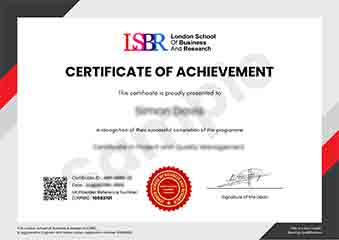
Sample Certificate
Preview the certificate you'll receive upon successful completion of this program.
Get Free Course Info
Receive detailed course information, curriculum breakdown, and career outcomes straight to your inbox.
Employer Sponsored?
Many employers cover professional development costs. Request a corporate invoice and we'll handle the rest. Bulk enrollment discounts available for teams of 3+.
Your Path to Certification
Four simple steps to your professionally recognised qualification
Enroll & Get Instant Access
Complete your enrollment and access course materials immediately
Study at Your Own Pace
Work through the modules on your schedule, from anywhere in the world
Complete Assessments
Demonstrate your knowledge through practical, real-world assessments
Receive Your Certificate
Get your official LSBR UK certificate, recognised across 180+ countries
Join Thousands Who Transformed Their Careers
Our graduates consistently report measurable career growth and professional advancement after completing their programmes.
What People Say About Us
Hear from our students about their experience with the Global Certificate in Understanding Friction in Dynamic Motion at LSBR UK - Executive Education.
James Thompson
United Kingdom"The course content is incredibly rich and well-researched, providing a deep understanding of friction in dynamic motion that has significantly enhanced my analytical skills. I've gained practical insights that are directly applicable to real-world engineering problems, which I believe will be invaluable in my career."
Sophie Brown
United Kingdom"This course has been incredibly valuable in enhancing my understanding of friction in dynamic motion, which is directly applicable to my role in automotive engineering. It has not only deepened my technical skills but also opened up new opportunities for career advancement in the field."
Emma Tremblay
Canada"The course structure is well-organized, providing a clear progression from basic concepts to more complex scenarios, which greatly enhances understanding. The knowledge gained has broadened my perspective on how friction impacts various dynamic systems, offering valuable insights for both academic and professional growth."
Still deciding?
Join 23,000+ professionals who advanced their careers. Enroll today and start learning immediately.
Enroll NowSecure payment • Instant access • Certificate included