
Postgraduate Certificate in Analog and Digital IC Design Principles
Gain expertise in analog and digital IC design principles, enhancing skills for semiconductor and electronics industry roles.
Postgraduate Certificate in Analog and Digital IC Design Principles
Programme Overview
The Postgraduate Certificate in Analog and Digital IC Design Principles is a specialized programme designed for engineers and professionals aiming to deepen their understanding of integrated circuit (IC) design, particularly in analog and digital domains. This programme covers essential topics such as semiconductor physics, circuit design, system-level integration, and emerging technologies in IC design. It is suitable for individuals with a background in electrical engineering or related fields who wish to enhance their expertise in IC design for various applications, including consumer electronics, telecommunications, and automotive systems.
Participants in this programme will develop a comprehensive skill set that includes advanced IC design techniques, simulation methods, and layout optimization. They will also gain knowledge in modern design tools, verification methodologies, and industry-standard practices. Through hands-on projects and experiential learning, learners will apply theoretical concepts to real-world design challenges, preparing them to tackle complex IC design issues in a professional setting.
The programme significantly impacts career trajectories by equipping participants with the advanced competencies needed for roles such as senior IC designers, design engineers, and system architects. Graduates are well-prepared to lead projects, innovate in cutting-edge technologies, and contribute to the development of next-generation ICs that drive technological advancements across multiple sectors.
What You'll Learn
The Postgraduate Certificate in Analog and Digital IC Design Principles is an intensive, hands-on program designed to equip professionals with the advanced skills needed to excel in the rapidly evolving field of integrated circuit (IC) design. This program covers essential topics such as semiconductor physics, circuit analysis, digital design techniques, and layout optimization, providing a solid foundation for both analog and digital IC design. Students will use industry-standard tools and software to design, simulate, and test ICs, ensuring they are proficient in the latest design methodologies and technologies.
Upon completion, graduates will be well-prepared to work in a variety of roles, including design engineer, verification engineer, and layout designer in semiconductor companies, electronics firms, and research institutions. They will also be capable of contributing to the development of cutting-edge electronic systems, from consumer devices to advanced computing platforms. The program’s focus on practical skills and real-world applications ensures that graduates are not only well-informed but also highly sought after in the job market. With a growing demand for skilled IC designers, this program opens up numerous career opportunities in both industry and academia, positioning graduates for success in this dynamic and critical sector.
Programme Highlights
Industry-Aligned Curriculum
Developed with industry leaders for job-ready skills
Globally Recognised Certificate
Recognised by employers across 180+ countries
Flexible Online Learning
Study at your own pace with lifetime access
Instant Access
Start learning immediately, no application process
Constantly Updated Content
Latest industry trends and best practices
Career Advancement
87% report measurable career progression within 6 months
Topics Covered
- Semiconductor Physics: Covers the fundamental properties and behavior of semiconductor materials.: Circuit Analysis: Analyzes the behavior of analog and digital circuits using theoretical and practical methods.
- Design Automation: Introduces tools and software used for automated design of ICs.: Analog Circuit Design: Focuses on the design and analysis of analog circuits.
- Digital Circuit Design: Covers the design and analysis of digital circuits.: Power and Performance Considerations: Discusses the trade-offs in power consumption and performance in IC design.
What You Get When You Enroll
Key Facts
Ideal for engineers, designers
Prerequisites: Bachelors in EE or CS
Outcomes: Proficient in IC design
Enhances digital and analog skills
Prepares for advanced semiconductor roles
Ready to Advance Your Career?
Join thousands of professionals who have transformed their careers with LSBR UK
Why This Course
Enhanced Skill Set for Career Advancement: A Postgraduate Certificate in Analog and Digital IC Design Principles equips professionals with advanced skills in circuit design, simulation, and optimization. This is particularly valuable in roles that require deep technical knowledge in semiconductor design, such as integrated circuit (IC) designers and senior engineers. For instance, understanding both analog and digital technologies can enable professionals to develop more efficient and versatile ICs, enhancing their market value and job security.
Increased Competitiveness in the Job Market: The demand for skilled professionals in IC design continues to grow, driven by advancements in technology and increasing complexity in electronic devices. This certificate can make professionals more competitive by providing them with specialized knowledge and practical skills that are in high demand. For example, graduates can focus on areas like low-power design, which is crucial for the development of battery-operated devices and IoT applications, thereby expanding their job opportunities.
Improved Problem-Solving and Innovation Capabilities: The program covers fundamental principles and advanced topics, which foster a deeper understanding of IC design processes. This knowledge empowers professionals to innovate and solve complex design challenges more effectively. For instance, by learning advanced techniques in analog-to-digital conversion and digital signal processing, professionals can contribute to the development of cutting-edge communication technologies and medical devices, driving technological progress and improving product performance.
3-4 Weeks
Study at your own pace
Course Brochure
Download our comprehensive course brochure with all details
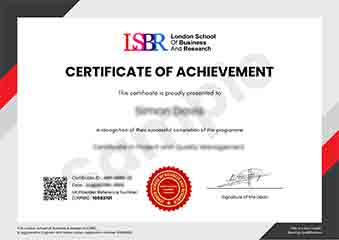
Sample Certificate
Preview the certificate you'll receive upon successful completion of this program.
Get Free Course Info
Receive detailed course information, curriculum breakdown, and career outcomes straight to your inbox.
Employer Sponsored?
Many employers cover professional development costs. Request a corporate invoice and we'll handle the rest. Bulk enrollment discounts available for teams of 3+.
Your Path to Certification
Four simple steps to your professionally recognised qualification
Enroll & Get Instant Access
Complete your enrollment and access course materials immediately
Study at Your Own Pace
Work through the modules on your schedule, from anywhere in the world
Complete Assessments
Demonstrate your knowledge through practical, real-world assessments
Receive Your Certificate
Get your official LSBR UK certificate, recognised across 180+ countries
Join Thousands Who Transformed Their Careers
Our graduates consistently report measurable career growth and professional advancement after completing their programmes.
What People Say About Us
Hear from our students about their experience with the Postgraduate Certificate in Analog and Digital IC Design Principles at LSBR UK - Executive Education.
Charlotte Williams
United Kingdom"The course content is comprehensive and well-structured, providing a solid foundation in both analog and digital IC design principles. Gaining hands-on experience through practical projects significantly enhanced my ability to apply theoretical knowledge to real-world problems, which is invaluable for my career in semiconductor engineering."
Greta Fischer
Germany"This course has been instrumental in bridging the gap between theoretical knowledge and practical application in IC design, making me more competitive in the job market. It has significantly enhanced my ability to tackle real-world design challenges, which has opened up new opportunities for career advancement."
Mei Ling Wong
Singapore"The course structure is well-organized, providing a comprehensive understanding of both analog and digital IC design principles, which has significantly enhanced my ability to apply theoretical knowledge to real-world engineering challenges."
Still deciding?
Join 23,000+ professionals who advanced their careers. Enroll today and start learning immediately.
Enroll NowSecure payment • Instant access • Certificate included