
Postgraduate Certificate in Biomedical Signal Processing Techniques
Enhance skills in biomedical signal analysis, processing, and interpretation techniques for advanced research and career opportunities.
Postgraduate Certificate in Biomedical Signal Processing Techniques
Programme Overview
The Postgraduate Certificate in Biomedical Signal Processing Techniques is a specialized programme designed for professionals and researchers seeking to advance their knowledge in the analysis and interpretation of biomedical signals. This programme covers the fundamentals of signal processing, including filtering, spectral analysis, and feature extraction, as well as advanced techniques such as machine learning and deep learning. It is tailored for individuals with a background in engineering, physics, or life sciences who wish to apply signal processing principles to biomedical applications.
Through this programme, learners will develop practical skills in signal processing software and programming languages, including MATLAB and Python. They will gain a deep understanding of the theoretical foundations of signal processing and learn to apply these principles to real-world biomedical problems, such as electrocardiogram and electroencephalogram analysis. Learners will also develop expertise in signal processing algorithms and techniques, including wavelet analysis and independent component analysis.
Upon completion of this programme, graduates will be well-equipped to pursue careers in biomedical research, medical device development, and clinical engineering, where they can apply their knowledge and skills to advance healthcare technology and improve patient outcomes.
What You'll Learn
The Postgraduate Certificate in Biomedical Signal Processing Techniques is a highly specialized programme designed to equip professionals with advanced skills in the analysis and interpretation of biomedical signals. In today's data-driven healthcare landscape, the ability to extract insights from complex physiological signals is crucial for developing innovative medical devices, improving patient outcomes, and enhancing clinical decision-making. This programme covers key topics such as time-frequency analysis, wavelet transforms, and machine learning techniques, enabling students to develop competencies in signal processing, data analysis, and programming languages like MATLAB and Python.
Graduates of this programme apply their skills in real-world settings, working with electrocardiogram (ECG), electroencephalogram (EEG), and medical imaging signals to develop novel diagnostic tools, predict patient risk, and optimize treatment protocols. They work in industries such as medical device manufacturing, pharmaceutical research, and healthcare technology, applying frameworks like signal processing chain analysis and sensor fusion to drive innovation.
Upon completion of the programme, graduates can pursue career advancement opportunities in biomedical engineering, clinical research, and data science, with potential roles including signal processing engineer, clinical data analyst, and medical device developer. With the increasing demand for skilled professionals in biomedical signal processing, this programme provides a valuable pathway for advancing careers and contributing to the development of cutting-edge healthcare technologies.
Programme Highlights
Industry-Aligned Curriculum
Developed with industry leaders for job-ready skills
Globally Recognised Certificate
Recognised by employers across 180+ countries
Flexible Online Learning
Study at your own pace with lifetime access
Instant Access
Start learning immediately, no application process
Constantly Updated Content
Latest industry trends and best practices
Career Advancement
87% report measurable career progression within 6 months
Topics Covered
- Introduction to Biomedical Signals: Biomedical signals basics.
- Signal Processing Fundamentals: Fundamental signal processing concepts.
- Biomedical Imaging Techniques: Medical imaging methods explored.
- Time-Frequency Analysis: Time-frequency analysis techniques.
- Machine Learning Applications: Machine learning in biomedicine.
- Advanced Biomedical Signal Processing: Advanced signal processing methods.
What You Get When You Enroll
Key Facts
Target Audience: Professionals and graduates in biomedical engineering, signal processing, and related fields seeking to enhance their skills in biomedical signal processing techniques.
Prerequisites: No formal prerequisites required, but a basic understanding of signal processing and biomedical principles is beneficial.
Learning Outcomes:
Apply signal processing techniques to biomedical signals and data.
Analyse and interpret biomedical signal processing results.
Design and implement signal processing algorithms for biomedical applications.
Evaluate the performance of biomedical signal processing systems.
Integrate biomedical signal processing techniques with other biomedical engineering disciplines.
Assessment Method: Quiz-based assessment to evaluate understanding of key concepts and techniques in biomedical signal processing.
Certification: Industry-recognised digital certificate awarded upon successful completion of the programme, verifying expertise in biomedical signal processing techniques.
Ready to Advance Your Career?
Join thousands of professionals who have transformed their careers with LSBR UK
Why This Course
The 'Postgraduate Certificate in Biomedical Signal Processing Techniques' programme offers a unique opportunity for professionals to enhance their skills in a rapidly evolving field, where advances in signal processing are revolutionizing healthcare and biomedical research. By choosing this programme, professionals can gain a competitive edge in their careers and contribute to the development of innovative biomedical technologies.
Specialized knowledge and skills: The programme provides specialized training in biomedical signal processing techniques, enabling professionals to analyze and interpret complex biomedical data, and develop algorithms and models to extract meaningful information. This expertise is highly valued in industries such as medical device manufacturing, pharmaceuticals, and healthcare, where professionals can apply their skills to develop new diagnostic tools, treatments, and therapies. With this knowledge, professionals can drive innovation and improvement in patient care and outcomes.
Career advancement opportunities: The programme can lead to career advancement opportunities in senior roles such as signal processing engineer, biomedical researcher, or data analyst, where professionals can apply their expertise to lead projects, mentor teams, and drive strategic decisions. Professionals can also pursue careers in academia, research institutions, or government agencies, where they can contribute to the development of new biomedical technologies and policies.
Industry relevance and application: The programme focuses on practical applications of biomedical signal processing techniques, ensuring that professionals can apply their knowledge and skills to real-world problems and industry challenges. This includes the development of wearable devices, mobile health applications, and medical imaging technologies, where professionals can work with cross-functional teams to design
3-4 Weeks
Study at your own pace
Course Brochure
Download our comprehensive course brochure with all details
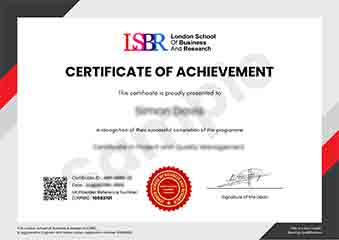
Sample Certificate
Preview the certificate you'll receive upon successful completion of this program.
Get Free Course Info
Receive detailed course information, curriculum breakdown, and career outcomes straight to your inbox.
Employer Sponsored?
Many employers cover professional development costs. Request a corporate invoice and we'll handle the rest. Bulk enrollment discounts available for teams of 3+.
Your Path to Certification
Four simple steps to your professionally recognised qualification
Enroll & Get Instant Access
Complete your enrollment and access course materials immediately
Study at Your Own Pace
Work through the modules on your schedule, from anywhere in the world
Complete Assessments
Demonstrate your knowledge through practical, real-world assessments
Receive Your Certificate
Get your official LSBR UK certificate, recognised across 180+ countries
Join Thousands Who Transformed Their Careers
Our graduates consistently report measurable career growth and professional advancement after completing their programmes.
What People Say About Us
Hear from our students about their experience with the Postgraduate Certificate in Biomedical Signal Processing Techniques at LSBR UK - Executive Education.
Charlotte Williams
United Kingdom"The course material was incredibly comprehensive, covering a wide range of biomedical signal processing techniques that I was able to apply to real-world problems, significantly enhancing my practical skills in signal analysis and processing. Through this course, I gained a deep understanding of the underlying principles and algorithms, which has not only improved my ability to design and develop medical devices but also opened up new career opportunities in the field of biomedical engineering. The knowledge and skills I acquired have been invaluable, allowing me to approach complex biomedical signal processing challenges with confidence and accuracy."
Mei Ling Wong
Singapore"The Postgraduate Certificate in Biomedical Signal Processing Techniques has been a game-changer for my career, equipping me with specialized skills that are highly sought after in the healthcare industry, and enabling me to develop innovative solutions that improve patient outcomes. Through this course, I gained a deep understanding of signal processing techniques and their practical applications, which has significantly enhanced my ability to analyze and interpret complex biomedical data. As a result, I have been able to transition into a more senior role, where I can apply my knowledge to drive meaningful advancements in medical technology and research."
Fatimah Ibrahim
Malaysia"The course structure was well-organized, allowing me to seamlessly transition between topics and gain a comprehensive understanding of biomedical signal processing techniques, from fundamental principles to advanced methods. I particularly appreciated how the course content was intertwined with real-world applications, enabling me to see the direct impact of these techniques on healthcare and medical research. Through this course, I have not only expanded my knowledge in signal processing but also developed a deeper understanding of its significance in driving innovation and improvement in the biomedical field."
Still deciding?
Join 23,000+ professionals who advanced their careers. Enroll today and start learning immediately.
Enroll NowSecure payment • Instant access • Certificate included