
Postgraduate Certificate in Hydraulic Engineering with Computational Tools
This program equips graduates with advanced hydraulic engineering skills and computational tools for professional excellence and innovation.
Postgraduate Certificate in Hydraulic Engineering with Computational Tools
Programme Overview
The Postgraduate Certificate in Hydraulic Engineering with Computational Tools is designed for engineering professionals and recent graduates aiming to enhance their expertise in hydraulic engineering, particularly in the application of computational tools and software. This program integrates advanced theoretical knowledge with practical computational techniques, equipping learners with the ability to model, simulate, and analyze complex hydraulic systems. Through a combination of coursework, hands-on laboratory work, and project-based learning, participants will gain proficiency in using industry-standard software and tools such as ANSYS Fluent, MATLAB, and HEC-HMS.
Learners will develop a comprehensive set of skills, including fluid dynamics, hydraulics, computational fluid dynamics (CFD), and numerical methods. The curriculum covers topics such as hydraulic structures, water resources management, and environmental fluid mechanics, all underpinned by the application of computational tools to solve real-world engineering problems. By the end of the program, students will be adept at designing, analyzing, and optimizing hydraulic systems, and will be well-prepared to tackle challenges in water management, flood control, and sustainable infrastructure development.
The career impact of this program is significant, as graduates will be well-equipped to seek advanced positions in consulting engineering firms, government agencies, and research institutions. They will also be prepared to lead projects involving hydraulic modeling, infrastructure planning, and environmental impact assessments. The program's emphasis on computational tools enhances their employability, making them valuable assets in a wide range of engineering roles that require both theoretical knowledge and practical computational skills.
What You'll Learn
The Postgraduate Certificate in Hydraulic Engineering with Computational Tools is meticulously designed to equip professionals with advanced skills in hydraulic systems analysis, design, and simulation, leveraging cutting-edge computational tools. This program bridges theoretical knowledge with practical application, preparing graduates to tackle complex challenges in water resources management, environmental engineering, and civil infrastructure design.
Key topics include fluid dynamics, hydraulic structures, computational fluid dynamics (CFD), and integrated water resources management. Students will engage in hands-on projects using industry-standard software such as ANSYS Fluent and open-source tools like OpenFOAM, enhancing their ability to model and optimize hydraulic systems.
Upon completion, graduates are well-prepared to work on projects that require in-depth analysis and simulation, such as flood control systems, sustainable irrigation schemes, and urban water management. The program also supports career transitions into roles such as hydraulic engineers, hydrologists, and environmental consultants. Graduates commonly secure positions with government agencies, consulting firms, and research organizations, contributing to the development of resilient and sustainable infrastructure.
Programme Highlights
Industry-Aligned Curriculum
Developed with industry leaders for job-ready skills
Globally Recognised Certificate
Recognised by employers across 180+ countries
Flexible Online Learning
Study at your own pace with lifetime access
Instant Access
Start learning immediately, no application process
Constantly Updated Content
Latest industry trends and best practices
Career Advancement
87% report measurable career progression within 6 months
Topics Covered
- Fundamentals of Fluid Mechanics: Covers the basic principles of fluid behavior and flow.: Computational Fluid Dynamics: Introduces numerical methods for solving fluid flow problems.
- Hydraulics of Pipes and Channels: Analyzes flow in conduits and open channels.: Soil-Structure Interaction: Examines the interaction between soil and hydraulic structures.
- Environmental Fluid Mechanics: Studies the impact of fluid mechanics on environmental systems.: Advanced Numerical Methods: Explores advanced techniques for solving complex hydraulic engineering problems.
What You Get When You Enroll
Key Facts
Target audience: Recent engineering graduates, industry professionals
Prerequisites: Bachelor’s degree in engineering, basic math skills
Outcomes: Proficient in hydraulic modeling, computational tools, sustainable practices
Ready to Advance Your Career?
Join thousands of professionals who have transformed their careers with LSBR UK
Why This Course
Enhance Technical Expertise: Postgraduate programs in Hydraulic Engineering with a focus on computational tools equip professionals with advanced skills in numerical methods, hydrodynamic modeling, and data analysis. These skills are crucial for solving complex water resource management challenges, contributing to more sustainable and efficient water systems.
Career Advancement: Graduates are well-prepared for leadership roles in consulting firms, government agencies, and research institutions where they can apply their knowledge to innovate in areas such as flood risk management, hydroelectric power generation, and climate change adaptation. The specialized training also opens doors to further academic pursuits, such as a master's or doctoral degree.
Industry Relevance: The curriculum is designed to align with industry needs, incorporating the latest computational tools and software used in the field. This ensures that professionals are up-to-date with the most current methodologies and technologies, making them highly competitive in the job market. For instance, proficiency in software like HydroLogicModeler or InfoWorks ICM can significantly enhance employability in companies that use these platforms for hydraulic modeling and simulation.
3-4 Weeks
Study at your own pace
Course Brochure
Download our comprehensive course brochure with all details
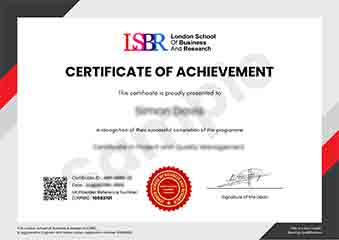
Sample Certificate
Preview the certificate you'll receive upon successful completion of this program.
Get Free Course Info
Receive detailed course information, curriculum breakdown, and career outcomes straight to your inbox.
Employer Sponsored?
Many employers cover professional development costs. Request a corporate invoice and we'll handle the rest. Bulk enrollment discounts available for teams of 3+.
Your Path to Certification
Four simple steps to your professionally recognised qualification
Enroll & Get Instant Access
Complete your enrollment and access course materials immediately
Study at Your Own Pace
Work through the modules on your schedule, from anywhere in the world
Complete Assessments
Demonstrate your knowledge through practical, real-world assessments
Receive Your Certificate
Get your official LSBR UK certificate, recognised across 180+ countries
Join Thousands Who Transformed Their Careers
Our graduates consistently report measurable career growth and professional advancement after completing their programmes.
What People Say About Us
Hear from our students about their experience with the Postgraduate Certificate in Hydraulic Engineering with Computational Tools at LSBR UK - Executive Education.
Oliver Davies
United Kingdom"The course content is comprehensive and deeply dives into the practical applications of computational tools in hydraulic engineering, equipping me with valuable skills that are directly applicable in the field. I've gained a solid understanding of how to model and analyze hydraulic systems, which has opened up new career opportunities for me."
Kavya Reddy
India"This postgraduate certificate has significantly enhanced my ability to apply computational tools in real-world hydraulic engineering problems, making me more competitive in the job market and opening up new opportunities for career advancement. The course content is highly relevant to current industry needs, equipping me with practical skills that I can immediately implement in my projects."
Mei Ling Wong
Singapore"The course structure is well-organized, providing a comprehensive understanding of hydraulic engineering principles and their application through computational tools, which has significantly enhanced my ability to tackle real-world engineering challenges."
Still deciding?
Join 23,000+ professionals who advanced their careers. Enroll today and start learning immediately.
Enroll NowSecure payment • Instant access • Certificate included