
Postgraduate Certificate in Indigenous Water Rights and Ethics
Gain expertise in Indigenous water rights and ethics, enhancing knowledge and promoting equitable water management practices.
Postgraduate Certificate in Indigenous Water Rights and Ethics
About This Course
The Postgraduate Certificate in Indigenous Water Rights and Ethics is a comprehensive programme designed for professionals, policy-makers, and researchers seeking to understand the complex interplay between Indigenous rights, water management, and environmental conservation. This programme delves into the legal, cultural, and ethical dimensions of water rights, with a focus on Indigenous perspectives and practices. It explores international frameworks, national policies, and local community initiatives that influence water access, use, and sustainability.
Learners will develop a robust understanding of Indigenous water rights and the ethical principles underpinning their recognition and implementation. Key skills include critical analysis of legal and policy frameworks, effective communication of Indigenous water rights concepts, and the ability to engage in culturally sensitive and inclusive water management practices. The programme also emphasizes the importance of interdisciplinary approaches to address water-related challenges from a holistic perspective.
Upon completion, participants will be well-equipped to contribute to policy development, advocacy, and community-based water governance initiatives that respect and uphold Indigenous rights and ethical standards. Graduates are prepared to work in a variety of roles within government agencies, non-profit organizations, research institutions, and international bodies, contributing to sustainable and equitable water management practices.
What You Will Learn
Explore the complex landscape of Indigenous water rights and ethics with the Postgraduate Certificate in Indigenous Water Rights and Ethics. This innovative program offers a deep dive into the legal, cultural, and environmental aspects of water management, emphasizing the rights and knowledge of Indigenous communities. Through a combination of theoretical and practical modules, students will gain a comprehensive understanding of the intersection between water rights, Indigenous sovereignty, and sustainable development.
Key topics include traditional water management practices, international and national legal frameworks, and the ethical dimensions of water conservation and distribution. The program equips students with the skills to engage in community-based research, policy development, and advocacy, fostering a balanced approach that respects Indigenous rights while addressing global water challenges.
Graduates of this program are well-prepared to work in a variety of roles, including water resource management, policy analysis, and environmental consulting. They can also serve as educators, community leaders, and researchers, contributing to projects that enhance the conservation and equitable distribution of water resources. By combining academic rigor with real-world applications, this certificate program empowers professionals to make a meaningful impact in the field of water rights and environmental stewardship.
Course Benefits
Industry-Aligned Curriculum
Developed with industry leaders for job-ready skills
Globally Recognised Certificate
Recognised by employers across 180+ countries
Flexible Online Learning
Study at your own pace with lifetime access
Instant Access
Start learning immediately, no application process
Constantly Updated Content
Latest industry trends and best practices
Career Advancement
87% report measurable career progression within 6 months
What This Course Covers
- Foundational Concepts: Covers the core principles and key terminology.: Historical Perspectives: Examines the historical development of water rights and their impact on indigenous communities.
- Legal Frameworks: Analyzes current legal and policy frameworks governing water rights.: Ethical Considerations: Discusses the ethical dimensions of water rights and their management.
- Community Engagement: Focuses on the importance of community involvement in water rights decisions.: Case Studies: Reviews real-world examples of indigenous water rights and their outcomes.
Everything You Get With This Course
Course Facts
Target audience: Environmental professionals, policymakers
Prerequisites: Bachelor's degree in relevant field
Outcomes: Understand indigenous water rights, ethical governance skills
Ready to Advance Your Career?
Join thousands of professionals who have transformed their careers with LSBR UK
Why This Course Is Right for You
Enhanced Understanding of Legal and Ethical Frameworks: The Postgraduate Certificate in Indigenous Water Rights and Ethics deepens professionals' understanding of the complex legal and ethical issues surrounding water rights. This knowledge is crucial for addressing environmental justice and sustainable water management. For instance, professionals can better navigate the nuances of treaty rights and customary laws, which are often overlooked in mainstream water management practices.
Fosters Cultural Competency and Stakeholder Engagement: This certificate equips professionals with the skills to engage effectively with Indigenous communities and other stakeholders. It emphasizes the importance of cultural competency, enabling professionals to build trust and foster collaborative relationships. This is particularly valuable in water resource management projects, where the involvement of Indigenous peoples is essential for the success and sustainability of initiatives.
Promotes Ethical Leadership and Decision-Making: The program focuses on developing ethical leadership skills, which are vital for making informed decisions that respect the rights and values of Indigenous peoples. Professionals learn to balance legal obligations with ethical considerations, ensuring that water management practices are fair and equitable. This skill set is particularly beneficial in leadership roles where decisions have significant environmental and social impacts.
Enhances Career Opportunities and Advancement: Acquiring this certificate can open up new career paths and advancement opportunities, especially in sectors like environmental law, policy, and water resource management. Employers value professionals who can integrate Indigenous perspectives and knowledge into their work, recognizing the importance of these perspectives for achieving sustainable and just outcomes.
3-4 Weeks
Study at your own pace
Course Brochure
Download our comprehensive course brochure with all details
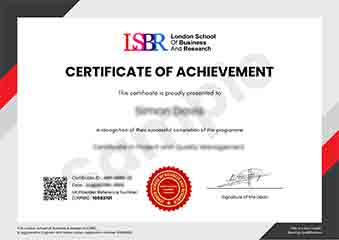
Sample Certificate
Preview the certificate you'll receive upon successful completion of this program.
Get Free Course Info
Receive detailed course information, curriculum breakdown, and career outcomes straight to your inbox.
Employer Sponsored?
Many employers cover professional development costs. Request a corporate invoice and we'll handle the rest. Bulk enrollment discounts available for teams of 3+.
How You Earn Your Certificate
Four simple steps to your professionally recognised qualification
Enroll & Get Instant Access
Complete your enrollment and access course materials immediately
Study at Your Own Pace
Work through the modules on your schedule, from anywhere in the world
Complete Assessments
Demonstrate your knowledge through practical, real-world assessments
Receive Your Certificate
Get your official LSBR UK certificate, recognised across 180+ countries
Real Results from Real Learners
Our graduates consistently report measurable career growth and professional advancement after completing their programmes.
Reviews from Our Learners
Hear from our students about their experience with the Postgraduate Certificate in Indigenous Water Rights and Ethics at LSBR UK - Executive Education.
Oliver Davies
United Kingdom"The course provided a deep dive into the complexities of Indigenous water rights and ethics, equipping me with a robust understanding of the legal and cultural frameworks. Gaining this knowledge has significantly enhanced my ability to advocate for sustainable water management practices that respect Indigenous rights and perspectives."
Fatimah Ibrahim
Malaysia"This course has significantly enhanced my understanding of the complex interplay between Indigenous rights and water management, making me more competitive in the field. The practical applications and ethical considerations I've learned are directly applicable to my role, opening up new opportunities for collaboration and advocacy."
Kavya Reddy
India"The course structure is meticulously organized, providing a clear pathway to understanding complex Indigenous water rights and ethical considerations, which has greatly enhanced my professional growth and knowledge application in real-world scenarios."
Need more time to decide?
Join 23,000+ professionals who advanced their careers. Enroll today and start learning immediately.
Enroll NowSecure payment • Instant access • Certificate included