
Postgraduate Certificate in Morphology in Ecological Context
Gain specialized knowledge in plant morphology and its ecological implications for sustainable management and conservation.
Postgraduate Certificate in Morphology in Ecological Context
About This Course
The Postgraduate Certificate in Morphology in Ecological Context is an advanced program designed for professionals and students with a background in biology, ecology, or a related field. It delves into the intricate relationship between an organism's morphology and its ecological environment, exploring how physical structures influence an organism's survival, reproduction, and interaction within ecosystems. This program equips learners with a deep understanding of the adaptive significance of morphological traits, their evolution, and their role in ecological processes.
Through this program, learners will develop critical skills in morphological analysis, statistical methods for ecological data, and advanced computational techniques. They will also gain expertise in interpreting morphological data in the context of ecological studies, understanding the molecular basis of morphological variation, and applying this knowledge to address contemporary ecological challenges. The curriculum is structured to foster both theoretical knowledge and practical skills, enabling learners to analyze and interpret complex morphological and ecological data.
Upon completion, graduates will be well-prepared for careers in environmental conservation, ecological research, and biodiversity management. They will be equipped to lead projects that involve morphological assessments in ecological studies, contribute to scientific publications, and inform policy decisions related to environmental conservation. The program also provides a strong foundation for those interested in pursuing further academic research or professional roles that require a deep understanding of the ecological implications of morphological traits.
What You Will Learn
The Postgraduate Certificate in Morphology in Ecological Context is an innovative program designed for professionals and students keen on understanding the intricate relationships between organismal form and function in diverse ecological settings. This program equips learners with a comprehensive understanding of how morphological traits influence survival and reproductive success in various environments.
Key topics include the study of plant and animal forms, adaptations to specific habitats, and the evolutionary processes that shape these traits. Students delve into advanced research methods, including digital phenotyping and functional morphology, to analyze the ecological significance of morphological characteristics. The curriculum emphasizes interdisciplinary learning, integrating knowledge from genetics, ecology, and evolutionary biology to provide a holistic view of morphological adaptations.
Graduates of this program are well-prepared to apply their skills in a range of careers. They can work as ecological consultants, wildlife conservationists, or research scientists, contributing to biodiversity conservation efforts, ecosystem management, and wildlife rehabilitation projects. Additionally, the program's focus on critical thinking and problem-solving equips graduates to pursue a variety of roles in academia, such as teaching or research positions, or in the biotechnology sector where morphological data is crucial for product development.
This program not only enhances technical skills but also cultivates a deep appreciation for the complexity and interconnectedness of life forms in their ecological contexts, making it a valuable asset for those committed to advancing ecological knowledge and stewardship.
Course Benefits
Industry-Aligned Curriculum
Developed with industry leaders for job-ready skills
Globally Recognised Certificate
Recognised by employers across 180+ countries
Flexible Online Learning
Study at your own pace with lifetime access
Instant Access
Start learning immediately, no application process
Constantly Updated Content
Latest industry trends and best practices
Career Advancement
87% report measurable career progression within 6 months
What This Course Covers
- Introduction to Morphology: Provides an overview of the field and its significance in ecological studies.: Cellular and Tissue Structures: Examines the basic units of structure and function in living organisms.
- Organ and System-Level Morphology: Analyzes the integration of organs and systems within organisms.: Environmental Adaptations: Investigates how morphology influences an organism's ability to survive in different environments.
- Comparative Morphology: Studies the similarities and differences in morphology across species.: Morphological Data Analysis: Teaches statistical and computational methods for analyzing morphological data.
Everything You Get With This Course
Course Facts
Audience: Graduate students, ecologists, biologists
Prerequisites: Bachelor's degree, basic ecology knowledge
Outcomes: Advanced morphological analysis skills, ecological impact assessment
Ready to Advance Your Career?
Join thousands of professionals who have transformed their careers with LSBR UK
Why This Course Is Right for You
Enhanced Specialization: Earning a Postgraduate Certificate in Morphology in Ecological Context allows professionals to deepen their expertise in specific areas of ecology, such as how organisms' physical forms adapt to their environments. This specialization can make candidates more competitive in niche roles within environmental consulting, biodiversity conservation, and wildlife management.
Advanced Research Skills: The program equips students with advanced analytical and research skills, enabling them to critically evaluate ecological data and contribute to cutting-edge research. These skills are highly valued in academia, government research institutions, and private sector organizations conducting ecological studies.
Broader Career Opportunities: By focusing on morphology in ecological context, professionals can expand their career horizons. They are better prepared to take on roles that require an understanding of how physical traits influence species' survival and distribution. This includes positions in ecological consulting, habitat management, and environmental policy, where knowledge of organismal form and function is crucial.
3-4 Weeks
Study at your own pace
Course Brochure
Download our comprehensive course brochure with all details
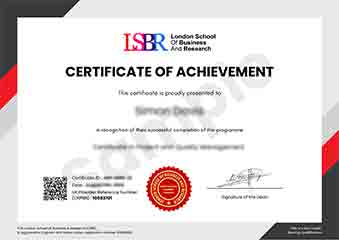
Sample Certificate
Preview the certificate you'll receive upon successful completion of this program.
Get Free Course Info
Receive detailed course information, curriculum breakdown, and career outcomes straight to your inbox.
Employer Sponsored?
Many employers cover professional development costs. Request a corporate invoice and we'll handle the rest. Bulk enrollment discounts available for teams of 3+.
How You Earn Your Certificate
Four simple steps to your professionally recognised qualification
Enroll & Get Instant Access
Complete your enrollment and access course materials immediately
Study at Your Own Pace
Work through the modules on your schedule, from anywhere in the world
Complete Assessments
Demonstrate your knowledge through practical, real-world assessments
Receive Your Certificate
Get your official LSBR UK certificate, recognised across 180+ countries
Real Results from Real Learners
Our graduates consistently report measurable career growth and professional advancement after completing their programmes.
Reviews from Our Learners
Hear from our students about their experience with the Postgraduate Certificate in Morphology in Ecological Context at LSBR UK - Executive Education.
James Thompson
United Kingdom"The course content is incredibly comprehensive, providing a deep understanding of how morphology impacts ecological systems. Gaining insights into applying this knowledge to real-world scenarios has significantly enhanced my analytical skills and broadened my career prospects in environmental consulting."
Jack Thompson
Australia"This postgraduate certificate has significantly enhanced my understanding of how morphological changes in species can impact their ecological roles, making me more competitive in the field of conservation biology. The coursework has provided me with practical tools to analyze and predict species responses to environmental changes, which I am now applying in my role at a wildlife conservation organization."
Oliver Davies
United Kingdom"The course structure is well-organized, providing a comprehensive overview of morphology in ecological contexts that seamlessly bridges theoretical knowledge with practical applications, enhancing my understanding and professional growth significantly."
Need more time to decide?
Join 23,000+ professionals who advanced their careers. Enroll today and start learning immediately.
Enroll NowSecure payment • Instant access • Certificate included