
Postgraduate Certificate in Tectonic Geomorphology of Active Faults
Develop expertise in analyzing active faults and tectonic processes, enhancing career prospects in geoscience and research.
Postgraduate Certificate in Tectonic Geomorphology of Active Faults
Programme Overview
The Postgraduate Certificate in Tectonic Geomorphology of Active Faults is a specialized programme designed for earth science professionals and researchers seeking to advance their understanding of the complex interactions between tectonic processes and landscape evolution. This programme covers the theoretical foundations and practical applications of tectonic geomorphology, with a focus on active faults and their role in shaping the Earth's surface.
Through a combination of lectures, seminars, and fieldwork, learners will develop a range of practical skills and knowledge, including the ability to analyse and interpret geological and geophysical data, apply geomorphic and geodetic techniques to investigate fault activity, and integrate field observations with numerical modelling and remote sensing methods. Learners will also gain a deep understanding of the underlying processes that control fault behaviour, including fault mechanics, seismic hazard assessment, and the impact of tectonic activity on landscape evolution.
Upon completing this programme, graduates will be equipped to pursue careers in earthquake science, natural hazard assessment, and environmental geology, with the skills and knowledge to inform policy and decision-making in these fields. The programme's strong focus on fieldwork and practical application will also provide graduates with a competitive edge in the job market, enabling them to make a meaningful contribution to the field of tectonic geomorphology and active fault research.
What You'll Learn
The Postgraduate Certificate in Tectonic Geomorphology of Active Faults provides advanced training in the analysis and interpretation of active fault systems, equipping students with specialized skills to assess seismic hazards and mitigate risks in various industries. This programme is valuable and relevant in today's professional landscape, as it addresses the growing need for experts who can apply cutting-edge geological and geophysical techniques to understand and predict earthquake activity.
Key topics covered include the application of remote sensing and GIS techniques to map and analyze fault geometries, the use of paleoseismology and geochronology to reconstruct earthquake histories, and the integration of seismic hazard assessment frameworks, such as the United States Geological Survey's (USGS) seismic hazard models. Students develop competencies in data analysis, field observation, and numerical modeling, as well as expertise in communicating complex scientific information to stakeholders.
Graduates of this programme apply their skills in real-world settings, working with government agencies, consulting firms, and research institutions to inform land-use planning, infrastructure development, and emergency preparedness. They use industry-standard software, such as ArcGIS and QGIS, to analyze and visualize data, and apply their knowledge of seismic hazard assessment to develop risk mitigation strategies.
Career advancement opportunities abound in fields such as seismic hazard assessment, natural hazard mitigation, and environmental consulting, with potential roles including seismic hazard analyst, natural hazard mitigation specialist, and geotechnical consultant. By acquiring specialized knowledge and skills in tectonic geomorphology, graduates
Programme Highlights
Industry-Aligned Curriculum
Developed with industry leaders for job-ready skills
Globally Recognised Certificate
Recognised by employers across 180+ countries
Flexible Online Learning
Study at your own pace with lifetime access
Instant Access
Start learning immediately, no application process
Constantly Updated Content
Latest industry trends and best practices
Career Advancement
87% report measurable career progression within 6 months
Topics Covered
- Introduction to Tectonic Geomorphology: Introduces key concepts and principles.
- Active Faulting Processes: Covers fault mechanics and dynamics.
- Geomorphological Mapping: Teaches mapping and analysis techniques.
- Seismic Hazard Assessment: Assesses seismic risk and hazards.
- Paleoseismology and Fault History: Examines fault activity and history.
- Applied Tectonic Geomorphology: Applies principles to real-world problems.
What You Get When You Enroll
Key Facts
Target Audience: Geologists, geophysicists, and earth scientists seeking advanced knowledge of tectonic geomorphology and active faults.
Prerequisites: No formal prerequisites required, but a background in geology, earth sciences, or a related field is recommended.
Learning Outcomes:
Analyze the geomorphic characteristics of active faults and their associated landforms.
Identify and interpret tectonic landforms and structures using remote sensing and field observations.
Apply geomorphic and geologic principles to understand fault activity and seismic hazard.
Evaluate the role of tectonic processes in shaping the Earth's surface.
Develop skills! in integrating geomorphology and geology to understand complex earth systems.
Assessment Method: Quiz-based assessment evaluating understanding of key concepts and application of skills.
Certification: Industry-recognised digital certificate awarded upon successful completion of the programme.
Ready to Advance Your Career?
Join thousands of professionals who have transformed their careers with LSBR UK
Why This Course
The 'Postgraduate Certificate in Tectonic Geomorphology of Active Faults' programme offers a unique opportunity for professionals to enhance their knowledge and skills in a critical field of study, with direct applications in natural hazard assessment, environmental monitoring, and resource exploration. By choosing this programme, professionals can gain a competitive edge in their careers and contribute meaningfully to high-stakes decision-making processes.
The programme provides advanced training in the application of geomorphic principles to fault analysis, enabling professionals to develop a nuanced understanding of seismic hazard and risk assessment. This expertise is highly valued in industries such as insurance, engineering, and urban planning, where accurate risk assessments are crucial for informed decision-making. Professionals who complete this programme can expect to take on leadership roles in seismic hazard mitigation and emergency response planning.
The programme's focus on active faults and tectonic geomorphology equips professionals with the skills to interpret and analyse complex geological data, including remote sensing imagery, geospatial data, and field observations. This skillset is essential for careers in geological surveying, environmental consulting, and natural resource management, where professionals must be able to collect and analyse data to inform policy and decision-making.
The programme's interdisciplinary approach, combining geology, geomorphology, and geophysics, prepares professionals to work effectively in multidisciplinary teams and communicate complex scientific concepts to non-technical stakeholders. This ability to collaborate and communicate is critical in industries such as energy, mining, and
3-4 Weeks
Study at your own pace
Course Brochure
Download our comprehensive course brochure with all details
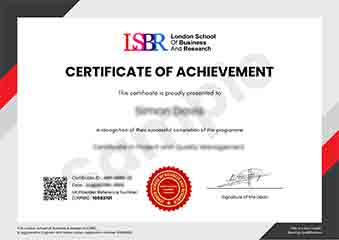
Sample Certificate
Preview the certificate you'll receive upon successful completion of this program.
Get Free Course Info
Receive detailed course information, curriculum breakdown, and career outcomes straight to your inbox.
Employer Sponsored?
Many employers cover professional development costs. Request a corporate invoice and we'll handle the rest. Bulk enrollment discounts available for teams of 3+.
Your Path to Certification
Four simple steps to your professionally recognised qualification
Enroll & Get Instant Access
Complete your enrollment and access course materials immediately
Study at Your Own Pace
Work through the modules on your schedule, from anywhere in the world
Complete Assessments
Demonstrate your knowledge through practical, real-world assessments
Receive Your Certificate
Get your official LSBR UK certificate, recognised across 180+ countries
Join Thousands Who Transformed Their Careers
Our graduates consistently report measurable career growth and professional advancement after completing their programmes.
What People Say About Us
Hear from our students about their experience with the Postgraduate Certificate in Tectonic Geomorphology of Active Faults at LSBR UK - Executive Education.
Charlotte Williams
United Kingdom"The course material was incredibly comprehensive, covering a wide range of topics from fault mechanics to geomorphic analysis, which significantly enhanced my understanding of tectonic processes and their impact on the Earth's surface. Through hands-on experience with industry-standard software and techniques, I gained valuable practical skills in data interpretation and mapping, which I can now apply to real-world problems in my career. The knowledge and skills I acquired have been instrumental in advancing my career in geoscience, allowing me to approach complex geological problems with confidence and precision."
Emma Tremblay
Canada"The Postgraduate Certificate in Tectonic Geomorphology of Active Faults has significantly enhanced my ability to analyze and interpret complex geological data, allowing me to make more informed decisions in my role as a geospatial analyst. The course has also equipped me with a deeper understanding of the practical applications of tectonic geomorphology, which has been invaluable in my work assessing seismic hazards and risks for infrastructure development projects. As a result, I have been able to take on more senior roles and contribute to high-profile projects, advancing my career in a highly competitive industry."
Kavya Reddy
India"The course structure was well-organized, allowing for a seamless progression from foundational concepts to advanced topics in tectonic geomorphology, which significantly enhanced my understanding of active fault systems. The comprehensive content covered a wide range of subjects, from fault mechanics to landscape evolution, providing me with a deeper appreciation of the complex interactions between tectonic processes and geomorphic responses. By exploring real-world examples and case studies, I gained valuable insights into the practical applications of tectonic geomorphology, which will undoubtedly contribute to my professional growth as a geoscientist."
Still deciding?
Join 23,000+ professionals who advanced their careers. Enroll today and start learning immediately.
Enroll NowSecure payment • Instant access • Certificate included