
Postgraduate Certificate in Toxicant Resistance Evolution Strategies
Develops expertise in evolving resistance strategies against toxicants, enhancing environmental and human health outcomes.
Postgraduate Certificate in Toxicant Resistance Evolution Strategies
Programme Overview
The Postgraduate Certificate in Toxicant Resistance Evolution Strategies is a comprehensive programme designed for professionals and researchers in the fields of biology, ecology, and environmental science. This programme covers the latest advances in understanding the evolution of resistance to toxicants, including the genetic and molecular mechanisms underlying this process, as well as the ecological and evolutionary consequences of toxicant exposure.
Learners will develop practical skills in data analysis, experimental design, and computational modeling, and will gain a deep understanding of the complex interactions between toxicants, organisms, and ecosystems. The programme will also provide training in the development and implementation of effective strategies for managing toxicant resistance, including the use of evolutionary principles to predict and mitigate the emergence of resistance.
Upon completion of the programme, graduates will be well-equipped to pursue careers in research, policy, and industry, applying their knowledge and skills to address the critical challenges posed by toxicant resistance. They will be able to design and implement evidence-based solutions to mitigate the impacts of toxicants on ecosystems and human health, and will be prepared to take on leadership roles in this field.
What You'll Learn
The Postgraduate Certificate in Toxicant Resistance Evolution Strategies is a specialized programme designed to equip professionals with the knowledge and skills to address the complex challenges of toxicant resistance in various fields, including environmental science, public health, and biotechnology. This programme is highly valuable and relevant in today's professional landscape, as the increasing prevalence of toxicant-resistant organisms poses significant threats to human health, ecosystems, and economies.
The programme covers key topics such as molecular mechanisms of toxicant resistance, evolutionary strategies, and risk assessment frameworks, including the use of computational models and machine learning algorithms. Students develop competencies in data analysis, experimental design, and communication of scientific findings to diverse stakeholders. They also learn to apply the Adaptive Evolution framework and the WHO/IPCS Risk Assessment framework to real-world scenarios.
Graduates of this programme apply their skills in real-world settings, such as developing strategies to mitigate the spread of antibiotic-resistant bacteria, assessing the environmental impact of toxicants, and designing effective monitoring and surveillance systems. They work in government agencies, research institutions, and private companies, using their expertise to inform policy decisions, develop innovative solutions, and collaborate with interdisciplinary teams.
With this certificate, professionals can advance their careers in fields such as environmental consulting, public health policy, and research and development, with potential roles including toxicant resistance specialist, environmental risk assessor, and research scientist. The programme's strong focus on practical applications and industry-relevant skills enables graduates to make a meaningful impact in their chosen field.
Programme Highlights
Industry-Aligned Curriculum
Developed with industry leaders for job-ready skills
Globally Recognised Certificate
Recognised by employers across 180+ countries
Flexible Online Learning
Study at your own pace with lifetime access
Instant Access
Start learning immediately, no application process
Constantly Updated Content
Latest industry trends and best practices
Career Advancement
87% report measurable career progression within 6 months
Topics Covered
- Introduction to Toxicology: Toxicology basics.
- Evolutionary Adaptation: Adaptation strategies.
- Resistance Mechanisms: Mechanisms explained.
- Ecotoxicology Principles: Ecotoxicology fundamentals.
- Toxicant Exposure: Exposure assessment.
- Strategic Management: Management techniques.
What You Get When You Enroll
Key Facts
Target Audience: Biologists, ecologists, and environmental scientists who want to specialise in toxicant resistance evolution strategies.
Prerequisites: No formal prerequisites required, but a background in biological sciences or a related field is recommended.
Learning Outcomes:
Analyse the evolution of toxicant resistance in various species
Design effective strategies to mitigate toxicant resistance
Evaluate the impact of toxicants on ecosystems
Develop predictive models for toxicant resistance evolution
Communicate toxicant resistance risks to stakeholders
Assessment Method: Quiz-based assessment to evaluate understanding of toxicant resistance evolution strategies.
Certification: Industry-recognised digital certificate awarded upon successful completion of the programme.
Ready to Advance Your Career?
Join thousands of professionals who have transformed their careers with LSBR UK
Why This Course
The 'Postgraduate Certificate in Toxicant Resistance Evolution Strategies' programme offers a unique opportunity for professionals to develop specialized expertise in a critical area of environmental science, with significant implications for public health and ecosystem conservation. By choosing this programme, professionals can position themselves at the forefront of a rapidly evolving field, equipped with the knowledge and skills to address complex challenges and drive meaningful change.
The programme provides advanced training in the latest methodologies and technologies for monitoring and mitigating toxicant resistance, enabling professionals to develop a sophisticated understanding of the complex interactions between pollutants, organisms, and ecosystems. This expertise can be applied in a range of contexts, from environmental consulting and policy development to research and academia. By mastering these skills, professionals can enhance their career prospects and make a lasting impact in their chosen field.
The programme focuses on the evolution of toxicant resistance, allowing professionals to explore the dynamic relationships between pollutants, genetic adaptation, and ecological resilience. This knowledge can be used to inform the development of effective strategies for managing toxicant resistance, from the design of more efficient remediation technologies to the creation of policies that promote sustainable environmental practices. Professionals who complete the programme will be well-equipped to contribute to the development of innovative solutions that address the root causes of toxicant resistance.
The programme's emphasis on interdisciplinary collaboration and knowledge exchange provides professionals with a unique opportunity to engage with experts from diverse backgrounds and sectors, fostering a rich and dynamic learning environment that reflects the complexities of real-world environmental challenges. By working
3-4 Weeks
Study at your own pace
Course Brochure
Download our comprehensive course brochure with all details
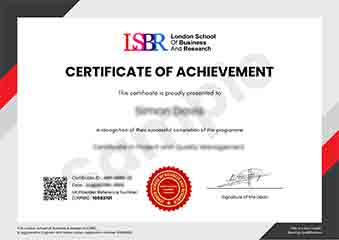
Sample Certificate
Preview the certificate you'll receive upon successful completion of this program.
Get Free Course Info
Receive detailed course information, curriculum breakdown, and career outcomes straight to your inbox.
Employer Sponsored?
Many employers cover professional development costs. Request a corporate invoice and we'll handle the rest. Bulk enrollment discounts available for teams of 3+.
Your Path to Certification
Four simple steps to your professionally recognised qualification
Enroll & Get Instant Access
Complete your enrollment and access course materials immediately
Study at Your Own Pace
Work through the modules on your schedule, from anywhere in the world
Complete Assessments
Demonstrate your knowledge through practical, real-world assessments
Receive Your Certificate
Get your official LSBR UK certificate, recognised across 180+ countries
Join Thousands Who Transformed Their Careers
Our graduates consistently report measurable career growth and professional advancement after completing their programmes.
What People Say About Us
Hear from our students about their experience with the Postgraduate Certificate in Toxicant Resistance Evolution Strategies at LSBR UK - Executive Education.
Charlotte Williams
United Kingdom"The course material was incredibly comprehensive, covering a wide range of topics from the fundamentals of toxicant resistance to advanced evolutionary strategies, which significantly enhanced my understanding of the subject. Through this program, I gained valuable practical skills in data analysis and experimental design, allowing me to develop effective resistance evolution strategies that can be applied in real-world scenarios. The knowledge and skills I acquired have been instrumental in advancing my career in environmental science and conservation biology."
Kavya Reddy
India"The Postgraduate Certificate in Toxicant Resistance Evolution Strategies has been instrumental in enhancing my understanding of adaptive mechanisms and resistance patterns, allowing me to develop targeted intervention strategies that are highly relevant to my work in environmental conservation. This advanced knowledge has significantly elevated my career prospects, enabling me to take on more complex projects and collaborate effectively with cross-functional teams to drive meaningful change. As a result, I've experienced a notable increase in professional recognition and opportunities for career advancement within the industry."
Muhammad Hassan
Malaysia"The course structure was well-organized, allowing me to seamlessly transition between modules and gain a comprehensive understanding of toxicant resistance evolution strategies, from foundational concepts to cutting-edge research. I appreciated how the curriculum integrated real-world applications, enabling me to connect theoretical knowledge to practical scenarios and enhancing my ability to develop effective resistance management plans. Through this course, I significantly expanded my knowledge of evolutionary adaptation mechanisms and their implications for environmental and public health, ultimately enriching my professional growth in the field."
Still deciding?
Join 23,000+ professionals who advanced their careers. Enroll today and start learning immediately.
Enroll NowSecure payment • Instant access • Certificate included