
Postgraduate Certificate in Wildfire Prevention: Mitigating Risks at Ecological Tipping Points
This program equips graduates with advanced skills in wildfire prevention and risk mitigation at critical ecological junctures.
Postgraduate Certificate in Wildfire Prevention: Mitigating Risks at Ecological Tipping Points
Programme Overview
The Postgraduate Certificate in Wildfire Prevention: Mitigating Risks at Ecological Tipping Points is designed for environmental scientists, policymakers, and forestry professionals who seek to enhance their expertise in wildfire management and prevention. The programme delves into the complex interplay between human activities, ecological conditions, and climatic factors that contribute to wildfire occurrences at critical ecological thresholds. It leverages advanced research methodologies and real-world case studies to equip learners with the knowledge and skills necessary to assess and mitigate wildfire risks effectively.
Key skills and knowledge developed through this programme include an understanding of the ecological, climatic, and social drivers of wildfires, the use of Geographic Information Systems (GIS) and remote sensing technologies for risk assessment, and the application of fire management strategies at ecological tipping points. Learners will also gain proficiency in developing and implementing risk management plans, collaborating with interdisciplinary teams, and communicating wildfire prevention strategies to diverse stakeholders.
This programme significantly impacts career trajectories by preparing graduates to lead in wildfire management roles within government agencies, non-profit organizations, and private sector firms. Graduates are well-equipped to contribute to policy development, engage in community education and outreach, and implement sustainable fire management practices that protect both natural ecosystems and human communities.
What You'll Learn
The Postgraduate Certificate in Wildfire Prevention: Mitigating Risks at Ecological Tipping Points equips students with the knowledge and skills essential for preventing and mitigating wildfires, particularly in vulnerable ecosystems. This program is designed for professionals and students passionate about environmental conservation and disaster risk management. By blending theoretical knowledge with practical applications, participants will gain a deep understanding of the ecological, climatic, and socio-economic factors that contribute to wildfires.
Key topics include fire ecology, climate change impacts, risk assessment methodologies, and sustainable land management practices. Students will learn to apply Geographic Information System (GIS) tools, remote sensing, and predictive modeling to analyze wildfire risks and develop effective mitigation strategies. The program also emphasizes community engagement and policy-making to foster resilient communities and ecosystems.
Upon completion, graduates will be well-prepared to work in a variety of roles, including wildfire risk assessment specialists, environmental consultants, and disaster risk management coordinators. They will be equipped to implement sustainable land management practices, collaborate with stakeholders, and contribute to the development of policies that enhance ecological resilience. This program is particularly valuable for those aiming to work with governmental agencies, non-profit organizations, and private sector companies focused on environmental sustainability and disaster preparedness.
Programme Highlights
Industry-Aligned Curriculum
Developed with industry leaders for job-ready skills
Globally Recognised Certificate
Recognised by employers across 180+ countries
Flexible Online Learning
Study at your own pace with lifetime access
Instant Access
Start learning immediately, no application process
Constantly Updated Content
Latest industry trends and best practices
Career Advancement
87% report measurable career progression within 6 months
Topics Covered
- Foundational Concepts: Covers the core principles and key terminology.: Climate Science for Wildfires: Examines the role of climate change in wildfire occurrence.
- Ecological Impacts: Analyzes the effects of wildfires on biodiversity and ecosystems.: Risk Assessment Techniques: Teaches methods for evaluating wildfire risks.
- Fire Management Strategies: Discusses tactics for preventing and managing wildfires.: Policy and Regulation: Reviews the legal and policy frameworks governing wildfire prevention.
What You Get When You Enroll
Key Facts
Target professionals in forestry, ecology, and environmental management
No formal degree required; relevant experience preferred
Understand ecological systems and tipping points
Implement wildfire risk assessment and mitigation strategies
Develop emergency response plans for wildfires
Analyze climate change impacts on wildfire risk
Gain hands-on fieldwork and research skills
Ready to Advance Your Career?
Join thousands of professionals who have transformed their careers with LSBR UK
Why This Course
Specialized Knowledge: The Postgraduate Certificate in Wildfire Prevention equips professionals with deep understanding of ecological tipping points and their connection to wildfire risks. This knowledge is crucial for developing effective prevention strategies that can mitigate risks in sensitive ecosystems.
Practical Skills: The program focuses on practical skills such as risk assessment, hazard mapping, and community engagement. These skills are highly transferable and can enhance a professional's ability to implement wildfire prevention measures in real-world scenarios.
Career Advancement: Graduates can advance in their careers by taking on leadership roles in environmental management or disaster risk reduction. The certificate demonstrates a commitment to environmental responsibility and expertise in a growing field, making candidates stand out in the job market.
Networking Opportunities: The program provides a platform to connect with experts and professionals from various sectors. These networks can lead to collaborative projects, research opportunities, and partnerships that can benefit both the individual and their organization.
3-4 Weeks
Study at your own pace
Course Brochure
Download our comprehensive course brochure with all details
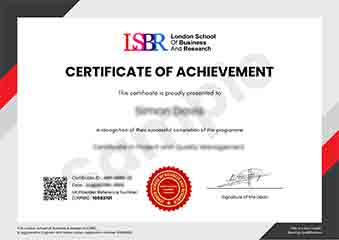
Sample Certificate
Preview the certificate you'll receive upon successful completion of this program.
Get Free Course Info
Receive detailed course information, curriculum breakdown, and career outcomes straight to your inbox.
Employer Sponsored?
Many employers cover professional development costs. Request a corporate invoice and we'll handle the rest. Bulk enrollment discounts available for teams of 3+.
Your Path to Certification
Four simple steps to your professionally recognised qualification
Enroll & Get Instant Access
Complete your enrollment and access course materials immediately
Study at Your Own Pace
Work through the modules on your schedule, from anywhere in the world
Complete Assessments
Demonstrate your knowledge through practical, real-world assessments
Receive Your Certificate
Get your official LSBR UK certificate, recognised across 180+ countries
Join Thousands Who Transformed Their Careers
Our graduates consistently report measurable career growth and professional advancement after completing their programmes.
What People Say About Us
Hear from our students about their experience with the Postgraduate Certificate in Wildfire Prevention: Mitigating Risks at Ecological Tipping Points at LSBR UK - Executive Education.
James Thompson
United Kingdom"The course content is incredibly comprehensive, providing deep insights into the complex dynamics of wildfires and their impact on ecosystems. Gaining a solid understanding of risk mitigation strategies at critical ecological tipping points has equipped me with valuable skills that I can directly apply in my fieldwork and future career."
Klaus Mueller
Germany"This postgraduate certificate has significantly enhanced my understanding of wildfire dynamics and risk management strategies, making me more competitive in the environmental consulting sector. The practical applications taught in the course have directly translated into more effective wildfire prevention plans for my current role."
Emma Tremblay
Canada"The course is meticulously structured, offering a seamless progression from foundational concepts to advanced strategies for wildfire prevention, which significantly enhances one's understanding and preparedness for real-world ecological challenges. It equips learners with a comprehensive toolkit for mitigating risks at critical ecological tipping points, fostering professional growth in the field."
Still deciding?
Join 23,000+ professionals who advanced their careers. Enroll today and start learning immediately.
Enroll NowSecure payment • Instant access • Certificate included