
Professional Certificate in Computational Geometry for Architects
This certificate equips architects with advanced computational geometry skills for innovative design and analysis, enhancing project efficiency and creativity.
Professional Certificate in Computational Geometry for Architects
Programme Overview
The Professional Certificate in Computational Geometry for Architects is a comprehensive programme designed for architects, designers, and urban planners seeking to integrate advanced computational techniques into their design processes. This programme equips learners with the skills to apply computational geometry principles to address complex architectural challenges, enhancing their ability to innovate and optimize designs. Through a combination of theoretical instruction and practical exercises, participants will explore the application of computational geometry in architectural form-finding, parametric design, and the generation of complex geometries.
Key skills and knowledge developed include the ability to use computational tools for geometric analysis and synthesis, proficiency in scripting languages such as Python and Grasshopper, and an understanding of geometric algorithms and their applications in architecture. Learners will also gain experience in using computational geometry to create sustainable and efficient building forms, enhancing their problem-solving capabilities in a digital environment.
The career impact of this programme is significant, as graduates will be well-equipped to lead design teams in the development of innovative, data-driven architectural projects. They will be able to leverage computational geometry to push the boundaries of traditional architectural design, contributing to the advancement of the field and driving the adoption of cutting-edge technologies in the built environment.
What You'll Learn
The Professional Certificate in Computational Geometry for Architects is designed to equip professionals with the advanced skills needed to leverage computational geometry in architectural design and construction. This comprehensive program, tailored for architects seeking to integrate cutting-edge technology into their practice, covers key topics such as geometric modeling, topological structures, and algorithmic design. Participants will learn to utilize computational tools to optimize form and function, enhancing the sustainability and efficiency of their projects.
By applying these skills, graduates can create innovative designs that push the boundaries of traditional architecture. They will be able to analyze complex spatial relationships, predict structural performance, and streamline the design process. This certificate is invaluable for those looking to enhance their portfolio, attract new clients, and stay at the forefront of architectural innovation.
Career opportunities abound for graduates of this program. They can pursue roles as computational architects, design analysts, or technology integrators in leading architectural firms, construction companies, or research institutions. The ability to bridge the gap between form and function through computational geometry opens doors to a wide range of projects, from sustainable buildings to complex urban developments. This program not only enriches the skill set of architects but also propels them into a future where technology and creativity seamlessly converge.
Programme Highlights
Industry-Aligned Curriculum
Developed with industry leaders for job-ready skills
Globally Recognised Certificate
Recognised by employers across 180+ countries
Flexible Online Learning
Study at your own pace with lifetime access
Instant Access
Start learning immediately, no application process
Constantly Updated Content
Latest industry trends and best practices
Career Advancement
87% report measurable career progression within 6 months
Topics Covered
- Foundational Concepts: Covers the core principles and key terminology.: Computational Tools: Introduces software and programming languages used in computational geometry.
- Geometric Modeling: Focuses on creating and manipulating geometric models.: Spatial Analysis: Teaches how to analyze spatial data and structures.
- Optimization Techniques: Explores methods for optimizing geometric designs.: Case Studies: Examines real-world applications in architectural design.
What You Get When You Enroll
Key Facts
Audience: Architects, design professionals
Prerequisites: Basic math, drawing skills
Outcomes: Master computational geometry, optimize designs, enhance precision
Ready to Advance Your Career?
Join thousands of professionals who have transformed their careers with LSBR UK
Why This Course
Enhances Design Efficiency: Professional architects can significantly improve their design process by understanding computational geometry principles. This knowledge allows for more precise and efficient modeling of complex architectural forms, reducing the need for physical prototypes and speeding up the design stage.
Expands Design Capabilities: A certificate in computational geometry equips architects with advanced tools and techniques for creating innovative designs. This includes the ability to work with parametric design software, which can adapt designs in response to changes in parameters, enabling more dynamic and responsive architectural solutions.
Competitive Advantage: As the construction industry increasingly adopts digital technologies, professionals who have a strong grasp of computational geometry will stand out. Employers are likely to favor candidates who can demonstrate proficiency in these areas, providing a clear edge in job applications and career advancement opportunities.
Better Collaboration: With a professional certificate in computational geometry, architects can better collaborate with other professionals such as engineers and contractors. The ability to use shared design platforms and consistent data formats enhances communication and ensures that all team members are working from the same technical foundation, leading to more seamless project outcomes.
3-4 Weeks
Study at your own pace
Course Brochure
Download our comprehensive course brochure with all details
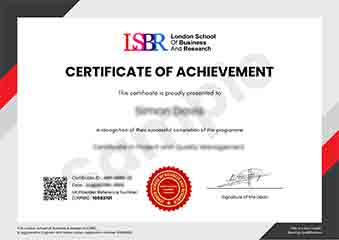
Sample Certificate
Preview the certificate you'll receive upon successful completion of this program.
Get Free Course Info
Receive detailed course information, curriculum breakdown, and career outcomes straight to your inbox.
Employer Sponsored?
Many employers cover professional development costs. Request a corporate invoice and we'll handle the rest. Bulk enrollment discounts available for teams of 3+.
Your Path to Certification
Four simple steps to your professionally recognised qualification
Enroll & Get Instant Access
Complete your enrollment and access course materials immediately
Study at Your Own Pace
Work through the modules on your schedule, from anywhere in the world
Complete Assessments
Demonstrate your knowledge through practical, real-world assessments
Receive Your Certificate
Get your official LSBR UK certificate, recognised across 180+ countries
Join Thousands Who Transformed Their Careers
Our graduates consistently report measurable career growth and professional advancement after completing their programmes.
What People Say About Us
Hear from our students about their experience with the Professional Certificate in Computational Geometry for Architects at LSBR UK - Executive Education.
Charlotte Williams
United Kingdom"The course content is incredibly rich and well-structured, providing a solid foundation in computational geometry that directly translates into practical tools for architectural design. Gaining skills in algorithmic problem-solving and geometric modeling has significantly enhanced my ability to innovate in my projects."
Arjun Patel
India"This course has been instrumental in bridging the gap between theoretical geometry and practical architectural design. It has equipped me with advanced computational tools that are directly applicable in my work, significantly enhancing my ability to innovate and solve complex design challenges."
Emma Tremblay
Canada"The course structure is well-organized, providing a clear path from foundational concepts to advanced topics in computational geometry, which has significantly enhanced my understanding and application of these principles in architectural design."
Still deciding?
Join 23,000+ professionals who advanced their careers. Enroll today and start learning immediately.
Enroll NowSecure payment • Instant access • Certificate included