
Professional Certificate in Fact-Checking Methods in Water Journalism
Elevate water journalism skills with a Professional Certificate in Fact-Checking Methods, enhancing accuracy and credibility in reporting.
Professional Certificate in Fact-Checking Methods in Water Journalism
Programme Overview
The Professional Certificate in Fact-Checking Methods in Water Journalism is designed for journalists, researchers, and professionals who wish to enhance their ability to report on water issues with the highest standards of accuracy and integrity. This program equips participants with the necessary skills to critically analyze and verify information related to water resources, policies, and technologies. It covers a range of topics including the scientific methods for assessing water quality, the regulatory landscape of water management, and the ethical considerations in journalism. Participants will learn how to use digital tools and databases for data verification, conduct interviews effectively to obtain reliable information, and apply critical thinking to uncover and correct misinformation.
Learners will develop key skills such as advanced fact-checking techniques, proficiency in using statistical analysis and data visualization for journalistic purposes, and the ability to communicate complex scientific concepts to a general audience. They will also learn to navigate and interpret governmental and non-governmental organization reports, and understand the importance of cross-referencing information from multiple sources. By mastering these skills, participants will be able to produce credible and impactful water journalism that contributes to public understanding and informed decision-making.
This program significantly impacts careers in journalism, environmental science, and policy analysis. Graduates will be well-equipped to take on positions as fact-checkers, environmental journalists, or policy analysts, where they can play a crucial role in ensuring the accuracy of information in the water sector. The skills acquired will also enhance their employability and the quality of their work, leading to more impactful and trustworthy reporting
What You'll Learn
Embark on a journey to enhance your journalistic craft with the Professional Certificate in Fact-Checking Methods in Water Journalism. This program is meticulously designed to equip you with the tools necessary to navigate the complex landscape of water journalism, ensuring that your reports are accurate, comprehensive, and impactful. You will delve into the critical topics of water resource management, environmental policy, and climate change, learning to critically evaluate sources and data to uncover the truth behind water-related stories.
Graduates of this program will be adept at using advanced fact-checking techniques, including data analysis, visual journalism, and digital storytelling, to produce reliable and engaging content. You will gain hands-on experience in fact-checking case studies, developing a robust skill set that is in high demand in today’s media landscape. The program also emphasizes the importance of ethical journalism, teaching you how to responsibly report on water issues, contributing to informed public discourse.
Upon completion, you will be well-prepared to pursue a variety of career paths, including freelance investigative journalism, environmental advocacy, or positions in news organizations where water-related reporting is a key focus. Whether you are a seasoned journalist looking to refine your skills or a newcomer eager to enter the field, this certificate will provide you with the knowledge and confidence to make a meaningful impact in water journalism. Join us and become a vital voice in the ongoing conversation about water and its critical role in our world.
Programme Highlights
Industry-Aligned Curriculum
Developed with industry leaders for job-ready skills
Globally Recognised Certificate
Recognised by employers across 180+ countries
Flexible Online Learning
Study at your own pace with lifetime access
Instant Access
Start learning immediately, no application process
Constantly Updated Content
Latest industry trends and best practices
Career Advancement
87% report measurable career progression within 6 months
Topics Covered
- Foundational Concepts: Covers the core principles and key terminology.: Data Verification: Techniques for validating information and data accuracy.
- Interviewing Sources: Strategies for effective and ethical interviews.: Digital Forensics: Tools and methods for analyzing digital evidence.
- Visual Storytelling: Using graphics and multimedia to enhance narratives.: Ethical Considerations: Navigating the ethical challenges in water journalism.
What You Get When You Enroll
Key Facts
Audience: Journalists, researchers, environmental policy makers
Prerequisites: Basic journalism knowledge, internet access
Outcomes: Proficient in fact-checking tools, enhanced credibility, expert in water journalism
Ready to Advance Your Career?
Join thousands of professionals who have transformed their careers with LSBR UK
Why This Course
Enhance Credibility and Expertise: Acquiring a Professional Certificate in Fact-Checking Methods in Water Journalism improves journalists' ability to verify information accurately. This skill is crucial in water journalism, where misinformation can lead to significant public health and environmental issues. By mastering these methods, journalists can establish themselves as trusted sources of information on complex water-related topics.
Career Advancement: Employers increasingly value professionals who can independently verify information before publication. The certificate demonstrates a journalist's commitment to high standards and meticulous research. This can open doors to leadership roles, such as fact-checking editors or senior reporters, where they can mentor others and lead projects that require in-depth fact-checking.
Adaptability to Emerging Issues: Water journalism faces new challenges with the rise of climate change and emerging contaminants. The certificate equips journalists with the skills to quickly adapt to these changes, ensuring they can tackle current and future issues with accuracy and depth. This adaptability is essential in a rapidly evolving field.
Improved Reporting Quality: Fact-checking enhances the overall quality of journalism by reducing errors and ensuring that stories are based on verified facts. Professionals who complete this certificate can produce more reliable and impactful stories, which can attract a broader audience and build a stronger reputation for their work.
3-4 Weeks
Study at your own pace
Course Brochure
Download our comprehensive course brochure with all details
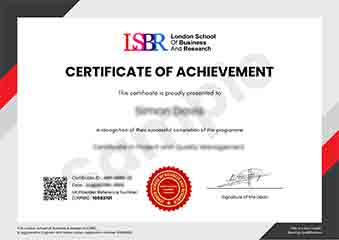
Sample Certificate
Preview the certificate you'll receive upon successful completion of this program.
Get Free Course Info
Receive detailed course information, curriculum breakdown, and career outcomes straight to your inbox.
Employer Sponsored?
Many employers cover professional development costs. Request a corporate invoice and we'll handle the rest. Bulk enrollment discounts available for teams of 3+.
Your Path to Certification
Four simple steps to your professionally recognised qualification
Enroll & Get Instant Access
Complete your enrollment and access course materials immediately
Study at Your Own Pace
Work through the modules on your schedule, from anywhere in the world
Complete Assessments
Demonstrate your knowledge through practical, real-world assessments
Receive Your Certificate
Get your official LSBR UK certificate, recognised across 180+ countries
Join Thousands Who Transformed Their Careers
Our graduates consistently report measurable career growth and professional advancement after completing their programmes.
What People Say About Us
Hear from our students about their experience with the Professional Certificate in Fact-Checking Methods in Water Journalism at LSBR UK - Executive Education.
Oliver Davies
United Kingdom"The course content is incredibly thorough and well-researched, providing a solid foundation in fact-checking methods that are directly applicable to water journalism. Gaining these skills has significantly enhanced my ability to report on complex environmental issues with accuracy and credibility."
Rahul Singh
India"This course has been incredibly valuable, equipping me with the skills to critically analyze and verify water-related news stories, which is crucial in today's media landscape. It has not only enhanced my professional toolkit but also opened up new opportunities in the field of environmental journalism."
Connor O'Brien
Canada"The course is meticulously organized, providing a comprehensive framework that bridges theoretical knowledge with practical fact-checking techniques, which has significantly enhanced my ability to report on water-related issues with greater accuracy and depth."
Still deciding?
Join 23,000+ professionals who advanced their careers. Enroll today and start learning immediately.
Enroll NowSecure payment • Instant access • Certificate included