
Professional Certificate in Optical Imaging in Cancer Research
Elevate skills in optical imaging techniques specifically for cancer research, earning a professional certificate with practical outcomes and advanced knowledge.
Professional Certificate in Optical Imaging in Cancer Research
About This Course
The Professional Certificate in Optical Imaging in Cancer Research is designed for healthcare professionals, researchers, and students seeking to deepen their understanding and expertise in the application of optical imaging technologies in cancer research. This program offers a comprehensive curriculum that integrates advanced optical imaging techniques with clinical and translational research, providing learners with a robust foundation in the latest methodologies and technologies.
Participants will develop key skills in advanced optical microscopy, including confocal microscopy, multiphoton microscopy, and two-photon fluorescence lifetime imaging. They will also gain proficiency in the analysis and interpretation of optical imaging data, learn about the biological and physical principles underlying these imaging techniques, and understand their applications in cancer diagnosis, prognosis, and therapeutic monitoring. The program also covers the integration of optical imaging with other modalities, such as MRI and PET, to enhance diagnostic and therapeutic outcomes.
This certificate will significantly impact learners' careers by equipping them with the knowledge and skills necessary to advance cancer research, improve patient care, and contribute to the development of innovative diagnostic and therapeutic strategies. Graduates will be well-prepared to lead or collaborate in research teams, publish findings, and influence clinical practices through the application of optical imaging technologies in cancer research.
What You Will Learn
Embark on a transformative journey with the 'Professional Certificate in Optical Imaging in Cancer Research,' designed to equip you with cutting-edge knowledge and skills in the intersection of optics and cancer diagnostics. This program immerses you in the latest techniques and technologies, including multiphoton microscopy, fluorescence imaging, and bioluminescence imaging, providing a deep understanding of how these tools are revolutionizing cancer research and patient care.
Key topics include the principles of optical imaging, image acquisition and processing, and the application of these technologies in early cancer detection, monitoring treatment efficacy, and understanding disease progression. By the end of the program, you will be proficient in analyzing and interpreting complex optical imaging data, contributing to the development of more effective cancer therapies and personalized medicine approaches.
Graduates of this program are well-prepared to engage in roles such as research assistants, imaging scientists, and data analysts in academic institutions, pharmaceutical companies, and hospitals. The skills acquired are particularly valuable in areas like cancer biology, translational research, and clinical trials, opening doors to a variety of career paths and collaborative opportunities in the global healthcare and biotechnology sectors.
Course Benefits
Industry-Aligned Curriculum
Developed with industry leaders for job-ready skills
Globally Recognised Certificate
Recognised by employers across 180+ countries
Flexible Online Learning
Study at your own pace with lifetime access
Instant Access
Start learning immediately, no application process
Constantly Updated Content
Latest industry trends and best practices
Career Advancement
87% report measurable career progression within 6 months
What This Course Covers
- Introduction to Optical Imaging: Provides an overview of the field and its significance in cancer research.: Principles of Light and Tissue Interaction: Discusses the physical properties of light and how they interact with biological tissues.
- Optical Imaging Modalities: Reviews various techniques such as fluorescence microscopy, optical coherence tomography, and spectroscopy.: Image Acquisition and Processing: Covers the technical aspects of capturing and analyzing optical images.
- Molecular and Cellular Targets: Explores the specific molecules and cells targeted by optical imaging in cancer research.: Clinical Applications and Case Studies: Examines real-world applications of optical imaging in cancer diagnosis and treatment.
Everything You Get With This Course
Course Facts
Intended for researchers, scientists, and healthcare professionals
No specific prerequisites required, but basic knowledge of imaging techniques recommended
Equips participants with advanced skills in optical imaging technologies
Expands understanding of applications in cancer research
Enhances ability to interpret and analyze imaging data
Prepares for professional roles requiring expertise in optical imaging technologies
Ready to Advance Your Career?
Join thousands of professionals who have transformed their careers with LSBR UK
Why This Course Is Right for You
Enhanced Expertise and Specialization: Obtaining a Professional Certificate in Optical Imaging in Cancer Research allows professionals to deepen their knowledge in a highly specialized field. This certificate is particularly valuable for researchers, clinicians, and engineers who wish to focus on the latest advancements in optical imaging technologies for cancer diagnosis and treatment. The curriculum typically includes cutting-edge techniques like fluorescence imaging, multispectral imaging, and photodynamic therapy, which are pivotal in cancer research.
Improved Career Prospects and Networking: Gaining this certificate can significantly enhance career opportunities in academia, industry, and healthcare. It positions professionals as experts in optical imaging, making them attractive candidates for roles in research institutions, hospitals, and pharmaceutical companies. The program also facilitates connections with leading researchers and industry experts, potentially leading to collaborations, mentorships, and job opportunities.
Advanced Research and Diagnostic Skills: The certificate equips professionals with advanced skills in designing, implementing, and analyzing optical imaging studies for cancer research. This includes understanding the biological principles underlying optical imaging, as well as practical skills in using imaging equipment and software. These enhanced skills are crucial for developing more accurate diagnostic tools and contributing to the development of innovative cancer therapies.
3-4 Weeks
Study at your own pace
Course Brochure
Download our comprehensive course brochure with all details
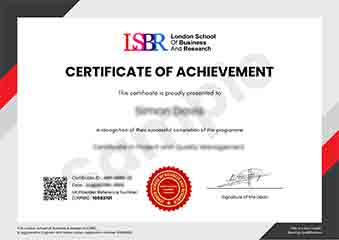
Sample Certificate
Preview the certificate you'll receive upon successful completion of this program.
Get Free Course Info
Receive detailed course information, curriculum breakdown, and career outcomes straight to your inbox.
Employer Sponsored?
Many employers cover professional development costs. Request a corporate invoice and we'll handle the rest. Bulk enrollment discounts available for teams of 3+.
How You Earn Your Certificate
Four simple steps to your professionally recognised qualification
Enroll & Get Instant Access
Complete your enrollment and access course materials immediately
Study at Your Own Pace
Work through the modules on your schedule, from anywhere in the world
Complete Assessments
Demonstrate your knowledge through practical, real-world assessments
Receive Your Certificate
Get your official LSBR UK certificate, recognised across 180+ countries
Real Results from Real Learners
Our graduates consistently report measurable career growth and professional advancement after completing their programmes.
Reviews from Our Learners
Hear from our students about their experience with the Professional Certificate in Optical Imaging in Cancer Research at LSBR UK - Executive Education.
Charlotte Williams
United Kingdom"The course content was incredibly thorough, providing a deep dive into the latest techniques in optical imaging for cancer research. I gained valuable practical skills that will be directly applicable to my work, enhancing my ability to analyze and interpret imaging data in a clinical setting."
Klaus Mueller
Germany"This course has significantly enhanced my understanding of optical imaging techniques and their applications in cancer research, making me more competitive in the industry. It provided practical insights that I can directly apply to my work, leading to faster and more accurate diagnoses in my current role."
Priya Sharma
India"The course structure was well-organized, providing a clear progression from fundamental concepts to advanced topics in optical imaging, which significantly enhanced my understanding and practical application in cancer research. The comprehensive content covered real-world scenarios, making the learning experience highly beneficial for professional growth in the field."
Need more time to decide?
Join 23,000+ professionals who advanced their careers. Enroll today and start learning immediately.
Enroll NowSecure payment • Instant access • Certificate included