
Professional Certificate in Physiological Responses to Pollution
Earn a Professional Certificate in Physiological Responses to Pollution to gain expertise in assessing and mitigating health impacts of pollution.
Professional Certificate in Physiological Responses to Pollution
Programme Overview
The Professional Certificate in Physiological Responses to Pollution is designed for environmental scientists, public health professionals, and medical researchers who seek to deepen their understanding of how pollutants affect human health at the physiological level. This comprehensive programme equips learners with advanced knowledge in toxicology, epidemiology, and molecular biology, focusing on the mechanisms by which pollutants interact with the human body. It also covers the latest research methodologies and analytical tools used to assess the health impacts of various pollution sources, including air, water, and soil contaminants.
Learners in this programme will develop critical skills in data analysis, risk assessment, and public health policy formulation. They will gain proficiency in interpreting physiological data related to pollution exposure, understanding the molecular and cellular changes that occur, and evaluating the long-term health risks associated with pollution. Additionally, participants will learn to apply this knowledge in real-world scenarios, from conducting field studies to designing public health interventions and advocating for policy changes.
The programme has a significant impact on learners' careers, enhancing their ability to contribute to the development of evidence-based pollution control strategies and public health policies. Graduates will be well-prepared to work in government agencies, non-governmental organizations, academic institutions, and private sector companies focused on environmental and public health. They will be equipped to lead research projects, advise on regulatory policies, and develop community-based initiatives aimed at mitigating the health impacts of pollution.
What You'll Learn
The Professional Certificate in Physiological Responses to Pollution is an intensive, three-month program designed for healthcare professionals, environmental scientists, and policymakers aiming to understand and mitigate the health impacts of pollution. This program equips participants with the knowledge and skills to analyze the physiological effects of various pollutants on human health, including respiratory and cardiovascular impacts, and to develop effective strategies for public health interventions.
Key topics include exposure assessment techniques, mechanisms of pollutant-induced health effects, epidemiological studies, and the integration of environmental and health data. Participants engage in practical, hands-on projects, such as designing community health surveillance programs and creating pollution exposure reduction plans for vulnerable populations.
Upon completion, graduates are well-prepared to work in environmental health agencies, healthcare organizations, and research institutions. They can implement pollution monitoring programs, develop public health policies, and contribute to environmental legislation aimed at protecting public health. The program also offers opportunities for further specialization through advanced studies or research in the field of environmental health.
Programme Highlights
Industry-Aligned Curriculum
Developed with industry leaders for job-ready skills
Globally Recognised Certificate
Recognised by employers across 180+ countries
Flexible Online Learning
Study at your own pace with lifetime access
Instant Access
Start learning immediately, no application process
Constantly Updated Content
Latest industry trends and best practices
Career Advancement
87% report measurable career progression within 6 months
Topics Covered
- Introduction to Environmental Pollution: Introduces various types of pollution and their sources.: Biochemical Basis of Physiological Responses: Discusses cellular and molecular mechanisms involved in physiological responses.
- Respiratory System and Pollution: Examines the impact of pollutants on respiratory health.: Cardiovascular Responses to Pollution: Analyzes how pollution affects the heart and blood vessels.
- Neurological Effects of Pollution: Explores the impact of pollutants on brain function and nervous system.: Integrative Physiological Responses: Studies combined effects of multiple pollutants on overall health.
What You Get When You Enroll
Key Facts
Audience: Environmental scientists, public health professionals
Prerequisites: Basic knowledge of physiology
Outcomes: Understand pollution impacts on human health
Ready to Advance Your Career?
Join thousands of professionals who have transformed their careers with LSBR UK
Why This Course
Enhance Expertise and Career Opportunities: Obtaining a Professional Certificate in Physiological Responses to Pollution equips professionals with a deeper understanding of how pollutants affect human health. This knowledge is invaluable for roles in environmental health, occupational safety, and public health, where the ability to assess and mitigate pollution-related risks is crucial.
Expand Industry Network: The certificate program often connects students with industry leaders, researchers, and practitioners. This network can lead to collaborative opportunities, mentorship, and job offers, especially in emerging sectors like environmental toxicology and sustainable development.
Validate Advanced Skills: The certificate validates specialized skills and knowledge, making professionals more competitive in the job market. It demonstrates a commitment to continuous learning and a high level of expertise in physiological responses to pollution, which is particularly relevant given the increasing global focus on environmental health and sustainability.
Improve Decision-Making Capabilities: By understanding the physiological impacts of pollution, professionals can make more informed decisions in policy development, workplace safety measures, and emergency response planning. This insight enhances their ability to protect public health and contribute to more effective environmental policies.
3-4 Weeks
Study at your own pace
Course Brochure
Download our comprehensive course brochure with all details
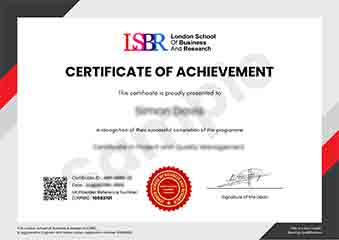
Sample Certificate
Preview the certificate you'll receive upon successful completion of this program.
Get Free Course Info
Receive detailed course information, curriculum breakdown, and career outcomes straight to your inbox.
Employer Sponsored?
Many employers cover professional development costs. Request a corporate invoice and we'll handle the rest. Bulk enrollment discounts available for teams of 3+.
Your Path to Certification
Four simple steps to your professionally recognised qualification
Enroll & Get Instant Access
Complete your enrollment and access course materials immediately
Study at Your Own Pace
Work through the modules on your schedule, from anywhere in the world
Complete Assessments
Demonstrate your knowledge through practical, real-world assessments
Receive Your Certificate
Get your official LSBR UK certificate, recognised across 180+ countries
Join Thousands Who Transformed Their Careers
Our graduates consistently report measurable career growth and professional advancement after completing their programmes.
What People Say About Us
Hear from our students about their experience with the Professional Certificate in Physiological Responses to Pollution at LSBR UK - Executive Education.
Oliver Davies
United Kingdom"The course content was incredibly thorough, covering a wide range of physiological responses to pollution, which has significantly enhanced my understanding of environmental health. Gaining practical skills to analyze and interpret physiological data has been invaluable, particularly for my career in environmental science."
Brandon Wilson
United States"This course has been incredibly valuable, equipping me with a deep understanding of how pollution affects human physiology, which is directly applicable in my role as an environmental health consultant. It has opened up new opportunities for me to contribute more effectively to public health initiatives and policy-making."
Tyler Johnson
United States"The course structure is well-organized, providing a clear path from understanding basic physiological mechanisms to applying this knowledge in real-world scenarios, which has significantly enhanced my professional growth in environmental health."
Still deciding?
Join 23,000+ professionals who advanced their careers. Enroll today and start learning immediately.
Enroll NowSecure payment • Instant access • Certificate included