
Professional Certificate in Threat Modeling for Secure Development
Elevate secure development skills with this certificate, equipping you to proactively identify and mitigate threats through advanced threat modeling techniques.
Professional Certificate in Threat Modeling for Secure Development
About This Course
The Professional Certificate in Threat Modeling for Secure Development is designed to equip professionals with the essential skills to identify, assess, and mitigate security threats in software development. This program is ideal for software developers, security analysts, project managers, and IT professionals who are eager to enhance their security knowledge and contribute effectively to secure software development processes.
Participants will develop key skills in threat modeling methodologies, including the use of structured techniques like STRIDE (Spoofing, Tampering, Repudiation, Information Disclosure, Denial of Service, Elevation of Privilege), and the application of risk assessment frameworks. They will learn to apply threat modeling throughout the software development lifecycle, from requirements gathering to deployment. Additionally, the course covers the integration of threat modeling with other security practices such as code reviews, security testing, and incident response planning.
The career impact of this program is significant, as graduates will be better prepared to address the evolving security landscape. They will be able to proactively identify vulnerabilities, design more secure systems, and contribute to a culture of security within their organizations. This program not only enhances the professional skills of participants but also positions them as valuable assets in the cybersecurity field, capable of leading or contributing to security initiatives across various industries.
What You Will Learn
The Professional Certificate in Threat Modeling for Secure Development is an immersive, industry-focused program designed to equip professionals with the advanced skills necessary to protect digital assets and systems from sophisticated cyber threats. This course is ideal for software developers, security professionals, and IT managers who aim to enhance their ability to proactively mitigate risks in software development processes.
Key topics include understanding the principles of threat modeling, identifying vulnerabilities in software and systems, and implementing effective countermeasures. Participants will learn to use various threat modeling techniques, such as STRIDE (Spoofing, Tampering, Repudiation, Information Disclosure, Denial of Service, Elevation of Privilege), and apply them throughout the software development lifecycle.
By the end of the program, graduates will be able to design and implement secure software solutions, perform comprehensive risk assessments, and collaborate with cross-functional teams to integrate security into development processes. This program not only enhances technical skills but also fosters a security mindset that is crucial in today's digital landscape.
Career opportunities abound for program graduates, including roles such as Threat Modeler, Security Architect, and Chief Information Security Officer. Graduates are well-prepared to lead secure development initiatives, ensuring that organizations can confidently safeguard their systems and data against cyber threats.
Course Benefits
Industry-Aligned Curriculum
Developed with industry leaders for job-ready skills
Globally Recognised Certificate
Recognised by employers across 180+ countries
Flexible Online Learning
Study at your own pace with lifetime access
Instant Access
Start learning immediately, no application process
Constantly Updated Content
Latest industry trends and best practices
Career Advancement
87% report measurable career progression within 6 months
What This Course Covers
- Foundational Concepts: Covers the core principles and key terminology.: Threat Modeling Frameworks: Introduces various frameworks and their applications.
- Attack Surface Analysis: Teaches how to identify and analyze the attack surface of systems.: Threat Agent Modeling: Focuses on understanding and modeling potential threat actors.
- Scenario-Based Modeling: Applies threat modeling techniques to specific real-world scenarios.: Security Controls and Mitigation: Discusses methods to implement and manage security controls.
Everything You Get With This Course
Course Facts
Audience: Software developers, security professionals
Prerequisites: Familiarity with programming, basic security concepts
Outcomes: Understand threat modeling techniques, apply to secure development
Ready to Advance Your Career?
Join thousands of professionals who have transformed their careers with LSBR UK
Why This Course Is Right for You
Enhance Security Practices: Acquiring a Professional Certificate in Threat Modeling for Secure Development equips professionals with advanced tools and methodologies to identify and mitigate security risks proactively. This knowledge is crucial for developing software that withstands sophisticated attacks, thereby reducing the risk of vulnerabilities exploited by cyber threats.
Boost Career Opportunities: As cybersecurity threats become more prevalent and sophisticated, organizations increasingly seek professionals with specialized skills in secure development practices. Holding this certification can differentiate a candidate from others, opening doors to roles such as security architects, application security engineers, and secure development lead positions.
Improve Project Outcomes: Threat modeling is a critical phase in the software development lifecycle. By incorporating this practice, professionals can anticipate and address potential security issues early, leading to higher quality software that is more resistant to attacks. This proactive approach can result in fewer security breaches and reduced costs associated with remediation.
Strengthen Compliance and Trust: Many industries have stringent regulatory requirements for data protection and security. Gaining this certificate demonstrates a commitment to adhering to these standards, which can enhance trust among stakeholders and improve an organization’s compliance posture. This is particularly valuable in sectors like finance, healthcare, and government, where data security is paramount.
3-4 Weeks
Study at your own pace
Course Brochure
Download our comprehensive course brochure with all details
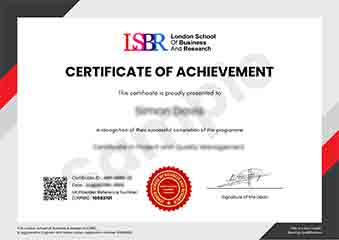
Sample Certificate
Preview the certificate you'll receive upon successful completion of this program.
Get Free Course Info
Receive detailed course information, curriculum breakdown, and career outcomes straight to your inbox.
Employer Sponsored?
Many employers cover professional development costs. Request a corporate invoice and we'll handle the rest. Bulk enrollment discounts available for teams of 3+.
How You Earn Your Certificate
Four simple steps to your professionally recognised qualification
Enroll & Get Instant Access
Complete your enrollment and access course materials immediately
Study at Your Own Pace
Work through the modules on your schedule, from anywhere in the world
Complete Assessments
Demonstrate your knowledge through practical, real-world assessments
Receive Your Certificate
Get your official LSBR UK certificate, recognised across 180+ countries
Real Results from Real Learners
Our graduates consistently report measurable career growth and professional advancement after completing their programmes.
Reviews from Our Learners
Hear from our students about their experience with the Professional Certificate in Threat Modeling for Secure Development at LSBR UK - Executive Education.
Charlotte Williams
United Kingdom"The course content is incredibly thorough and well-structured, providing a solid foundation in threat modeling that has directly enhanced my ability to identify and mitigate security risks in software development projects. It has been invaluable in preparing me for more advanced security roles and has given me practical tools to apply in real-world scenarios."
Rahul Singh
India"This course has been incredibly valuable, equipping me with the skills to proactively identify and mitigate security threats in software development. It has directly enhanced my resume and opened up new opportunities in the cybersecurity field."
Madison Davis
United States"The course is well-structured, offering a comprehensive overview of threat modeling that directly translates to practical security strategies in software development, significantly enhancing my professional skills."
Need more time to decide?
Join 23,000+ professionals who advanced their careers. Enroll today and start learning immediately.
Enroll NowSecure payment • Instant access • Certificate included