
Professional Certificate in Toxic Metal Cycling in Aquatic Systems
Gain expertise in toxic metal cycling in aquatic systems, enhancing environmental protection and remediation efforts.
Professional Certificate in Toxic Metal Cycling in Aquatic Systems
About This Course
The Professional Certificate in Toxic Metal Cycling in Aquatic Systems is a comprehensive program designed for environmental scientists, engineers, and researchers who seek to deepen their understanding of the complex interactions between toxic metals and aquatic ecosystems. This program offers a detailed exploration of the mechanisms by which toxic metals move through aquatic environments, including dispersion, adsorption, and biogeochemical cycling, and the impact of these processes on water quality and aquatic life. It also addresses the latest methodologies for monitoring and assessing the presence and effects of toxic metals in water bodies, equipping participants with the skills necessary to conduct robust environmental assessments and remediation efforts.
Participants in this program will develop a robust set of skills and knowledge essential for addressing environmental challenges related to toxic metals. They will learn advanced analytical techniques for detecting and quantifying toxic metals, understand the ecological impacts of metal contamination, and gain proficiency in modeling metal cycling and predicting environmental outcomes. Additionally, the program emphasizes the importance of stakeholder engagement and policy compliance, preparing learners to effectively communicate findings and contribute to informed decision-making processes.
The career impact of this program is significant, providing graduates with the expertise to engage in various roles within academia, government agencies, consulting firms, and non-profit organizations. Graduates can pursue positions such as environmental scientists, aquatic toxicologists, and environmental consultants, contributing to the development and implementation of policies that protect aquatic ecosystems and human health from the harmful effects of toxic metals.
What You Will Learn
Explore the intricate dynamics of toxic metal cycling in aquatic systems through our esteemed Professional Certificate program. Designed for environmental scientists, policymakers, and water resource managers, this program equips you with the latest knowledge and practical skills to address the challenges posed by metal pollution in aquatic environments.
Key topics include the sources and fate of toxic metals, bioavailability and toxicity, environmental monitoring techniques, and remediation strategies. You will gain hands-on experience with state-of-the-art analytical tools and learn from experts in the field. This program bridges theoretical knowledge with real-world applications, enabling you to contribute effectively to the development of sustainable water management practices.
Upon completion, graduates can apply their expertise in various sectors, such as environmental consulting firms, governmental agencies, research institutions, and non-profit organizations. Potential career opportunities range from environmental health and safety roles to research and development in water quality management. With this certificate, you will be well-prepared to lead initiatives aimed at protecting aquatic ecosystems and human health from the adverse effects of toxic metals.
Course Benefits
Industry-Aligned Curriculum
Developed with industry leaders for job-ready skills
Globally Recognised Certificate
Recognised by employers across 180+ countries
Flexible Online Learning
Study at your own pace with lifetime access
Instant Access
Start learning immediately, no application process
Constantly Updated Content
Latest industry trends and best practices
Career Advancement
87% report measurable career progression within 6 months
What This Course Covers
- Introduction to Toxic Metals: Overview of metallic elements and their environmental significance.: Aquatic Systems Basics: Understanding the composition and functions of aquatic environments.
- Toxic Metal Sources and Pathways: Identification of sources and routes of toxic metal contamination.: Bioavailability and Bioaccumulation: Factors affecting metal uptake and accumulation in aquatic organisms.
- Ecological Impact Assessment: Evaluation of toxic metal effects on aquatic ecosystems.: Remediation and Management Strategies: Techniques for mitigating toxic metal pollution.
Everything You Get With This Course
Course Facts
Audience: Environmental scientists, water quality specialists
Prerequisites: Basic knowledge of chemistry, biology
Outcomes: Understand metal cycling, assess aquatic impacts, develop remediation strategies
Ready to Advance Your Career?
Join thousands of professionals who have transformed their careers with LSBR UK
Why This Course Is Right for You
Enhance Expertise in Water Quality Management: Earning a Professional Certificate in Toxic Metal Cycling in Aquatic Systems provides professionals with in-depth knowledge of contaminants like mercury, lead, and cadmium. This enhances their ability to assess and manage water quality in various settings, including industrial, agricultural, and urban environments.
Expand Career Opportunities: The certificate opens doors to specialized roles such as environmental toxicologist, water quality specialist, and aquatic ecologist. Professionals with this certification can work in government agencies, environmental consulting firms, research institutions, and non-profit organizations, ensuring a diverse and fulfilling career path.
Strengthen Regulatory Compliance Skills: Understanding the cycling of toxic metals in aquatic systems is crucial for ensuring compliance with environmental regulations. The certificate equips professionals with the knowledge to develop and implement strategies that meet legal standards, thereby reducing the risk of fines and legal actions for non-compliance.
3-4 Weeks
Study at your own pace
Course Brochure
Download our comprehensive course brochure with all details
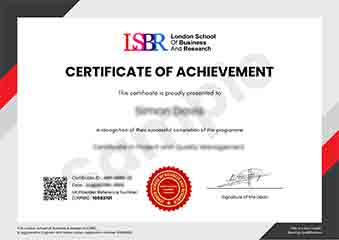
Sample Certificate
Preview the certificate you'll receive upon successful completion of this program.
Get Free Course Info
Receive detailed course information, curriculum breakdown, and career outcomes straight to your inbox.
Employer Sponsored?
Many employers cover professional development costs. Request a corporate invoice and we'll handle the rest. Bulk enrollment discounts available for teams of 3+.
How You Earn Your Certificate
Four simple steps to your professionally recognised qualification
Enroll & Get Instant Access
Complete your enrollment and access course materials immediately
Study at Your Own Pace
Work through the modules on your schedule, from anywhere in the world
Complete Assessments
Demonstrate your knowledge through practical, real-world assessments
Receive Your Certificate
Get your official LSBR UK certificate, recognised across 180+ countries
Real Results from Real Learners
Our graduates consistently report measurable career growth and professional advancement after completing their programmes.
Reviews from Our Learners
Hear from our students about their experience with the Professional Certificate in Toxic Metal Cycling in Aquatic Systems at LSBR UK - Executive Education.
Oliver Davies
United Kingdom"The course content was incredibly detailed and well-researched, providing a deep understanding of toxic metal cycling in aquatic systems. I gained valuable practical skills that will be directly applicable to my work in environmental consulting, particularly in assessing and mitigating metal contamination in water bodies."
Zoe Williams
Australia"This course has significantly enhanced my understanding of toxic metal cycling in aquatic systems, making me more competitive in the environmental consulting industry. The practical applications and real-world case studies have provided me with valuable skills to address environmental challenges more effectively."
Ahmad Rahman
Malaysia"The course structure was well-organized, providing a clear progression from basic principles to advanced topics in toxic metal cycling in aquatic systems, which greatly enhanced my understanding and practical application skills. The comprehensive content covered real-world scenarios, making the knowledge gained highly valuable for my professional growth in environmental science."
Need more time to decide?
Join 23,000+ professionals who advanced their careers. Enroll today and start learning immediately.
Enroll NowSecure payment • Instant access • Certificate included