
Undergraduate Certificate in Bayesian Modeling for Ecological Research
Gain expertise in Bayesian modeling techniques to advance ecological research and data analysis.
Undergraduate Certificate in Bayesian Modeling for Ecological Research
About This Course
The Undergraduate Certificate in Bayesian Modeling for Ecological Research is designed for students and professionals in the field of ecology with a desire to enhance their analytical skills using advanced statistical methods. This program provides a comprehensive foundation in Bayesian statistical techniques, equipping learners with the ability to model complex ecological data and address real-world ecological challenges. Key topics include Bayesian inference, Markov Chain Monte Carlo (MCMC) methods, and the application of these techniques to ecological datasets, such as population dynamics, community ecology, and environmental monitoring.
Participants will develop a strong understanding of Bayesian modeling principles and practical skills in using software tools for Bayesian analysis. Through hands-on projects and case studies, learners will gain proficiency in applying Bayesian methods to ecological research, including model specification, parameter estimation, and model evaluation. This program is ideal for those who wish to deepen their knowledge in ecological modeling and contribute to innovative research or professional practice in environmental science.
The program has a significant career impact, preparing students for roles in ecological research, conservation biology, environmental consulting, and data analysis in government and non-government organizations. Graduates are well-equipped to engage in cutting-edge ecological research, develop predictive models for ecosystem health, and make informed decisions based on statistical evidence. This certificate can also serve as a stepping stone for advanced studies in ecology, statistics, or related fields, opening up a range of career opportunities in academia, research institutions, and the private sector.
What You Will Learn
Embark on a transformative journey into the world of ecological research with our Undergraduate Certificate in Bayesian Modeling for Ecological Research. This program equips students with cutting-edge skills in statistical modeling, particularly Bayesian methods, which are essential for analyzing complex ecological data and making evidence-based decisions. Key topics include Bayesian inference, model selection, and Markov Chain Monte Carlo techniques, all underpinned by practical applications in ecology.
Graduates of this program will be well-prepared to address real-world ecological challenges, from wildlife population dynamics to ecosystem health assessments. They will learn to integrate diverse data sources, develop predictive models, and communicate findings effectively to stakeholders. Proficiency in Bayesian modeling enhances problem-solving capabilities, making graduates highly sought after in academia, government agencies, and non-profit organizations dedicated to environmental conservation and sustainability.
This certificate opens doors to various career paths, including environmental consultant, researcher, data analyst, and policy advisor. By leveraging Bayesian approaches, you can contribute to the development of robust ecological models that inform conservation strategies and support sustainable practices. Whether you aspire to advance ecological knowledge or drive practical solutions to environmental issues, this program provides the foundational skills and insights needed to succeed in your chosen career.
Course Benefits
Industry-Aligned Curriculum
Developed with industry leaders for job-ready skills
Globally Recognised Certificate
Recognised by employers across 180+ countries
Flexible Online Learning
Study at your own pace with lifetime access
Instant Access
Start learning immediately, no application process
Constantly Updated Content
Latest industry trends and best practices
Career Advancement
87% report measurable career progression within 6 months
What This Course Covers
- Introduction to Bayesian Statistics: Introduces the fundamental principles of Bayesian statistics and its application in ecological research.: Prior and Posterior Distributions: Explains the concepts of prior, likelihood, and posterior distributions, and how they are used in Bayesian modeling.
- Markov Chain Monte Carlo (MCMC): Covers the theory and practical implementation of MCMC methods for parameter estimation.: Hierarchical Modeling: Discusses the use of hierarchical models to analyze complex ecological data structures.
- Model Checking and Validation: Teaches techniques for assessing model fit and validating ecological models.: Case Studies in Bayesian Ecological Modeling: Applies Bayesian modeling techniques to real-world ecological datasets and problems.
Everything You Get With This Course
Course Facts
For professionals, researchers, or students in ecology, statistics
Basic statistical knowledge and familiarity with R or Python
Proficient in applying Bayesian models to ecological data
Capable of conducting independent Bayesian analysis in research
Understands Bayesian principles and their ecological applications
Ready to Advance Your Career?
Join thousands of professionals who have transformed their careers with LSBR UK
Why This Course Is Right for You
Enhance Analytical Skills: Acquiring a Certificate in Bayesian Modeling for Ecological Research equips professionals with advanced statistical tools. Bayesian methods offer a robust framework for incorporating prior knowledge with data, which can significantly improve predictive accuracy and decision-making in ecological studies. This skill set is highly valued in research and can lead to more credible and impactful publications.
Career Advancement Opportunities: The demand for ecologists skilled in Bayesian modeling is on the rise. Organizations and institutions are increasingly seeking professionals who can handle complex data sets and apply sophisticated statistical techniques. A certificate can distinguish candidates in job applications, opening doors to leadership roles or specialized positions such as ecological data analyst or environmental scientist.
Adaptability to Emerging Technologies: As ecological research evolves, so do the tools and methods used. Bayesian modeling is a rapidly developing field with ongoing advancements in computational algorithms and software. A certificate ensures professionals stay current with these developments, making them more adaptable and competitive in a dynamic field. This adaptability can also facilitate collaboration across different scientific disciplines, enhancing interdisciplinary projects and innovation.
3-4 Weeks
Study at your own pace
Course Brochure
Download our comprehensive course brochure with all details
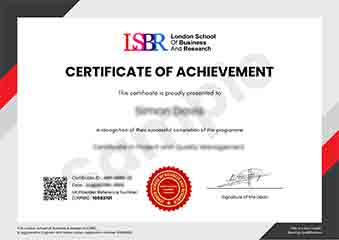
Sample Certificate
Preview the certificate you'll receive upon successful completion of this program.
Get Free Course Info
Receive detailed course information, curriculum breakdown, and career outcomes straight to your inbox.
Employer Sponsored?
Many employers cover professional development costs. Request a corporate invoice and we'll handle the rest. Bulk enrollment discounts available for teams of 3+.
How You Earn Your Certificate
Four simple steps to your professionally recognised qualification
Enroll & Get Instant Access
Complete your enrollment and access course materials immediately
Study at Your Own Pace
Work through the modules on your schedule, from anywhere in the world
Complete Assessments
Demonstrate your knowledge through practical, real-world assessments
Receive Your Certificate
Get your official LSBR UK certificate, recognised across 180+ countries
Real Results from Real Learners
Our graduates consistently report measurable career growth and professional advancement after completing their programmes.
Reviews from Our Learners
Hear from our students about their experience with the Undergraduate Certificate in Bayesian Modeling for Ecological Research at LSBR UK - Executive Education.
Oliver Davies
United Kingdom"This course provided high-quality, comprehensive material that significantly enhanced my understanding of Bayesian modeling techniques, crucial for ecological research. I gained valuable practical skills that have already improved my ability to analyze ecological data and draw meaningful conclusions."
Zoe Williams
Australia"This course has been instrumental in enhancing my analytical skills, particularly in applying Bayesian modeling techniques to ecological research. It has significantly boosted my career prospects by equipping me with tools that are highly valued in the environmental consulting industry."
Brandon Wilson
United States"The course structure is well-organized, providing a clear path from basic concepts to advanced Bayesian modeling techniques, which has greatly enhanced my understanding and ability to apply these methods in ecological research. The comprehensive content and real-world case studies have been invaluable for my professional growth in this field."
Need more time to decide?
Join 23,000+ professionals who advanced their careers. Enroll today and start learning immediately.
Enroll NowSecure payment • Instant access • Certificate included