
Undergraduate Certificate in Biochemical Hazard Detection and Monitoring
Gain expertise in detecting and monitoring biochemical hazards for public health and safety.
Undergraduate Certificate in Biochemical Hazard Detection and Monitoring
About This Course
The Undergraduate Certificate in Biochemical Hazard Detection and Monitoring is designed for students and professionals looking to gain a foundational understanding of biochemical hazards, their detection, and the methodologies employed in monitoring and managing these hazards. This program equips learners with the knowledge and skills necessary to identify and assess biochemical threats in various environments, including food, water, and air. Through a combination of theoretical study and practical laboratory work, participants will explore the principles of biochemical analysis, the use of advanced detection technologies, and the implementation of effective monitoring protocols.
During the course, learners will develop key skills in biochemical laboratory techniques, including sample preparation, separation, and analysis using spectroscopy and chromatography. They will also learn about the regulatory frameworks governing the detection and monitoring of biochemical hazards, as well as the ethical considerations in handling such issues. These competencies are essential for careers in environmental health, food safety, pharmaceuticals, and public health, where the ability to detect and respond to biochemical threats is critical.
The program has a significant impact on learners' career trajectories, preparing them for roles such as biochemical analysts, environmental health officers, and quality control specialists. Graduates will be well-positioned to work in government agencies, private sector laboratories, and international organizations, contributing to the safeguarding of public health and the environment from biochemical threats.
What You Will Learn
The Undergraduate Certificate in Biochemical Hazard Detection and Monitoring equips students with the skills and knowledge necessary to identify and manage biochemical threats in diverse settings. This program, designed in collaboration with industry experts, covers essential topics such as molecular biology, chemical analysis, and environmental monitoring techniques. Students learn to use advanced laboratory equipment and software to analyze samples and interpret data, ensuring accurate and reliable detection of hazards.
Upon completion, graduates are well-prepared to work in various sectors, including public health, pharmaceuticals, and environmental protection. They can apply their skills in laboratories, fieldwork, and regulatory compliance, contributing to the safety and well-being of communities. Career opportunities include roles in biohazard response teams, environmental monitoring agencies, and biotech companies, where they can implement preventive measures and contribute to the development of new detection technologies.
This program also emphasizes the importance of ethical considerations and the responsible use of technology, preparing students to navigate the complexities of working with biochemical substances. By fostering a deep understanding of biochemical hazards and effective detection methods, the program aims to produce graduates who are ready to address emerging challenges in biosecurity and environmental protection.
Course Benefits
Industry-Aligned Curriculum
Developed with industry leaders for job-ready skills
Globally Recognised Certificate
Recognised by employers across 180+ countries
Flexible Online Learning
Study at your own pace with lifetime access
Instant Access
Start learning immediately, no application process
Constantly Updated Content
Latest industry trends and best practices
Career Advancement
87% report measurable career progression within 6 months
What This Course Covers
- Fundamentals of Biochemistry: Introduces basic biochemical principles and their relevance to hazard detection.: Hazard Identification Techniques: Describes methods for identifying various biochemical hazards.
- Analytical Chemistry for Biochemical Analysis: Covers techniques for analyzing biochemical samples.: Environmental Monitoring: Focuses on monitoring techniques for detecting biochemical hazards in the environment.
- Laboratory Procedures: Outlines standard procedures for handling and testing biochemical samples.: Data Interpretation and Reporting: Teaches how to interpret biochemical data and prepare reports for stakeholders.
Everything You Get With This Course
Course Facts
Audience: Students, professionals in biology, chemistry
Prerequisites: High school diploma, basic science knowledge
Outcomes: Proficient in biochemical hazard detection, monitoring techniques
Ready to Advance Your Career?
Join thousands of professionals who have transformed their careers with LSBR UK
Why This Course Is Right for You
Enhanced Career Opportunities: Earning an Undergraduate Certificate in Biochemical Hazard Detection and Monitoring equips professionals with specialized skills in identifying and managing biohazards, making them highly sought after in sectors like environmental health, pharmaceuticals, and biotechnology. This certificate can open doors to roles such as biohazard analyst, environmental health officer, or safety officer, where the ability to monitor and detect hazardous substances is crucial.
Advanced Skill Development: The program focuses on practical applications of biochemical analysis techniques, such as spectrophotometry, chromatography, and immunological assays. These skills are essential for monitoring and mitigating risks associated with biological contaminants. Graduates are adept at using advanced laboratory equipment and software, which enhances their analytical and problem-solving abilities.
Regulatory Compliance and Risk Management: Understanding the latest regulatory standards and protocols for biohazard management is a key component of the certificate. Professionals gain knowledge in implementing safety measures, developing emergency response plans, and ensuring compliance with local, national, and international health and safety regulations. This expertise is vital for industries handling biological materials, ensuring both safety and legal compliance.
3-4 Weeks
Study at your own pace
Course Brochure
Download our comprehensive course brochure with all details
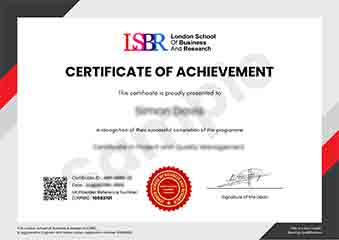
Sample Certificate
Preview the certificate you'll receive upon successful completion of this program.
Get Free Course Info
Receive detailed course information, curriculum breakdown, and career outcomes straight to your inbox.
Employer Sponsored?
Many employers cover professional development costs. Request a corporate invoice and we'll handle the rest. Bulk enrollment discounts available for teams of 3+.
How You Earn Your Certificate
Four simple steps to your professionally recognised qualification
Enroll & Get Instant Access
Complete your enrollment and access course materials immediately
Study at Your Own Pace
Work through the modules on your schedule, from anywhere in the world
Complete Assessments
Demonstrate your knowledge through practical, real-world assessments
Receive Your Certificate
Get your official LSBR UK certificate, recognised across 180+ countries
Real Results from Real Learners
Our graduates consistently report measurable career growth and professional advancement after completing their programmes.
Reviews from Our Learners
Hear from our students about their experience with the Undergraduate Certificate in Biochemical Hazard Detection and Monitoring at LSBR UK - Executive Education.
Sophie Brown
United Kingdom"The course provided high-quality, up-to-date content that significantly enhanced my understanding of biochemical hazard detection and monitoring techniques. I gained valuable practical skills that I believe will be crucial in my future career in environmental health."
Ashley Rodriguez
United States"This course has been incredibly valuable, equipping me with the latest techniques in biochemical hazard detection that are directly applicable in the field. It has not only enhanced my analytical skills but also opened up new career opportunities in environmental and public health sectors."
Ahmad Rahman
Malaysia"The course structure is well-organized, providing a clear pathway from basic principles to advanced applications in biochemical hazard detection and monitoring, which has significantly enhanced my understanding and practical skills in this field. The comprehensive content and real-world case studies have been particularly beneficial for my professional growth and career prospects."
Need more time to decide?
Join 23,000+ professionals who advanced their careers. Enroll today and start learning immediately.
Enroll NowSecure payment • Instant access • Certificate included