
Undergraduate Certificate in Cytoskeleton Structure and Mechanics
Master cytoskeleton mechanics to advance biomedical research, enhancing your expertise in cellular structure and function for career growth.
Undergraduate Certificate in Cytoskeleton Structure and Mechanics
About This Course
This rigorous undergraduate certificate immerses you in the dynamic world of cellular architecture, focusing on actin filaments, microtubules, and intermediate filaments. Designed for biology majors and early-career researchers, the curriculum bridges molecular biology with biophysics to explain how cells maintain shape and move. You will explore the mechanical properties of cytoskeletal networks through hands-on microscopy and computational modeling exercises. The programme suits students seeking a specialized foundation in cell mechanics before pursuing advanced degrees or industry roles. By combining theoretical lectures with laboratory practicums, you gain immediate access to cutting-edge techniques in live-cell imaging and force measurement.
You will master the quantitative analysis of cellular forces using Python-based simulation tools and advanced microscopy software. The coursework develops your ability to interpret complex data sets regarding protein dynamics and membrane interactions. You learn to design experiments that isolate specific cytoskeletal components for structural analysis under varying mechanical stresses. Critical thinking skills emerge as you evaluate recent literature on cytoskeleton-related diseases and therapeutic interventions. This technical proficiency ensures you can troubleshoot experimental protocols and optimize imaging parameters for high-resolution data collection.
Graduates secure positions in pharmaceutical research, biotech startups, and academic laboratories requiring expertise in cell biology. Employers value your unique blend of mechanical insight and molecular knowledge when tackling drug discovery challenges. This certificate distinguishes your profile by demonstrating competency in specialized areas often overlooked in general biology degrees. You gain a competitive edge in applying for research assistant roles or graduate programs focused on tissue engineering and oncology
What You Will Learn
Discover the hidden architecture of life with our Undergraduate Certificate in Cytoskeleton Structure and Mechanics. This dynamic programme invites you to explore the intricate networks that give cells their shape, strength, and movement. You will move beyond textbook diagrams to understand how actin filaments, microtubules, and intermediate filaments function as the cellular scaffolding and motor systems. By mastering these fundamental biological mechanisms, you gain a competitive edge in the rapidly evolving fields of biotechnology and medical research.
Our curriculum blends rigorous theoretical knowledge with hands-on laboratory experience. You will study the molecular dynamics of cell division, intracellular transport, and mechanical signaling pathways. Advanced microscopy techniques and computational modeling form the core of your practical training, allowing you to visualize and quantify cellular behavior in real time. These skills are essential for anyone aiming to contribute to breakthroughs in tissue engineering, drug delivery systems, or cancer therapeutics, where understanding cell mechanics is critical.
Graduates of this certificate emerge with a unique ability to analyze complex biological systems through a mechanical lens. Employers in pharmaceutical companies, diagnostic labs, and academic research institutions value this specialized expertise. You will be prepared for roles such as a research associate, laboratory technician, or quality control specialist. The programme also serves as a strong foundation for postgraduate study in biomedical engineering or molecular biology. We encourage you to take this step toward a rewarding career where your curiosity drives innovation. Join a community of dedicated learners who are shaping the future of cellular science. Your journey
Course Benefits
Industry-Aligned Curriculum
Developed with industry leaders for job-ready skills
Globally Recognised Certificate
Recognised by employers across 180+ countries
Flexible Online Learning
Study at your own pace with lifetime access
Instant Access
Start learning immediately, no application process
Constantly Updated Content
Latest industry trends and best practices
Career Advancement
87% report measurable career progression within 6 months
What This Course Covers
- Cellular Architecture Basics: Introduces the primary components of the cytoskeleton, including microtubules, actin filaments, and intermediate filaments.: Polymerization Dynamics: Examines the biochemical mechanisms governing the assembly and disassembly of cytoskeletal polymers.
- Motor Protein Mechanics: Analyzes how motor proteins like kinesin, dynein, and myosin generate force and transport cargo along cytoskeletal tracks.: Structural Integrity and Tension: Explores how the cytoskeleton maintains cell shape and resists mechanical stress through tension and compression.
- Cell Motility and Division: Investigates the role of cytoskeletal rearrangements in processes such as mitosis, cytokinesis, and cellular migration.: Experimental Techniques in Cytoskeleton Research: Reviews modern imaging and biophysical methods used to visualize and measure cytoskeletal structures and forces.
Everything You Get With This Course
Course Facts
Audience: Biology majors eager to master cellular mechanics.
Prerequisites: Introductory cell biology and basic physics courses.
Outcomes: Gain expertise in cytoskeletal dynamics and research skills.
Ready to Advance Your Career?
Join thousands of professionals who have transformed their careers with LSBR UK
Why This Course Is Right for You
Embarking on a specialized journey in cellular biology can significantly elevate your professional trajectory. The Undergraduate Certificate in Cytoskeleton Structure and Mechanics offers a unique opportunity to master the fundamental frameworks that drive cell movement, division, and signaling. Here is why this program deserves your attention.
You will gain deep expertise in mechanobiology, a rapidly growing field bridging physics and biology. Understanding how cells sense and respond to mechanical forces allows you to contribute to cutting-edge research in tissue engineering and regenerative medicine. This niche knowledge makes you highly attractive to biotech firms developing advanced biomaterials.
The curriculum emphasizes advanced imaging and computational modeling skills. You will learn to utilize tools like fluorescence microscopy and finite element analysis to visualize and simulate cytoskeletal dynamics. These technical competencies are directly transferable to roles in pharmaceutical R&D, where precise data analysis is crucial for drug discovery and development.
This certificate strengthens your foundation for graduate studies or specialized industry positions. By mastering complex topics such as actin polymerization and microtubule stability, you demonstrate a rigorous scientific mindset. Employers value candidates who can dissect intricate biological mechanisms and apply them to solve real-world health challenges.
Networking opportunities within the program connect you with leading researchers and industry experts. These relationships can open doors to internships, collaborations, and mentorship, accelerating your career growth. You are not just learning theory; you are building a professional community that supports your long-term success in
3-4 Weeks
Study at your own pace
Course Brochure
Download our comprehensive course brochure with all details
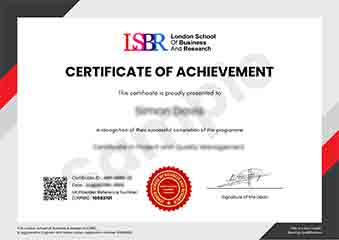
Sample Certificate
Preview the certificate you'll receive upon successful completion of this program.
Get Free Course Info
Receive detailed course information, curriculum breakdown, and career outcomes straight to your inbox.
Employer Sponsored?
Many employers cover professional development costs. Request a corporate invoice and we'll handle the rest. Bulk enrollment discounts available for teams of 3+.
How You Earn Your Certificate
Four simple steps to your professionally recognised qualification
Enroll & Get Instant Access
Complete your enrollment and access course materials immediately
Study at Your Own Pace
Work through the modules on your schedule, from anywhere in the world
Complete Assessments
Demonstrate your knowledge through practical, real-world assessments
Receive Your Certificate
Get your official LSBR UK certificate, recognised across 180+ countries
Real Results from Real Learners
Our graduates consistently report measurable career growth and professional advancement after completing their programmes.
Reviews from Our Learners
Hear from our students about their experience with the Undergraduate Certificate in Cytoskeleton Structure and Mechanics at LSBR UK - Executive Education.
Charlotte Williams
United Kingdom"The deep dive into actin dynamics and microtubule mechanics provided a robust theoretical foundation that immediately translated into practical lab skills. Mastering techniques like fluorescence microscopy and traction force microscopy has significantly boosted my confidence in handling complex cellular imaging data."
Muhammad Hassan
Malaysia"Mastering the mechanical properties of cytoskeletal networks gave me the technical edge needed to secure a role in biomaterials engineering. The course’s focus on real-world applications allowed me to immediately contribute to developing tissue scaffolds that mimic natural cellular environments."
Wei Ming Tan
Singapore"The logical progression from molecular architecture to macroscopic mechanics provided a robust framework for understanding cellular dynamics. This comprehensive approach significantly enhanced my ability to apply theoretical concepts to complex biological systems, directly supporting my professional development in biomedical research."
Need more time to decide?
Join 23,000+ professionals who advanced their careers. Enroll today and start learning immediately.
Enroll NowSecure payment • Instant access • Certificate included