
Undergraduate Certificate in Designing for Failure in Complex Systems
Gain expertise in intentionally designing for failure to enhance resilience and safety in complex systems.
Undergraduate Certificate in Designing for Failure in Complex Systems
About This Course
The Undergraduate Certificate in Designing for Failure in Complex Systems is tailored for students and professionals seeking to understand and address the intrinsic challenges of complex systems, particularly those prone to failure. This program equips learners with a comprehensive understanding of system dynamics, resilience, and the importance of anticipating potential failures to enhance overall system performance. It covers a range of topics from foundational theories in systems engineering to advanced methodologies in risk management, failure analysis, and design principles that promote robust and adaptable solutions.
Key skills and knowledge developed include the ability to analyze complex systems, predict failure points, and design failure-tolerant systems. Learners will master techniques for integrating diverse system components, managing uncertainties, and leveraging data analytics to improve system reliability. They will also gain proficiency in using simulation tools, understanding regulatory frameworks, and communicating design solutions effectively to stakeholders.
This program has a significant impact on careers within sectors such as aerospace, automotive, healthcare, and technology. Graduates will be well-prepared to lead projects that require a deep understanding of system failures and the strategies to mitigate them, ensuring that their innovations are not only effective but also safe and reliable. The skills acquired are highly sought after, opening up opportunities for roles in system design, risk assessment, project management, and regulatory compliance.
What You Will Learn
The Undergraduate Certificate in Designing for Failure in Complex Systems is a transformative educational program designed to equip students with the knowledge and skills to anticipate, mitigate, and manage failure in intricate systems. This program is invaluable for professionals and students aiming to enhance system reliability across various industries, from healthcare and transportation to technology and urban planning.
Students delve into key topics such as systems theory, risk assessment, failure modes and effects analysis, and resilience engineering. Through interactive workshops, hands-on projects, and case studies, learners gain practical experience in designing robust systems that can withstand and recover from unexpected challenges. The curriculum emphasizes the importance of collaboration, critical thinking, and innovation, preparing graduates to tackle real-world complexities.
Graduates apply these skills in diverse roles, such as systems analyst, reliability engineer, and design consultant. They can work on developing safety protocols in medical devices, optimizing traffic flow in urban planning, or creating fail-safe software systems. This program not only fosters technical expertise but also nurtures a mindset that values proactive problem-solving and continuous improvement, opening doors to a wide array of career opportunities in both established and emerging fields.
Course Benefits
Industry-Aligned Curriculum
Developed with industry leaders for job-ready skills
Globally Recognised Certificate
Recognised by employers across 180+ countries
Flexible Online Learning
Study at your own pace with lifetime access
Instant Access
Start learning immediately, no application process
Constantly Updated Content
Latest industry trends and best practices
Career Advancement
87% report measurable career progression within 6 months
What This Course Covers
- Introduction to Designing for Failure: Introduces the concept of intentional design to enhance system reliability.: System Analysis and Modeling: Teaches how to analyze and model complex systems to predict potential failure points.
- Risk Management Strategies: Discusses strategies for identifying, assessing, and mitigating risks in complex systems.: Case Studies in Failure: Analyzes real-world examples of failures in complex systems and the lessons learned.
- Design Thinking for Resilience: Applies design thinking principles to create resilient and adaptive system designs.: Future Trends in System Design: Explores emerging technologies and methodologies in designing for failure in complex systems.
Everything You Get With This Course
Course Facts
For professionals in tech, engineering
No specific prerequisites required
Understand failure modes in complex systems
Develop resilience in system design
Apply failure analysis techniques effectively
Ready to Advance Your Career?
Join thousands of professionals who have transformed their careers with LSBR UK
Why This Course Is Right for You
Enhance Problem-Solving Skills: The Undergraduate Certificate in Designing for Failure in Complex Systems equips professionals with the ability to anticipate and mitigate potential issues in complex systems. This skill is crucial in fields like engineering, software development, and urban planning, where system failures can have significant impacts. By learning to design for failure, professionals can improve system resilience and safety.
Foster Innovation: This program encourages a mindset that views failure as an opportunity for learning and innovation. This approach can lead to more robust and adaptable designs that can better handle unexpected challenges. For instance, in the automotive industry, understanding how to design systems to fail safely can lead to the development of more reliable and efficient autonomous vehicles.
Expand Career Opportunities: Graduates of this program are well-prepared to tackle complex, multifaceted challenges in various industries. This unique skill set can open doors to specialized roles such as systems reliability engineer, risk management analyst, and design thinking facilitator. Employers in sectors like healthcare, aviation, and technology are increasingly seeking professionals who can proactively address system vulnerabilities and enhance overall system performance.
Boost Decision-Making Capabilities: The course provides tools and methodologies for analyzing complex systems and predicting potential failures. These skills are invaluable for making informed decisions that can save resources, prevent accidents, and improve system efficiency. In the cybersecurity field, for example, professionals trained in designing for failure can develop more effective strategies to protect against and respond to cyber threats.
3-4 Weeks
Study at your own pace
Course Brochure
Download our comprehensive course brochure with all details
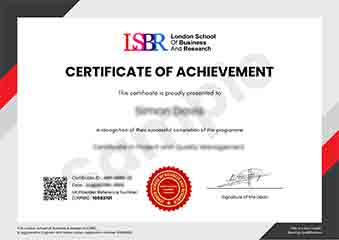
Sample Certificate
Preview the certificate you'll receive upon successful completion of this program.
Get Free Course Info
Receive detailed course information, curriculum breakdown, and career outcomes straight to your inbox.
Employer Sponsored?
Many employers cover professional development costs. Request a corporate invoice and we'll handle the rest. Bulk enrollment discounts available for teams of 3+.
How You Earn Your Certificate
Four simple steps to your professionally recognised qualification
Enroll & Get Instant Access
Complete your enrollment and access course materials immediately
Study at Your Own Pace
Work through the modules on your schedule, from anywhere in the world
Complete Assessments
Demonstrate your knowledge through practical, real-world assessments
Receive Your Certificate
Get your official LSBR UK certificate, recognised across 180+ countries
Real Results from Real Learners
Our graduates consistently report measurable career growth and professional advancement after completing their programmes.
Reviews from Our Learners
Hear from our students about their experience with the Undergraduate Certificate in Designing for Failure in Complex Systems at LSBR UK - Executive Education.
James Thompson
United Kingdom"The course content is incredibly thorough, covering a wide range of real-world scenarios that taught me invaluable skills in system resilience and failure analysis. Gaining this knowledge has significantly enhanced my ability to approach complex projects with a more robust and adaptable mindset, which I believe will be highly beneficial in my future career."
Kavya Reddy
India"This course has been incredibly valuable, equipping me with the skills to anticipate and manage failures in complex systems, which is directly applicable to my role in developing robust software solutions. It has opened up new opportunities for me to take on more challenging projects and has significantly enhanced my career prospects in the tech industry."
Kavya Reddy
India"The course structure is well-organized, providing a comprehensive understanding of designing for failure in complex systems, which has greatly enhanced my ability to approach real-world challenges with a more resilient mindset."
Need more time to decide?
Join 23,000+ professionals who advanced their careers. Enroll today and start learning immediately.
Enroll NowSecure payment • Instant access • Certificate included