
Undergraduate Certificate in Developing Robust Diagnostic Models for Complex Diseases
Gain expertise in creating robust diagnostic models for complex diseases, enhancing diagnostic accuracy and patient care outcomes.
Undergraduate Certificate in Developing Robust Diagnostic Models for Complex Diseases
Programme Overview
The Undergraduate Certificate in Developing Robust Diagnostic Models for Complex Diseases is designed for students with a strong background in biology, computer science, or a related field who are eager to contribute to the advancement of healthcare diagnostics. This program focuses on the application of advanced statistical and machine learning techniques to diagnose complex diseases, integrating genetic, genomic, and clinical data. It also emphasizes the ethical considerations and privacy implications in handling sensitive patient data.
Throughout the program, learners will develop a comprehensive set of skills in data analysis, algorithm development, and software engineering, specifically tailored for the creation and validation of diagnostic models. Key areas of study include predictive modeling, feature selection, model evaluation, and the integration of artificial intelligence tools in medical diagnostics. Additionally, learners will gain proficiency in using state-of-the-art software and programming languages such as Python, R, and TensorFlow, as well as familiarity with relevant databases and computational platforms.
This program has a significant impact on learners' career trajectories, preparing them for roles in biotechnology, pharmaceuticals, medical research, and healthcare informatics. Graduates will be equipped to design, implement, and evaluate diagnostic models that can improve patient care and enhance the precision of disease diagnosis. The skills and knowledge gained are highly valued in the industry, making certificate holders well-positioned for careers in research, development, and clinical applications in the field of diagnostic medicine.
What You'll Learn
The 'Undergraduate Certificate in Developing Robust Diagnostic Models for Complex Diseases' is a cutting-edge educational program designed to equip students with the skills necessary to advance the field of medical diagnostics. This program emphasizes the development of robust diagnostic models that can accurately predict and diagnose complex diseases, addressing a critical need in modern healthcare.
Key topics include statistical analysis, machine learning algorithms, data mining techniques, and practical applications of artificial intelligence in medical diagnostics. Students will learn to analyze large datasets, develop predictive models, and validate results using real-world clinical data. The curriculum is designed to bridge the gap between theoretical knowledge and practical application, enabling students to contribute meaningfully to research and development in healthcare.
Upon completion, graduates will be well-prepared to work as research assistants, data analysts, or researchers in academia, hospitals, and pharmaceutical companies. They can also pursue roles in biotech firms, healthcare IT, and public health organizations. The program's focus on hands-on learning and real-world applications ensures that graduates are adept at applying their skills to improve patient outcomes and advance medical science.
This certificate program not only provides a strong foundation in the technical aspects of diagnostic modeling but also fosters critical thinking, problem-solving, and ethical considerations in medical research. It is ideal for students with a passion for healthcare and a desire to innovate in the field of medical diagnostics.
Programme Highlights
Industry-Aligned Curriculum
Developed with industry leaders for job-ready skills
Globally Recognised Certificate
Recognised by employers across 180+ countries
Flexible Online Learning
Study at your own pace with lifetime access
Instant Access
Start learning immediately, no application process
Constantly Updated Content
Latest industry trends and best practices
Career Advancement
87% report measurable career progression within 6 months
Topics Covered
- Foundational Concepts: Covers the core principles and key terminology.: Data Collection: Discusses methods and ethics in collecting data for diagnostic models.
- Data Preprocessing: Focuses on cleaning, normalization, and transformation of raw data.: Machine Learning Techniques: Introduces various machine learning algorithms and their application.
- Model Validation: Teaches strategies for assessing model performance and reliability.: Case Studies: Analyzes real-world examples of diagnostic models in complex diseases.
What You Get When You Enroll
Key Facts
Audience: Healthcare professionals, biostatisticians, researchers
Prerequisites: Basic statistics, biology knowledge
Outcomes: Develop diagnostic models, understand complex diseases
Ready to Advance Your Career?
Join thousands of professionals who have transformed their careers with LSBR UK
Why This Course
Specialization in Diagnostic Models: This certificate program equips professionals with in-depth knowledge of developing robust diagnostic models for complex diseases. It enables them to apply advanced analytics and machine learning techniques to improve diagnostic accuracy and patient outcomes, a critical skill in the healthcare sector.
Career Advancement: By earning this certificate, professionals can advance their careers in healthcare, academia, or biotechnology. It opens doors to roles such as data scientist, medical informatician, or biostatistician, where they can leverage their expertise in diagnostic modeling to drive innovation and improve patient care.
Enhanced Analytical Skills: The program focuses on developing strong analytical and problem-solving skills. Participants learn to interpret complex medical data, understand disease patterns, and design predictive models. These skills are highly valued in the healthcare industry, making professionals more competitive in the job market and better equipped to meet the demands of evolving medical research and clinical practice.
3-4 Weeks
Study at your own pace
Course Brochure
Download our comprehensive course brochure with all details
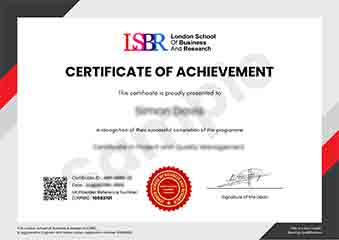
Sample Certificate
Preview the certificate you'll receive upon successful completion of this program.
Get Free Course Info
Receive detailed course information, curriculum breakdown, and career outcomes straight to your inbox.
Employer Sponsored?
Many employers cover professional development costs. Request a corporate invoice and we'll handle the rest. Bulk enrollment discounts available for teams of 3+.
Your Path to Certification
Four simple steps to your professionally recognised qualification
Enroll & Get Instant Access
Complete your enrollment and access course materials immediately
Study at Your Own Pace
Work through the modules on your schedule, from anywhere in the world
Complete Assessments
Demonstrate your knowledge through practical, real-world assessments
Receive Your Certificate
Get your official LSBR UK certificate, recognised across 180+ countries
Join Thousands Who Transformed Their Careers
Our graduates consistently report measurable career growth and professional advancement after completing their programmes.
What People Say About Us
Hear from our students about their experience with the Undergraduate Certificate in Developing Robust Diagnostic Models for Complex Diseases at LSBR UK - Executive Education.
Oliver Davies
United Kingdom"The course provided a deep dive into the complexities of diagnostic models, equipping me with the practical skills to analyze and develop robust models for diagnosing complex diseases. It significantly enhanced my ability to apply statistical methods and machine learning techniques in real-world scenarios, which I believe will be invaluable in my future career in healthcare technology."
Arjun Patel
India"This certificate program has significantly enhanced my ability to develop and apply robust diagnostic models, making my skills highly relevant in the biotech industry. It has opened up new career opportunities and allowed me to contribute more effectively to projects aimed at improving disease diagnosis and patient care."
Ahmad Rahman
Malaysia"The course structure is well-organized, providing a comprehensive understanding of developing robust diagnostic models for complex diseases, which has significantly enhanced my ability to apply theoretical knowledge to real-world medical challenges."
Still deciding?
Join 23,000+ professionals who advanced their careers. Enroll today and start learning immediately.
Enroll NowSecure payment • Instant access • Certificate included