
Undergraduate Certificate in Economic Policy and Inequality: Redistribution Strategies
This certificate equips students with the skills to analyze economic policies and develop strategies to address income inequality and promote redistribution.
Undergraduate Certificate in Economic Policy and Inequality: Redistribution Strategies
Programme Overview
The Undergraduate Certificate in Economic Policy and Inequality: Redistribution Strategies is designed for students and professionals who want to understand and address economic disparities. First, you'll dive into the basics of economic policy. Next, explore the complexities of inequality. Finally, learn about practical redistribution strategies.
Throughout the course, you’ll gain hands-on experience. You’ll analyze real-world case studies. Moreover, you’ll develop skills to create effective policies. By the end, you’ll be equipped to contribute to more equitable societies.
What You'll Learn
Dive into the dynamic world of economic policy and inequality with our Undergraduate Certificate in Economic Policy and Inequality: Redistribution Strategies. This program empowers you to understand and address the challenges of economic disparity. First, you'll explore the fundamentals of economic policy. Next, you'll delve into the complexities of inequality and redistribution strategies. Furthermore, you'll learn from experts in the field through engaging discussions and real-world case studies. Most importantly, you'll gain the skills to drive meaningful change.
Upon completion, you'll be well-equipped for careers in public policy, non-profit organizations, and international development. Moreover, you'll have the tools to advocate for equitable economic policies. Don't just observe the world—shape it. Enroll today and become a catalyst for economic fairness.
Programme Highlights
Industry-Aligned Curriculum
Developed with industry leaders to ensure practical, job-ready skills valued by employers worldwide.
Expert Faculty
Learn from experienced professionals with real-world expertise in your chosen field.
Flexible Learning
Study at your own pace, from anywhere in the world, with our flexible online platform.
Industry Focus
Practical, real-world knowledge designed to meet the demands of today's competitive job market.
Latest Curriculum
Stay ahead with constantly updated content reflecting the latest industry trends and best practices.
Career Advancement
Unlock new opportunities with a globally recognized qualification respected by employers.
Topics Covered
- Introduction to Economic Policy: An overview of fundamental economic policy concepts and their role in addressing inequality.
- Understanding Inequality: Exploring the causes and consequences of economic inequality.
- Public Finance and Redistribution: Analyzing the role of public finance in redistributing wealth and reducing inequality.
- Social Welfare Programs: Examining the design and effectiveness of social welfare programs in mitigating inequality.
- Tax Policy and Redistribution: Investigating how tax policies can be used to redistribute income and reduce inequality.
- Case Studies in Economic Policy: Comparative analysis of economic policies and their impact on inequality in different countries.
Key Facts
Audience
Open to all undergraduate students.
Ideal for those interested in economics and social policy.
Prerequisites
First, complete an introductory economics course.
Next, have basic math skills.
Students should have a strong desire to learn.
Outcomes
First, gain a solid understanding of economic policy.
Then, learn to analyze inequality and its causes.
Finally, develop skills to design effective redistribution strategies.
Why This Course
First, this certificate offers a solid foundation in economic policy. First, you will learn about economic policy. Next, you will study how governments make decisions that affect our lives. You will then learn about the consequences of these decisions.
Second, you will actively explore inequality. First, you will learn how inequality is measured. Next, you will study the causes of inequality. Then, you will analyze how inequality impacts society.
Finally, you will actively engage in redistributive strategies. First, you will learn about different approaches to redistribution. Next, you will evaluate the effectiveness of these approaches. Then, you will develop your own strategies to reduce inequality.
Programme Title
Undergraduate Certificate in Economic Policy and Inequality: Redistribution Strategies
Course Brochure
Download our comprehensive course brochure with all details
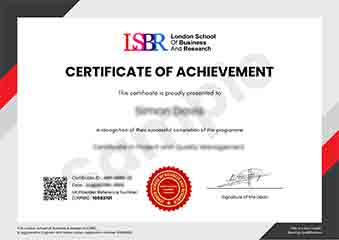
Sample Certificate
Preview the certificate you'll receive upon successful completion of this program.
Pay as an Employer
Request an invoice for your company to pay for this course. Perfect for corporate training and professional development.
What People Say About Us
Hear from our students about their experience with the Undergraduate Certificate in Economic Policy and Inequality: Redistribution Strategies at LSBR UK - Executive Education.
James Thompson
United Kingdom"The course material was incredibly comprehensive, providing a deep dive into economic policy and inequality that I found both engaging and informative. I gained practical skills in analyzing redistribution strategies, which I believe will be invaluable in my future career, especially in understanding and addressing economic disparities."
Tyler Johnson
United States"This course has been a game-changer for my understanding of economic policy and its real-world applications. The skills I've developed in analyzing redistribution strategies have not only made me more effective in my current role but have also opened up new opportunities for career advancement in policy research and consulting."
Charlotte Williams
United Kingdom"The course structure was exceptionally well-organized, with each module building logically on the previous one, which made complex economic concepts much more digestible. The comprehensive content not only deepened my understanding of economic policy and inequality but also provided practical insights into real-world redistribution strategies, enhancing my professional growth and equipping me with valuable tools for future career endeavors."