
Undergraduate Certificate in Food Safety Testing via Mass Spectrometry
This certificate equips students with advanced skills in food safety testing using mass spectrometry, ensuring they can detect contaminants and ensure food safety.
Undergraduate Certificate in Food Safety Testing via Mass Spectrometry
About This Course
The Undergraduate Certificate in Food Safety Testing via Mass Spectrometry is designed for students and professionals who wish to specialize in the advanced techniques of food safety analysis. This program covers a comprehensive curriculum, including the principles and applications of mass spectrometry in food testing, quality assurance, and regulatory compliance. Learners will gain hands-on experience using state-of-the-art mass spectrometers to identify and quantify food contaminants, allergens, and pathogens, which are critical for ensuring the safety and quality of food products.
Students will develop key skills in data analysis, troubleshooting, and the interpretation of mass spectrometry data. They will also learn about the regulatory frameworks governing food safety, the ethical considerations in food testing, and the importance of clear communication in reporting test results. Practical components of the program, such as laboratory sessions and case studies, provide students with the expertise needed to perform accurate and reliable food safety testing.
Upon completion of the program, graduates are well-prepared for careers in food safety laboratories, quality control departments, and regulatory bodies. They can pursue roles such as food safety analysts, quality assurance technicians, and food safety inspectors, where they will apply their knowledge and skills to safeguard public health and ensure the integrity of the food supply chain. The program also equips students with the foundational knowledge to continue their education in more advanced programs or to transition into related fields such as analytical chemistry, public health, or food science.
What You Will Learn
The Undergraduate Certificate in Food Safety Testing via Mass Spectrometry combines cutting-edge analytical techniques with a comprehensive understanding of food safety standards. This program is designed to equip students with the skills necessary to detect and analyze contaminants in food, ensuring the safety and quality of the food supply chain. Key topics include the fundamentals of mass spectrometry, analytical techniques, food microbiology, and regulatory frameworks governing food safety.
Through hands-on laboratory work and real-world case studies, students gain practical experience in sample preparation, data interpretation, and report writing. This program uniquely bridges theoretical knowledge with practical application, allowing graduates to confidently operate mass spectrometry equipment and interpret complex data sets in a food safety context.
Graduates from this program are well-prepared for careers in quality control laboratories, food safety agencies, and research institutions. They can conduct comprehensive food safety assessments, support regulatory compliance, and contribute to the development of new testing methods. The demand for experts in food safety is on the rise, driven by increasing consumer awareness and stringent global food safety standards. This certificate not only opens doors to specialized roles but also paves the way for further advanced studies in food science and related fields.
Course Benefits
Industry-Aligned Curriculum
Developed with industry leaders for job-ready skills
Globally Recognised Certificate
Recognised by employers across 180+ countries
Flexible Online Learning
Study at your own pace with lifetime access
Instant Access
Start learning immediately, no application process
Constantly Updated Content
Latest industry trends and best practices
Career Advancement
87% report measurable career progression within 6 months
What This Course Covers
- Introduction to Mass Spectrometry: Introduces the fundamental principles and technologies of mass spectrometry.: Food Safety Regulations: Discusses global and national regulations governing food safety.
- Sample Preparation Techniques: Covers methods for preparing samples for mass spectrometry analysis.: Data Analysis and Interpretation: Teaches how to analyze and interpret mass spectrometry data for food safety testing.
- Instrumentation and Operation: Focuses on the operation and maintenance of mass spectrometry instruments.: Quality Assurance and Control: Explores methods for ensuring the accuracy and reliability of food safety testing.
Everything You Get With This Course
Course Facts
Audience: Students, professionals in food safety
Prerequisites: Basic chemistry knowledge, lab experience
Outcomes: Proficient in mass spectrometry, understands food safety testing
Ready to Advance Your Career?
Join thousands of professionals who have transformed their careers with LSBR UK
Why This Course Is Right for You
Enhanced Career Opportunities: Professionals in food science, public health, and quality assurance can significantly enhance their career prospects by obtaining an Undergraduate Certificate in Food Safety Testing via Mass Spectrometry. This certification equips them with advanced analytical skills, allowing them to contribute to more complex and critical tasks within their field. For instance, mass spectrometry is pivotal in identifying and quantifying pathogenic microorganisms, ensuring food safety standards are met.
Specialized Knowledge and Skills: The program provides a deep dive into food safety testing methodologies, including hands-on experience with mass spectrometry techniques. Participants learn to handle sophisticated instrumentation and software, which are essential for accurate and reliable results. This expertise enables professionals to conduct comprehensive food safety assessments, which is crucial for maintaining public health and meeting regulatory requirements.
Competitive Advantage and Innovation: With a certificate in food safety testing via mass spectrometry, professionals can stand out in a competitive job market. The ability to apply cutting-edge technology in food testing makes them valuable assets to organizations. Moreover, this knowledge can drive innovation in food safety protocols, contributing to safer food production processes and better consumer protection.
3-4 Weeks
Study at your own pace
Course Brochure
Download our comprehensive course brochure with all details
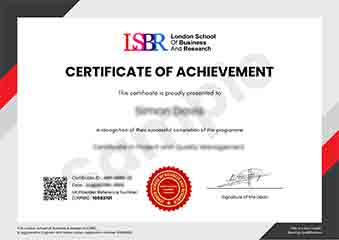
Sample Certificate
Preview the certificate you'll receive upon successful completion of this program.
Get Free Course Info
Receive detailed course information, curriculum breakdown, and career outcomes straight to your inbox.
Employer Sponsored?
Many employers cover professional development costs. Request a corporate invoice and we'll handle the rest. Bulk enrollment discounts available for teams of 3+.
How You Earn Your Certificate
Four simple steps to your professionally recognised qualification
Enroll & Get Instant Access
Complete your enrollment and access course materials immediately
Study at Your Own Pace
Work through the modules on your schedule, from anywhere in the world
Complete Assessments
Demonstrate your knowledge through practical, real-world assessments
Receive Your Certificate
Get your official LSBR UK certificate, recognised across 180+ countries
Real Results from Real Learners
Our graduates consistently report measurable career growth and professional advancement after completing their programmes.
Reviews from Our Learners
Hear from our students about their experience with the Undergraduate Certificate in Food Safety Testing via Mass Spectrometry at LSBR UK - Executive Education.
Charlotte Williams
United Kingdom"The course content is comprehensive and well-researched, providing a solid foundation in food safety testing techniques. Gaining hands-on experience with mass spectrometry has been incredibly beneficial, equipping me with practical skills that are highly valuable in the industry."
Madison Davis
United States"This certificate program has been incredibly valuable, equipping me with advanced skills in food safety testing that are directly applicable in the industry. It has opened up new career opportunities and enhanced my ability to contribute to ensuring food safety, which is both personally rewarding and professionally beneficial."
Anna Schmidt
Germany"The course structure is well-organized, providing a clear path from basic principles to advanced techniques in food safety testing, which has greatly enhanced my understanding and practical skills in the field. The comprehensive content and real-world applications have been invaluable for my professional growth, equipping me with the knowledge to tackle complex food safety challenges effectively."
Need more time to decide?
Join 23,000+ professionals who advanced their careers. Enroll today and start learning immediately.
Enroll NowSecure payment • Instant access • Certificate included