
Undergraduate Certificate in Human Centred Design and Proximity
Gain practical skills in human-centered design and proximity to innovate solutions, enhancing user experiences and community engagement.
Undergraduate Certificate in Human Centred Design and Proximity
Programme Overview
The Undergraduate Certificate in Human Centred Design and Proximity is tailored for students and professionals who aim to integrate user-centric design principles with a focus on proximity technologies. This programme equips learners with a comprehensive understanding of human-centred design methodologies, enabling them to create innovative solutions that address the needs and preferences of users in close physical proximity. It covers a range of topics including user research, design thinking, prototyping, and interaction design, with a particular emphasis on proximity-based technologies such as Bluetooth Low Energy (BLE), RFID, and sensor networks.
Throughout the programme, learners will develop key skills in empathy mapping, co-design workshops, and iterative design processes, fostering a deep understanding of user needs and the ability to design for user experience. They will also gain proficiency in using proximity technologies for creating intuitive and responsive user interfaces, as well as for developing smart and interactive environments. The curriculum is designed to bridge the gap between design and technology, ensuring that graduates are well-prepared to work in interdisciplinary teams and to innovate in fields such as smart cities, healthcare, and retail.
The career impact of this programme is significant, as graduates will be equipped to design products, services, and systems that are not only user-friendly but also technologically advanced and context-aware. This qualification opens up a wide range of career opportunities in industries such as technology, healthcare, urban planning, and user experience design. Graduates can pursue roles such as proximity design specialists, user experience designers, human-centred design researchers, or
What You'll Learn
Discover the transformative power of human-centered design and proximity with our Undergraduate Certificate program. This unique program equips you with the skills to create innovative solutions that address real-world challenges, fostering a deeper understanding of user needs and enabling you to design experiences that are not only functional but also meaningful.
Key topics include design thinking, empathy mapping, co-design methods, and space utilization, all grounded in the principles of proximity, which emphasize the importance of considering space as a tool for enhancing human interactions and well-being. Through hands-on projects and collaborative learning, you will engage in workshops, field studies, and lab sessions that provide practical applications of these concepts.
Graduates are well-prepared to enter a variety of roles in design, urban planning, public health, and technology, such as user experience (UX) designer, service designer, or spatial planner. By leveraging your expertise in human-centered design and proximity, you can contribute to the development of spaces and systems that improve the quality of life and foster connection among people.
Join our program to become a catalyst for positive change, equipped with the skills to design solutions that resonate with human needs and enhance the spaces around us.
Programme Highlights
Industry-Aligned Curriculum
Developed with industry leaders for job-ready skills
Globally Recognised Certificate
Recognised by employers across 180+ countries
Flexible Online Learning
Study at your own pace with lifetime access
Instant Access
Start learning immediately, no application process
Constantly Updated Content
Latest industry trends and best practices
Career Advancement
87% report measurable career progression within 6 months
Topics Covered
- Introduction to Human-Centered Design: Introduces the philosophy and practices of human-centered design.: Empathy and Observation: Teaches how to develop empathy for users and conduct effective observations.
- Ideation and Prototyping: Focuses on generating ideas and creating prototypes to solve design challenges.: Collaboration and Communication: Develops skills in working in teams and presenting design concepts.
- Technology and Tools: Explores the use of digital tools and technologies in design.: User Testing and Evaluation: Covers methods for testing and evaluating designs to ensure they meet user needs.
What You Get When You Enroll
Key Facts
Audience: Design enthusiasts, industry professionals
Prerequisites: High school diploma, design fundamentals knowledge
Outcomes: Critical thinking skills, user-centered design proficiency
Ready to Advance Your Career?
Join thousands of professionals who have transformed their careers with LSBR UK
Why This Course
Enhance Problem-Solving Skills: The Undergraduate Certificate in Human-Centered Design and Proximity equips professionals with a robust foundation in design thinking. This approach encourages a deep understanding of user needs, fostering innovative solutions that can significantly improve product or service usability. For instance, designers can create more effective user interfaces, leading to higher user satisfaction and engagement.
Boost Career Opportunities: This certificate is particularly valuable in industries like technology, healthcare, and consumer goods, where user experience is critical. Graduates can take on roles such as user experience designers or human-centered design strategists, roles that are in high demand. According to the Bureau of Labor Statistics, the job outlook for UX designers is projected to grow by % from to
Develop Interdisciplinary Skills: The program integrates knowledge from design, psychology, and sociology, preparing professionals to address complex issues from multiple angles. This interdisciplinary approach is particularly useful in fields requiring collaboration across different departments or industries. For example, in healthcare, professionals with this background can help design more intuitive and user-friendly medical devices or apps, improving patient outcomes and the overall healthcare experience.
3-4 Weeks
Study at your own pace
Course Brochure
Download our comprehensive course brochure with all details
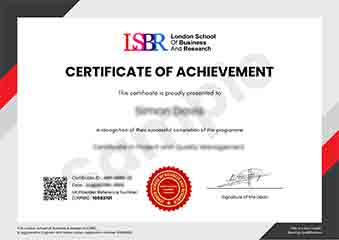
Sample Certificate
Preview the certificate you'll receive upon successful completion of this program.
Get Free Course Info
Receive detailed course information, curriculum breakdown, and career outcomes straight to your inbox.
Employer Sponsored?
Many employers cover professional development costs. Request a corporate invoice and we'll handle the rest. Bulk enrollment discounts available for teams of 3+.
Your Path to Certification
Four simple steps to your professionally recognised qualification
Enroll & Get Instant Access
Complete your enrollment and access course materials immediately
Study at Your Own Pace
Work through the modules on your schedule, from anywhere in the world
Complete Assessments
Demonstrate your knowledge through practical, real-world assessments
Receive Your Certificate
Get your official LSBR UK certificate, recognised across 180+ countries
Join Thousands Who Transformed Their Careers
Our graduates consistently report measurable career growth and professional advancement after completing their programmes.
What People Say About Us
Hear from our students about their experience with the Undergraduate Certificate in Human Centred Design and Proximity at LSBR UK - Executive Education.
James Thompson
United Kingdom"The course content is rich and well-structured, providing a solid foundation in human-centered design principles that have directly enhanced my problem-solving skills. I've gained practical skills in prototyping and user research, which are invaluable for anyone looking to innovate in design or related fields."
Ashley Rodriguez
United States"The Human-Centred Design and Proximity course has been incredibly practical, equipping me with skills that are directly applicable in the industry. It has not only enhanced my ability to design solutions that truly meet user needs but also opened up new career opportunities in user experience and service design."
Ahmad Rahman
Malaysia"The course structure is well-organized, providing a comprehensive understanding of human-centered design principles that are directly applicable to real-world problems, significantly enhancing my professional growth in this field."
Still deciding?
Join 23,000+ professionals who advanced their careers. Enroll today and start learning immediately.
Enroll NowSecure payment • Instant access • Certificate included