
Undergraduate Certificate in Infectious Disease Control and Prevention
Gain practical skills and knowledge to combat infectious diseases, enhancing career prospects in public health and healthcare.
Undergraduate Certificate in Infectious Disease Control and Prevention
Programme Overview
This course is designed for healthcare professionals and students interested in infectious disease control. First, it equips participants with the knowledge to identify and manage infectious diseases. Meanwhile, it fosters practical skills for implementing prevention strategies. Additionally, participants will grasp the importance of public health surveillance and response.
Upon completion, graduates gain a certificate demonstrating their expertise. First, they will understand the fundamentals of epidemiology. Then, they will be ready to contribute effectively to disease control efforts. Moreover, they will be prepared to navigate real-world challenges in disease prevention.
What You'll Learn
Dive into the frontlines of global health with our Undergraduate Certificate in Infectious Disease Control and Prevention. First, you'll gain a solid foundation in epidemiology and public health. Next, explore the intricacies of infectious diseases, from bacteria to viruses. Meanwhile, you'll learn to navigate the challenges of disease outbreaks. Furthermore, you'll acquire skills in data analysis and community health management.
This program is perfect for anyone eager to make a difference. Moreover, it opens doors to careers in public health, healthcare, and research. First and foremost, you'll be equipped to protect communities worldwide. Lastly, our unique blend of theoretical knowledge and practical applications ensures you're ready for real-world challenges. Join us and become a hero in the fight against infectious diseases. Enroll today and take the first step towards a rewarding career!
Programme Highlights
Industry-Aligned Curriculum
Developed with industry leaders to ensure practical, job-ready skills valued by employers worldwide.
Expert Faculty
Learn from experienced professionals with real-world expertise in your chosen field.
Flexible Learning
Study at your own pace, from anywhere in the world, with our flexible online platform.
Industry Focus
Practical, real-world knowledge designed to meet the demands of today's competitive job market.
Latest Curriculum
Stay ahead with constantly updated content reflecting the latest industry trends and best practices.
Career Advancement
Unlock new opportunities with a globally recognized qualification respected by employers.
Topics Covered
- Introduction to Infectious Diseases: An overview of infectious diseases, their causes, and basic concepts.
- Epidemiology and Disease Control: Study of disease patterns and methods to control their spread.
- Microbiology for Infection Control: Understanding microorganisms and their role in infectious diseases.
- Public Health and Infectious Diseases: The role of public health in preventing and managing infectious diseases.
- Infection Prevention and Control Practices: Best practices for preventing and controlling infections in healthcare settings.
- Emerging Infectious Diseases: Exploration of new and re-emerging infectious diseases and their impact.
Key Facts
Audience: This program is for students and working professionals looking to strengthen their public health skills. It is especially useful for those in healthcare, education, and public service. First, identify your career goals. Then, determine if this certificate aligns with them.
Prerequisites: First, ensure you have a high school diploma or equivalent. Next, demonstrate basic computer literacy. Additionally, have a strong interest in health sciences. Moreover, no prior college experience is required for enrollment.
Outcomes: First, you will gain a solid understanding of infectious disease basics. Next, you will learn how to implement prevention strategies. Then, you will be able to assess community health needs. Finally, you will develop communication skills to educate others on disease control.
Why This Course
Firstly, consider the growing demand for infectious disease expertise. Secondly, this certificate equips learners with practical skills, which they can apply directly to their current roles. Lastly, the program offers flexibility, allowing learners to study at their own pace, while gaining access to a supportive community of professionals.
Programme Title
Undergraduate Certificate in Infectious Disease Control and Prevention
Course Brochure
Download our comprehensive course brochure with all details
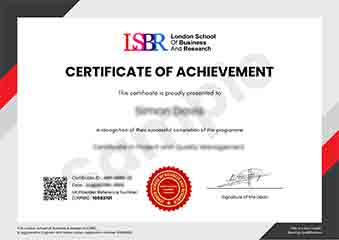
Sample Certificate
Preview the certificate you'll receive upon successful completion of this program.
Pay as an Employer
Request an invoice for your company to pay for this course. Perfect for corporate training and professional development.
What People Say About Us
Hear from our students about their experience with the Undergraduate Certificate in Infectious Disease Control and Prevention at LSBR UK - Executive Education.
James Thompson
United Kingdom"The course material was incredibly comprehensive, covering everything from disease epidemiology to public health strategies. I found the practical skills gained, such as outbreak investigation techniques and data analysis, to be particularly valuable and directly applicable to my career in public health."
Emma Tremblay
Canada"This certificate program has been instrumental in equipping me with the latest industry knowledge and practical skills in infectious disease control, making me a more confident and competent professional in my public health role. The learning outcomes have directly translated into career advancement opportunities, as I've been able to apply what I've learned to real-world scenarios, enhancing my problem-solving abilities and strategic thinking in disease prevention."
Fatimah Ibrahim
Malaysia"The course structure was exceptionally well-organized, with each module building logically on the previous one, which made complex topics in infectious disease control much more digestible. The comprehensive content not only deepened my understanding of epidemiology and prevention strategies but also provided practical insights that I can directly apply in my future healthcare career."