
Undergraduate Certificate in Insect Coevolution Strategies
Gain expertise in insect coevolution strategies, enhancing your knowledge in ecology, evolution, and biodiversity for career advancement.
Undergraduate Certificate in Insect Coevolution Strategies
About This Course
The Undergraduate Certificate in Insect Coevolution Strategies is designed for students with a keen interest in evolutionary biology, ecology, and entomology. This program delves into the intricate relationships between insects and their environments, focusing on how coevolution shapes the interactions between species. Students will explore the mechanisms of coevolution, including the roles of natural selection, genetic drift, and environmental pressures, as well as the impact of these interactions on biodiversity and ecosystem stability.
Participants will develop a robust understanding of molecular and genetic tools used in studying coevolution, as well as the application of ecological field techniques and laboratory analyses. They will gain expertise in quantitative methods for analyzing evolutionary data and will learn to interpret the results to understand the adaptive significance of coevolutionary relationships. This comprehensive skill set will enable learners to contribute effectively to research and conservation efforts aimed at preserving insect diversity and understanding the broader implications of insect coevolution on ecological systems.
The career impact of this program is significant, with graduates being well-prepared for advanced studies in biology, ecology, or entomology, or for roles in environmental consulting, biodiversity conservation, and policy development. This certificate provides a solid foundation for those aiming to conduct research, manage natural resources, or enforce environmental regulations, ensuring they are equipped with the knowledge and skills necessary for success in these fields.
What You Will Learn
Explore the fascinating world of coevolution through our Undergraduate Certificate in Insect Coevolution Strategies. This program equips you with a deep understanding of the intricate relationships between insects and their environments, including plants, fungi, and other insects. By studying the evolutionary processes that shape these relationships, you'll gain valuable insights into biodiversity, ecosystem dynamics, and the challenges faced by insects in a changing world.
Key topics include the biology of insect-plant interactions, the evolution of mutualisms and antagonisms, and the role of environmental factors in driving coevolutionary processes. You'll also delve into advanced research methods and techniques used in insect ecology and evolution, such as molecular analysis and field observations.
Upon completion, you will be well-prepared to apply your knowledge in various sectors. Whether you aim to pursue a career in environmental consulting, conservation biology, or academia, this certificate will provide you with the foundational skills needed to make meaningful contributions. Graduates often secure roles in research institutions, governmental agencies, and non-profit organizations focused on wildlife conservation, biodiversity studies, and ecological management. Additionally, the program enhances your adaptability, making you a valuable asset in fields requiring critical thinking and problem-solving skills, such as biotechnology and environmental policy.
Course Benefits
Industry-Aligned Curriculum
Developed with industry leaders for job-ready skills
Globally Recognised Certificate
Recognised by employers across 180+ countries
Flexible Online Learning
Study at your own pace with lifetime access
Instant Access
Start learning immediately, no application process
Constantly Updated Content
Latest industry trends and best practices
Career Advancement
87% report measurable career progression within 6 months
What This Course Covers
- Introduction to Insect Coevolution: Introduces the concept of coevolution and its significance in biological systems.: Evolutionary Genetics: Focuses on genetic mechanisms driving coevolutionary processes.
- Host-Pathogen Dynamics: Examines the coevolutionary arms race between hosts and pathogens.: Predator-Prey Interactions: Analyzes the coevolutionary strategies in predator-prey relationships.
- Mutualistic Relationships: Investigates coevolution in mutualistic interactions, such as pollination and mycorrhizal associations.: Human-Environment Interactions: Explores the impact of human activities on insect coevolutionary strategies.
Everything You Get With This Course
Course Facts
Audience: Bachelor's degree holders in biology, ecology
Prerequisites: None specified; basic biology knowledge recommended
Outcomes: Understands coevolution principles, applies evolutionary strategies, conducts research in entomology
Ready to Advance Your Career?
Join thousands of professionals who have transformed their careers with LSBR UK
Why This Course Is Right for You
Specialized Knowledge: An undergraduate certificate in Insect Coevolution Strategies provides professionals with deep, specialized knowledge of ecological and evolutionary processes. This expertise is invaluable for roles in entomology, environmental science, or agricultural research, where understanding insect behavior and interactions with other species can lead to innovative solutions.
Career Advancement: This certificate can enhance career prospects by positioning individuals as experts in niche areas. For example, professionals in pest management can leverage this knowledge to develop more effective, sustainable pest control strategies. In academia, it can lead to research opportunities and publications, aiding in career progression.
Practical Skills: The program focuses on developing skills in data analysis, experimental design, and scientific communication. These skills are highly transferable and can be applied across various industries, including biotechnology, environmental consulting, and public health. For instance, the ability to analyze large datasets can be crucial in identifying patterns in pest behavior or predicting outbreaks.
Interdisciplinary Approach: This certificate encourages an interdisciplinary approach, integrating knowledge from ecology, genetics, and evolutionary biology. This holistic understanding can lead to innovative solutions in complex environmental issues, such as managing invasive species or protecting endangered species from pests. Professionals with this background can contribute to multi-disciplinary teams, fostering collaborative problem-solving in diverse settings.
3-4 Weeks
Study at your own pace
Course Brochure
Download our comprehensive course brochure with all details
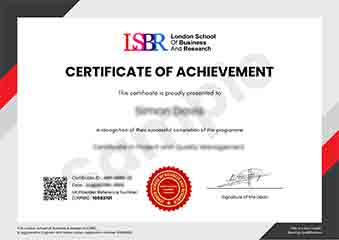
Sample Certificate
Preview the certificate you'll receive upon successful completion of this program.
Get Free Course Info
Receive detailed course information, curriculum breakdown, and career outcomes straight to your inbox.
Employer Sponsored?
Many employers cover professional development costs. Request a corporate invoice and we'll handle the rest. Bulk enrollment discounts available for teams of 3+.
How You Earn Your Certificate
Four simple steps to your professionally recognised qualification
Enroll & Get Instant Access
Complete your enrollment and access course materials immediately
Study at Your Own Pace
Work through the modules on your schedule, from anywhere in the world
Complete Assessments
Demonstrate your knowledge through practical, real-world assessments
Receive Your Certificate
Get your official LSBR UK certificate, recognised across 180+ countries
Real Results from Real Learners
Our graduates consistently report measurable career growth and professional advancement after completing their programmes.
Reviews from Our Learners
Hear from our students about their experience with the Undergraduate Certificate in Insect Coevolution Strategies at LSBR UK - Executive Education.
James Thompson
United Kingdom"The course provided a deep dive into the complex interactions between insects and their environments, equipping me with a robust understanding of coevolutionary strategies that I find incredibly valuable for my future career in ecology. Gaining insights into how these strategies can be applied in real-world scenarios has been particularly beneficial."
Sophie Brown
United Kingdom"This course has been incredibly valuable, equipping me with a deep understanding of insect coevolution that directly enhances my ability to analyze ecological interactions in a practical setting. It has opened up new opportunities in my field, particularly in conservation biology, where my knowledge of coevolutionary strategies is highly sought after."
Ruby McKenzie
Australia"The course structure is well-organized, providing a clear progression from fundamental concepts to advanced coevolution strategies, which enhances understanding and retention. The comprehensive content not only deepens my knowledge but also highlights real-world applications, making the subject matter highly relevant and practical for future research and professional endeavors."
Need more time to decide?
Join 23,000+ professionals who advanced their careers. Enroll today and start learning immediately.
Enroll NowSecure payment • Instant access • Certificate included